Tibet flood death toll disputed as China blocks media access, RSF warns
Synopsis
China has barred every independent and international journalist from Tibet's flood zone — and the numbers tell a stark story: RSF-linked Tibet Radio puts the death toll at 29, nearly double Beijing's official count of 16. With WeChat posts deleted, exile Tibetans too afraid to speak, and only state media allowed in, the world may never know the true scale of the disaster.
Key Takeaways
Reporters Without Borders (RSF) condemned China's total media blackout over Tibet's flash flood zone on 3 September .
No independent Tibetan or international media outlet has been granted access to the disaster-affected area.
Tibet Radio independently confirmed at least 29 deaths — against China's official toll of 16 .
At least ten internet users have reportedly been punished for 'spreading rumours' about the disaster, according to state media.
Flood references on WeChat have been censored or deleted by Chinese authorities.
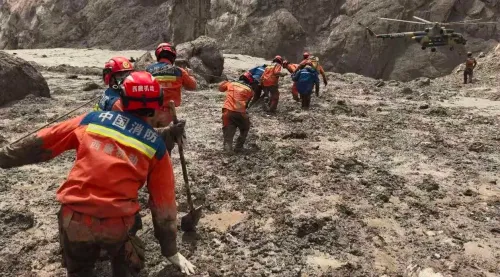
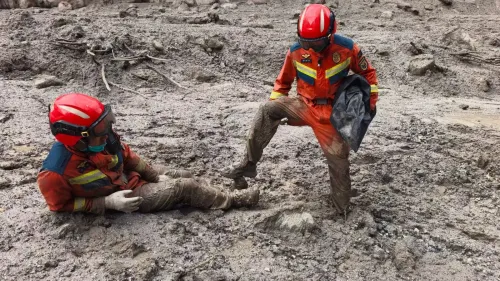
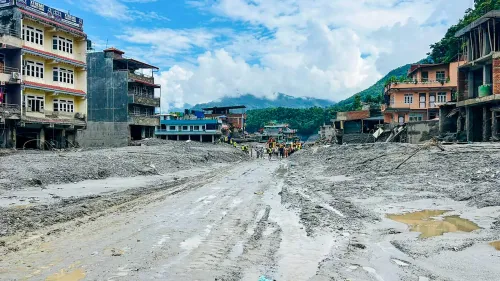
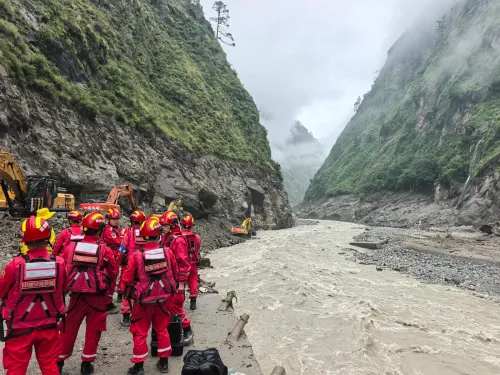
The flood originated in Tibet on 26 August and swept into Nepal's Rasuwa district via the Bhote Koshi River , killing over a thousand in Nepal.
Reporters Without Borders (RSF) on 3 September issued a sharp condemnation of China's near-total media blackout over Tibet's flash flood disaster, warning that the true scale of casualties and destruction remains impossible to independently verify. The Paris-based press freedom group said no independent Tibetan or international news outlet has been granted access to the flood-affected region.
Only State Media Permitted In
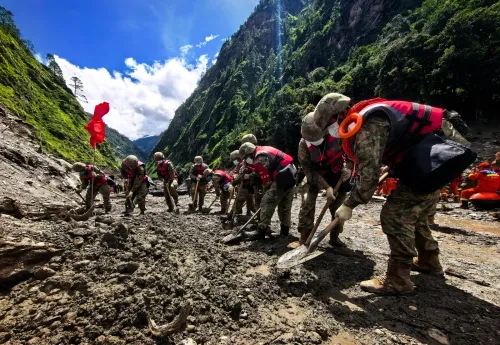
In the wake of the disaster, Chinese authorities have exclusively authorised state-controlled outlets to cover the floods in Tibetan areas. According to RSF, those reports have focused on Beijing's relief achievements rather than providing a comprehensive picture of the devastation. The organisation said this approach 'reflects a long-standing practice of the Chinese regime, which exercises some of the strictest control in the world over media professionals.'
Authorities have also reportedly punished at least ten internet users for 'spreading rumours' related to the disaster, citing the Chinese state-run newspaper Xinjing Bao (The Beijing News) as the source for that figure.
Tibet Described as an 'Information Black Hole'
Aleksandra Bielakowska, Head of Advocacy for RSF Asia-Pacific, said that under Chinese President Xi Jinping's leadership, Tibet has effectively become a 'de facto information black hole.' She stated: 'No independent Tibetan media, nor any international media, are permitted to freely cover news from this autonomous region. The only outlets allowed to operate are those controlled by the state and its propaganda organs, which report on events according to the guidelines approved by the Chinese Communist Party's Propaganda Department. Under these circumstances, it is virtually impossible to gauge the true scale of the tragedy, as the regime seeks to whitewash its international image and stifle any information that might cast it in an unfavourable light.'
Exile Community Struggles to Reach Relatives
Kalsang Jigme, editor-in-chief of the independent outlet Tibet Radio, said information control this time appears significantly tighter than in past disasters. 'I noticed a very high level of censorship and information control inside Tibet. I also tried to reach Tibetans in exile whose families are in the flood-affected areas. Many have been reluctant to share information because they fear that speaking publicly could put their families inside Tibet at risk,' Jigme said.
Tibet Radio has independently confirmed at least 29 Tibetan deaths — nearly double China's official toll of 16. Tibetan media outlets cited by RSF suggest the actual victim count may be significantly higher, though verification remains extremely difficult given the access constraints.
WeChat Censorship and Cross-Border Impact
RSF also highlighted widespread censorship on Chinese social media, particularly on WeChat, where references to the floods have reportedly been deleted or suppressed by authorities. The broader disaster context adds further urgency: the massive flood originated in the Tibetan region of China on 26 August, swept through the transboundary Bhote Koshi River, and caused catastrophic destruction in Nepal's Rasuwa district, leaving over a thousand dead in the Himalayan nation.
With state-controlled narratives the only officially sanctioned account and independent journalists locked out, the full human cost of the Tibet floods may not be known for some time — if at all.
Point of View
Measurable consequence of information control. What makes this moment significant is that it is not an isolated lapse: RSF's characterisation of Tibet as a 'de facto information black hole' is supported by a pattern stretching back years. The self-censorship among exile Tibetans — afraid that speaking out will endanger relatives inside Tibet — reveals how suppression extends far beyond the region's borders. The cross-border dimension, with over a thousand dead in Nepal from the same flood system, makes the blackout even harder to justify on any humanitarian grounds. The real accountability gap here is not just journalistic — it is humanitarian.
NationPress
18 Oct 2026
Frequently Asked Questions
What is the disputed Tibet flood death toll?
Independent outlet Tibet Radio has confirmed at least 29 Tibetan deaths, nearly double China's official count of 16. RSF says Tibetan media believe the actual toll may be significantly higher, but verification is extremely difficult given the media blackout.
Why is China blocking media access to Tibet's flood zone?
RSF says China has a long-standing practice of restricting independent media in Tibet, allowing only state-controlled outlets that report in line with Communist Party guidelines. The organisation says this pattern intensified under President Xi Jinping, effectively making Tibet an 'information black hole.'
What has Reporters Without Borders said about the Tibet flood coverage?
RSF condemned China's media restrictions on 3 September, stating that no independent Tibetan or international outlet has been allowed into the disaster zone. Its Asia-Pacific advocacy head Aleksandra Bielakowska said it is 'virtually impossible to gauge the true scale of the tragedy' under current conditions.
How did the Tibet flood affect Nepal?
The flash flood originated in the Tibetan region of China on 26 August and swept through the transboundary Bhote Koshi River into Nepal's Rasuwa district, killing over a thousand people and causing widespread destruction in the Himalayan nation.
Are Tibetans in exile able to get information from the flood-affected areas?
According to Tibet Radio editor-in-chief Kalsang Jigme, many Tibetans in exile are reluctant to share information they receive from relatives inside Tibet, fearing that speaking publicly could put those family members at risk. WeChat posts about the floods have also reportedly been deleted by Chinese authorities.