China silences Tibet flood deaths to dodge global scrutiny, report finds
Synopsis
China has not released a single official casualty figure from the glacial-collapse floods that devastated Tibet on 26 August — and according to HRW and analysts including the Dalai Lama's nephew, that silence is no accident. With journalists barred from the disaster zone, AI imagery substituted for real footage, and at least 10 people punished for 'rumourmongering', Beijing's information lockdown is being called a cover-up of lives, not just numbers.
Key Takeaways
A glacial collapse triggered catastrophic flooding in Tibet on 26 August , with floodwaters also killing hundreds in Nepal's Rasuwa district via the Bhote Koshi River .
China has released no official Tibetan casualty figures , which analysts say is consistent with a long-standing policy of suppressing information on Tibetan suffering.
Khedroob Thondup , nephew of the 14th Dalai Lama , wrote that Beijing's silence is designed to avoid international scrutiny and domestic sympathy.
Human Rights Watch (HRW) alleges journalists have been barred from the disaster zone and at least 10 people punished for 'rumourmongering'.
Chinese state media reportedly used AI-generated imagery of the disaster while original footage of Gyirong Port being flooded was censored domestically.
Analysts warn Tibet's glacial ecosystem, stressed by climate change and development, poses a growing transboundary disaster risk.
China's systematic refusal to disclose casualty figures from the devastating glacial-collapse floods in Tibet is part of a decades-long pattern of suppressing information whenever Tibetans suffer disproportionately, according to a detailed report. The information blackout, analysts argue, is designed to shield Beijing from international accountability and prevent domestic sympathy from forming around Tibetan communities.
Scale of the Disaster
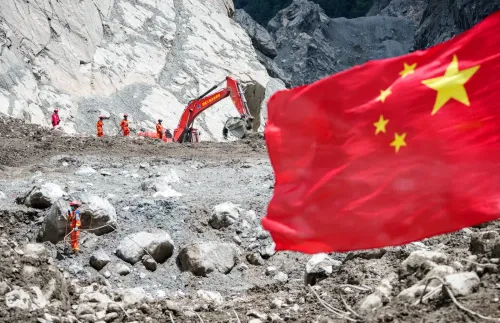
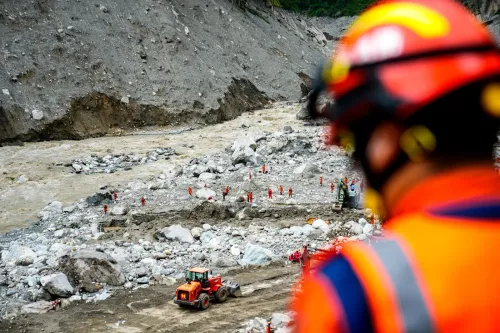
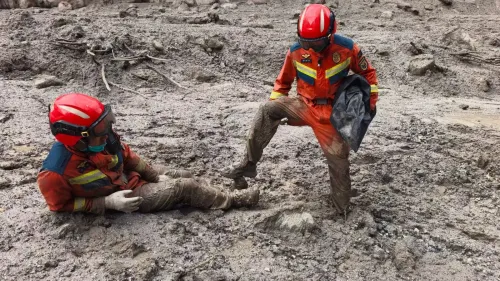
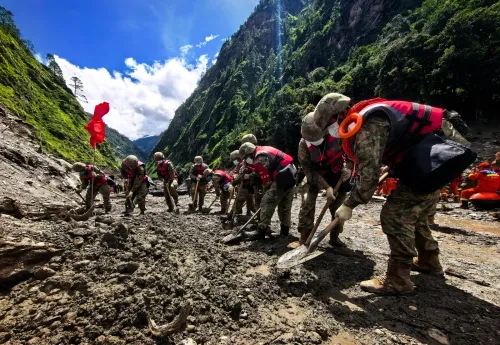
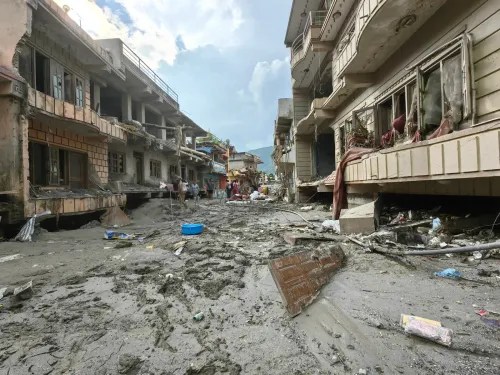
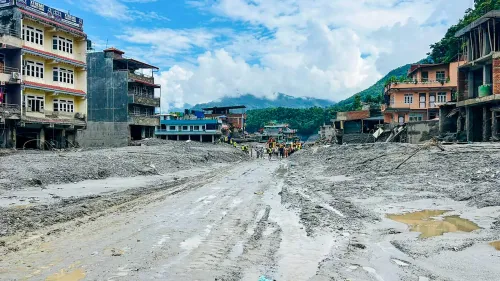
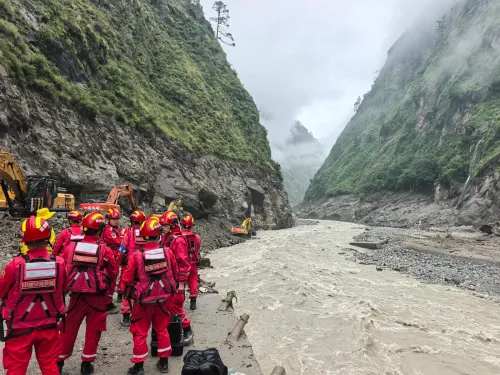
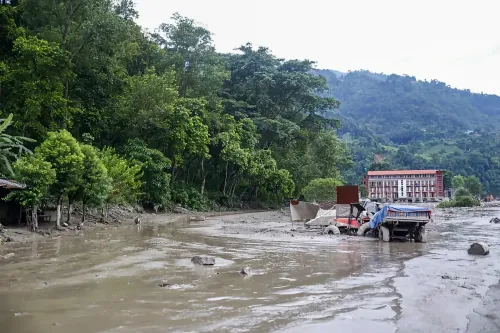
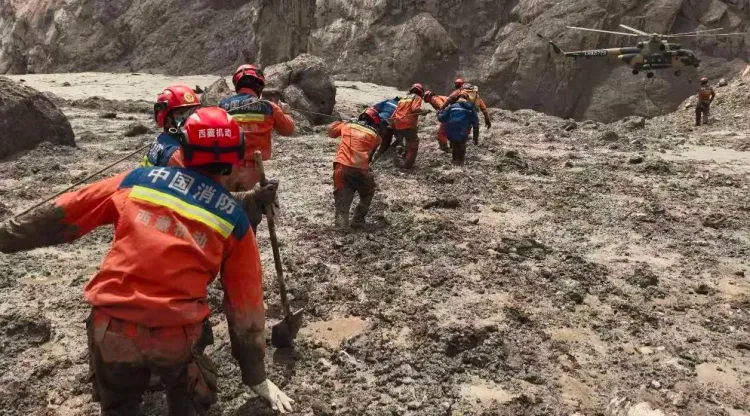
The catastrophic flooding, triggered by a glacial collapse, tore through Tibetan communities on 26 August, leaving entire settlements in ruins and families separated. The same floodwaters swept down the transboundary Bhote Koshi River into Nepal's Rasuwa district, where hundreds were reported dead and widespread destruction followed across the Himalayan nation.
Despite the scale of the calamity, Chinese authorities have released no official count of Tibetan casualties — a silence that critics say speaks louder than any statement.
A Pattern of Concealment
'The refusal to announce casualties fits a long-standing pattern of Chinese authorities in Tibet suppressing information whenever Tibetans suffer disproportionately. Whether it is uprisings, self-immolations or environmental disasters, the state's instinct is to conceal rather than confront. By silencing reports of Tibetan deaths, Beijing avoids international scrutiny and domestic sympathy. To acknowledge Tibetan suffering would be to admit that Tibetans are distinct, resilient and enduring — qualities the state seeks to erase,' wrote Khedroob Thondup, nephew of the 14th Dalai Lama, in Taiwan's Taipei Times.
Thondup's assessment reflects a view widely held among Tibet-watchers: that the erasure of casualty data is not administrative oversight but deliberate policy — one that reduces Tibetan lives, in his words, 'to abstractions' and removes their suffering from public record.
Censorship and Media Restrictions
US-based advocacy organisation Human Rights Watch (HRW) has separately accused China of tightening information controls in the aftermath of the floods. According to HRW, the Chinese social media platform Weibo — which operates under state censorship directives — pinned a memorial hashtag, 'Mourning the victims of the Gyirong mudslide disaster', at the top of its trending section, alongside eight other disaster-related hashtags.
The lead post on that hashtag featured a China Central Television (CCTV) anchor reading what HRW described as a Politburo communiqué, in which President Xi Jinping reportedly called on top leaders to observe a minute of silence for the victims. 'The victims' own voices are largely absent from the trending topics, which focus on the death toll, rescue operations, and the mechanics of the disaster,' HRW noted.
Journalists in China have reportedly been barred from entering the disaster zone or interviewing affected families, leaving them reliant on official narratives. HRW further alleged that Chinese authorities have punished at least 10 people for 'rumourmongering' related to the disaster.
AI Imagery and Suppressed Footage
HRW also flagged that Chinese state media relied on AI-generated images and videos purporting to depict the likely origins of the mudslide. International footage showing Gyirong Port — on the Chinese side of the border — being overwhelmed by floodwater, with people visibly fleeing for their lives, was reportedly being censored inside China even as it circulated globally.
Broader Environmental Warning
Beyond the immediate human toll, analysts warn that the Tibet glacial collapse is a harbinger of larger crises to come. Tibet's fragile high-altitude ecosystem, already under stress from climate change and what critics describe as reckless infrastructure development, is increasingly vulnerable to cascading disasters. The international community, the Taipei Times report argued, must recognise China's silence not as a data gap but as a deliberate cover-up of lives lost.
Point of View
Self-immolations, and now environmental disasters all trigger the same reflex of concealment. What makes this episode particularly significant is that the floodwaters crossed an international border, killing hundreds in Nepal, making it impossible for Beijing to contain the story geographically even as it tries to contain it informationally. The use of AI-generated imagery in place of real footage, and the punishment of citizens for sharing ground-level information, signals that the information architecture around Tibet is hardening, not loosening. The international community's challenge is to treat silence itself as a data point.
NationPress
19 Oct 2026
Frequently Asked Questions
What caused the flooding in Tibet and Nepal?
A glacial collapse in Tibet triggered catastrophic flooding on 26 August, with floodwaters travelling down the transboundary Bhote Koshi River into Nepal's Rasuwa district, where hundreds were reported dead and widespread destruction occurred.
Why is China not releasing Tibetan flood casualty figures?
Analysts and rights groups say China's refusal to publish casualty data follows a long-standing pattern of suppressing information whenever Tibetans suffer disproportionately. Khedroob Thondup, nephew of the 14th Dalai Lama, wrote that disclosing Tibetan deaths would invite international scrutiny and domestic sympathy — outcomes Beijing seeks to avoid.
What has Human Rights Watch said about China's response to the Tibet floods?
Human Rights Watch has accused China of censorship, barring journalists from the disaster zone, relying on AI-generated imagery, and punishing at least 10 people for 'rumourmongering'. It also noted that original footage of Gyirong Port being overwhelmed by floodwater was being censored inside China while circulating globally.
Who is Khedroob Thondup and why is his statement significant?
Khedroob Thondup is the nephew of the 14th Dalai Lama and a prominent commentator on Tibetan affairs. His op-ed in Taiwan's Taipei Times argued that China's silence on Tibetan flood deaths is a deliberate erasure of Tibetan suffering from the public record, making it a significant statement from within the Tibetan diaspora leadership.
What is the broader environmental concern raised by the Tibet glacial collapse?
Analysts warn that Tibet's high-altitude glacial ecosystem is increasingly fragile due to climate change and infrastructure development, making cascading disasters more likely. The August 26 event, which sent floodwaters across an international border into Nepal, is being cited as evidence of a growing transboundary climate risk.