China censors Tibet flood coverage, HRW flags AI images and media blackout
Synopsis
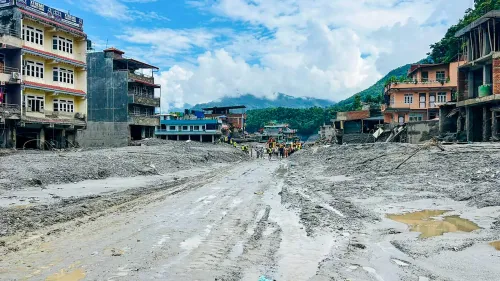
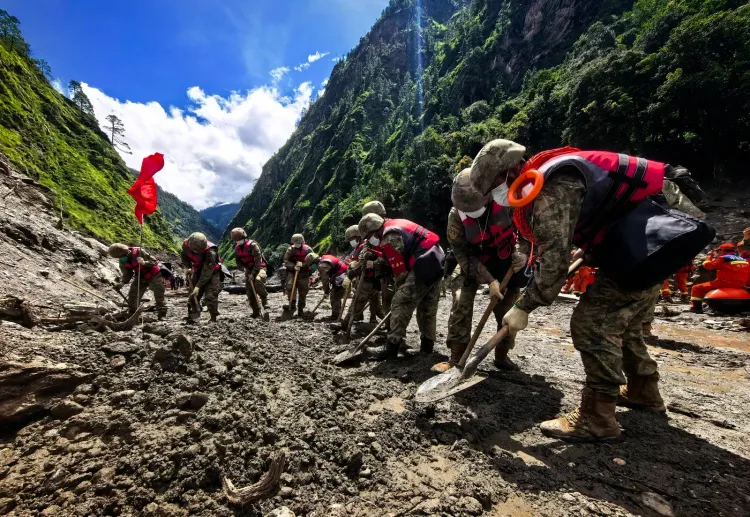
Human Rights Watch says China is running a familiar disaster-censorship playbook in Tibet — barring journalists, punishing 'rumormongers', and now deploying AI-generated images to shape the narrative of the Gyirong mudslide that killed hundreds across Tibet and Nepal. The addition of AI to the toolkit marks a new escalation in an old strategy.
Key Takeaways
Human Rights Watch accused China of censoring coverage of the Gyirong mudslide disaster that struck on 26 August .
Chinese authorities allegedly punished at least 10 people for 'rumormongering' related to the disaster.
Official media reportedly used AI-generated images and videos to depict the mudslide's origins, while original footage was censored.
Journalists were reportedly barred from the disaster zone and from interviewing affected families.
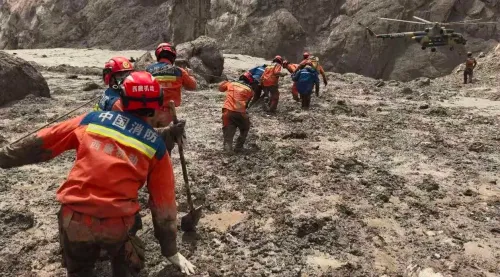
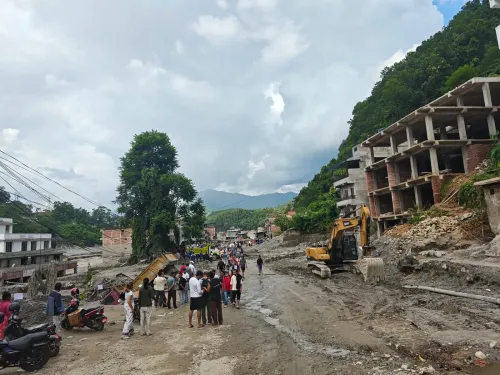
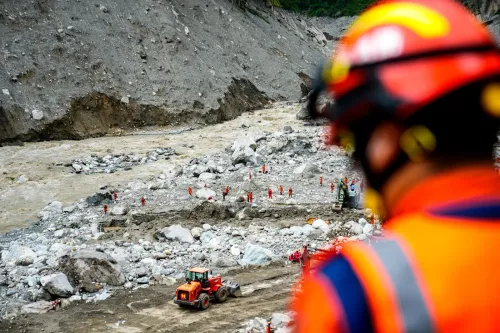
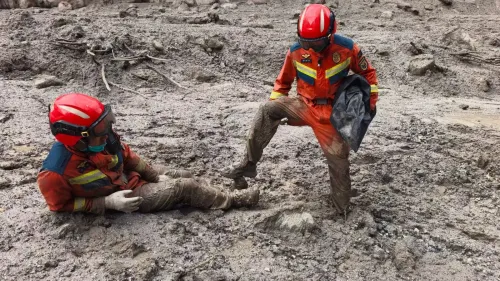
The flood originated in Tibet and swept through the Bhote Koshi River into Nepal's Rasuwa district , leaving hundreds dead.
HRW noted that foreigners, including journalists, cannot enter Tibet without official Chinese permission.
Human Rights Watch (HRW), a US-based advocacy group, has accused China of imposing sweeping censorship and tightening information controls in the wake of deadly flash floods that have devastated communities in Tibet and across the border in Nepal. The allegations, published on 1 September, detail a coordinated effort to suppress independent reporting and shape public narratives around the disaster.
Weibo Hashtags and Official Narratives
According to HRW, the Chinese social media platform Weibo — which operates under Beijing's censorship directives — prominently pinned a memorial hashtag, 'Mourning the victims of the Gyirong mudslide disaster', at the top of its trending topics, alongside eight other disaster-related hashtags. The lead post featured a China Central Television (CCTV) news anchor reading what was described as a Politburo communique, in which Chinese President Xi Jinping reportedly called on the country's top leaders to observe a minute of silence for the victims.
HRW noted that 'the victims' own voices are largely absent from the trending topics, which focus on the death toll, rescue operations, and the mechanics of the disaster.'
Journalists Barred, AI Images Deployed
Citing reports, HRW said journalists in China have been barred from the disaster zone and from interviewing affected families, leaving them entirely dependent on official information channels. The rights body further alleged that Chinese authorities have punished at least 10 people for 'rumormongering' related to the disaster.
HRW also reported that Chinese official media relied on AI-generated images and videos purporting to depict the likely origins of the mudslide. Meanwhile, original footage that circulated internationally — showing Gyirong Port on the Chinese side of the border being overwhelmed by floodwater as people fled — was reportedly being censored within China.
A Familiar Playbook, HRW Says
The rights body drew direct parallels with past disasters in China, describing the response as a recurring pattern. 'Information controls can make it harder for families to locate loved ones, and hamper understanding of the disaster and any future response,' HRW stated. It added: 'As with previous disasters, the choreography is familiar: restrict information, control the narrative, and praise the leadership's resolve and rescue efforts. AI may polish the performance, but the script remains unchanged.'
HRW said it has long documented pervasive censorship and self-censorship across China, particularly in Tibetan areas, where people can reportedly be imprisoned for allegedly undermining national security simply by sharing information with the outside world. Foreigners, including journalists and independent investigators, are barred from entering Tibet without official permission.
The Disaster: Origins and Cross-Border Impact
The catastrophic flood that struck Nepal's Rasuwa district originated in the Tibetan region of China on 26 August. It swept through the transboundary Bhote Koshi River, leaving hundreds dead and causing widespread destruction across the Himalayan nation. The disaster's cross-border nature has made independent verification of the full scale of damage particularly difficult, given the restrictions on access to the Tibetan side.
As rescue operations continue on both sides of the border, the question of information access — and who controls it — remains as consequential as the disaster response itself.
Point of View
But the reported use of AI-generated imagery marks a qualitative shift — state media can now fabricate plausible visual narratives faster than independent verification can catch up. The Gyirong case also underscores a structural problem: because Tibet is effectively a closed zone for foreign journalists, every major disaster there becomes an information asymmetry crisis. HRW's report is credible but necessarily limited — the organisation itself cannot independently verify ground conditions. What is verifiable is the architecture of control: Weibo's pinned hashtags, the CCTV anchor reading Politburo lines, the 10 punished 'rumormongers'. That architecture does not change with the severity of the disaster; it intensifies with it.
NationPress
16 Oct 2026
Frequently Asked Questions
What did Human Rights Watch allege about China's response to the Tibet floods?
Human Rights Watch accused China of imposing censorship and tight information controls following the deadly Gyirong mudslide, including barring journalists from the disaster zone, punishing at least 10 people for 'rumormongering', and deploying AI-generated images through official media to shape the narrative.
What is the Gyirong mudslide disaster?
The Gyirong mudslide refers to the catastrophic flash floods that originated in Tibet's Gyirong area on 26 August and swept through the transboundary Bhote Koshi River into Nepal's Rasuwa district, killing hundreds and causing widespread destruction.
How did China's official media cover the disaster?
According to HRW, Chinese state media outlet CCTV led coverage with an anchor reading a Politburo communique in which President Xi Jinping reportedly called for a minute of silence. Official media also reportedly used AI-generated images to depict the mudslide's origins, while original footage showing the flooding at Gyirong Port was censored domestically.
Why is independent reporting from Tibet difficult?
HRW notes that foreigners, including journalists and independent investigators, are barred from entering Tibet without official Chinese permission. People inside Tibet can reportedly face imprisonment for sharing information with the outside world on national security grounds.
What broader pattern does HRW identify in China's disaster response?
HRW argues that China follows a consistent playbook during disasters: restricting independent information, controlling the public narrative, and amplifying the leadership's rescue efforts. The rights body says the use of AI-generated imagery in the Gyirong case represents a new tool in an otherwise unchanged strategy.