Amit Shah Congratulates Uttarakhand Police on Rashtrapati Nishan Alankar
Synopsis
Union Home Minister Amit Shah congratulated the Uttarakhand Police on receiving the Rashtrapati Nishan Alankar — the President's Colour — praising the force's motto of 'Karm Satyam Shauryam' (Duty, Truth, Valour) as the foundation of every officer's service.
Key Takeaways
Amit Shah publicly congratulated all Uttarakhand Police personnel on November 6, 2026 , via a post on X.
The Rashtrapati Nishan Alankar (President's Colour) is the highest honour the President of India can confer on an entire police organisation.
Uttarakhand Police's motto — 'Karm Satyam Shauryam' — translates to Duty, Truth, Valour, and was specifically cited by Shah in his message.
Uttarakhand shares international borders with China and Nepal , giving the state police force strategic national significance.
The official gazette notification listing individual awardees and citations is expected to be published subsequently.
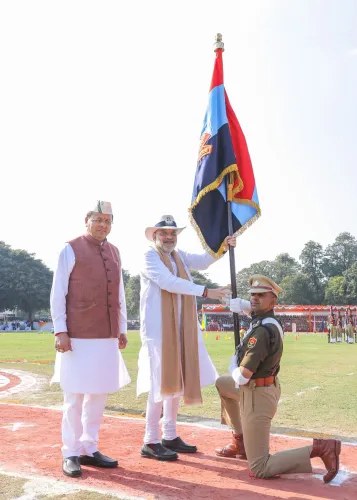
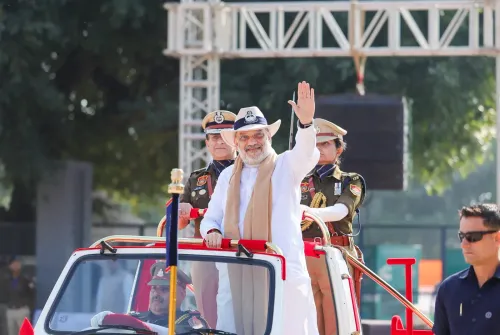
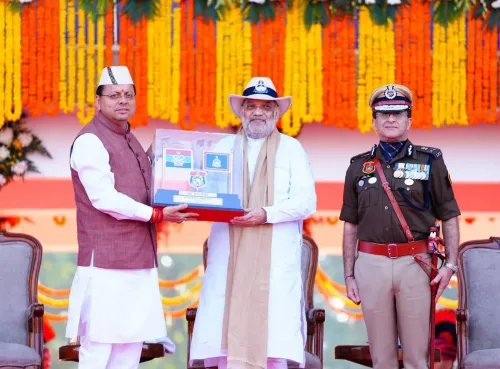
Duty, truth, valour — three words that define a force, and now a national salute to match. Union Home Minister Amit Shah on Friday, November 6, 2026, congratulated every personnel of the Uttarakhand Police on receiving the Rashtrapati Nishan Alankar (President's Colour), the highest honour the President of India can confer upon a police organisation.
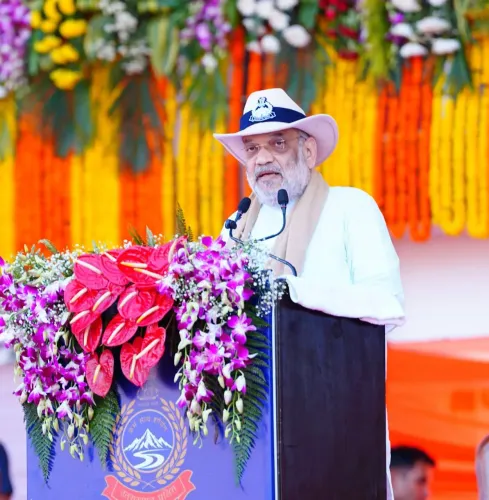
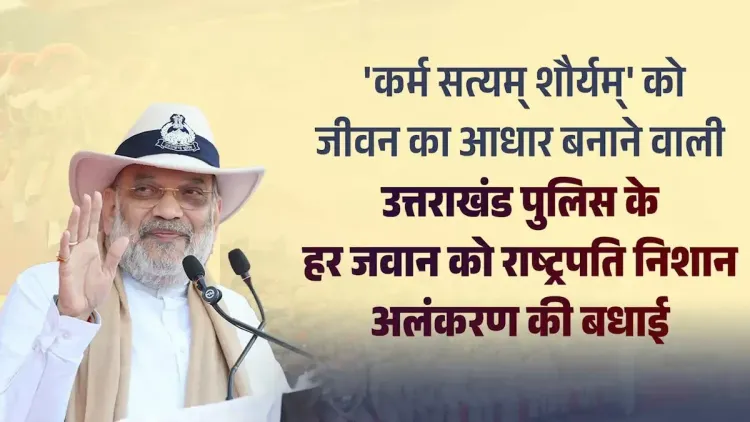
Shah's message, posted in Hindi on X, hailed the force's guiding motto — 'Karm Satyam Shauryam' (Duty, Truth, Valour) — calling it the very foundation of every officer's life. 'Congratulations to every jawan of Uttarakhand Police who has made Karm Satyam Shauryam the basis of their life,' he wrote, acknowledging the force collectively rather than singling out individual recipients.
What the Rashtrapati Nishan Alankar means for a police force
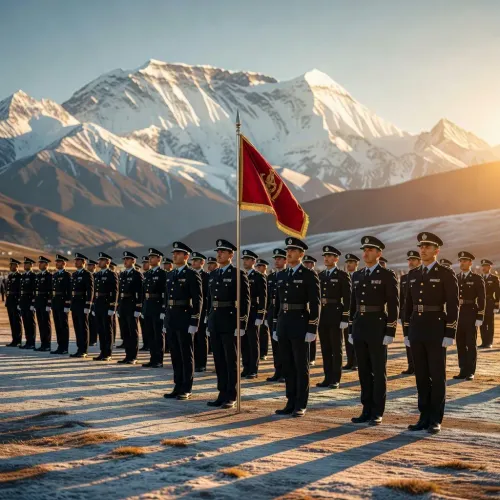
The President's Colour — formally the Rashtrapati Nishan Alankar — is not a medal pinned to a single chest. It is a ceremonial standard presented by the President of India to an entire police organisation in recognition of exceptional service to the nation over time. Only forces that have consistently upheld discipline, public service, and operational excellence earn the distinction. The colour is thereafter carried on parade, a permanent symbol of institutional honour.
For Uttarakhand Police, a force that guards some of India's most challenging terrain — from high-altitude border districts to the dense pilgrimage corridors of Char Dham — the recognition carries particular weight. The force has long operated in conditions that demand both tactical readiness and humanitarian sensitivity, often serving as first responder during floods, avalanches, and mass religious gatherings.
A routine tribute — and the larger Centre-state security signal it sends
Union Home Ministers routinely issue public congratulations when state forces receive central honours, reinforcing the Centre's visible role in recognising law-enforcement excellence. The gesture is ceremonial in form but institutional in function: it signals New Delhi's acknowledgement of a state force's contribution to national internal security architecture.
Shah, who as Home Minister oversees the country's entire internal security framework, has used such moments to spotlight forces operating in strategically sensitive states. Uttarakhand, sharing borders with China and Nepal, sits at a geopolitically significant node — making the health and morale of its police force a matter of national, not merely state, interest.
The official gazette notification listing individual awardees and their citations is expected to follow in the coming days — the full roll of honour that gives names and faces to the motto every officer is now sworn to carry a little taller.
Point of View
While ceremonial, underscores a deliberate Centre-state optics strategy: publicly saluting state police forces that operate in geopolitically sensitive corridors reinforces New Delhi's stakes in their morale and institutional standing. For Uttarakhand — a state bordering China and Nepal — the signal goes beyond protocol. The timing also reflects the Home Ministry's consistent practice of using national honours as soft-power moments, binding state forces closer to the central security narrative at a time when border-state policing carries heightened strategic value.
NationPress
6 Nov 2026
Frequently Asked Questions
What is the Rashtrapati Nishan Alankar?
The Rashtrapati Nishan Alankar, also known as the President's Colour, is the highest ceremonial honour the President of India can bestow upon a police organisation, recognising its sustained excellence, discipline, and service to the nation.
Why did Amit Shah congratulate Uttarakhand Police?
Union Home Minister Amit Shah congratulated Uttarakhand Police on being awarded the Rashtrapati Nishan Alankar, praising the force for embodying its motto 'Karm Satyam Shauryam' — Duty, Truth, Valour.
What does 'Karm Satyam Shauryam' mean?
'Karm Satyam Shauryam' is the official motto of Uttarakhand Police and translates from Sanskrit to English as Duty, Truth, and Valour.
Which state police force received the President's Colour in 2026?
Uttarakhand Police received the Rashtrapati Nishan Alankar (President's Colour) in 2026, as acknowledged by Union Home Minister Amit Shah in a public message on November 6, 2026.
What is the significance of Uttarakhand Police receiving this honour?
Uttarakhand Police guards strategically sensitive terrain bordering China and Nepal, making the President's Colour recognition significant not just ceremonially but as a national security acknowledgement of the force's consistent performance in difficult conditions.