Akhilesh Yadav warns SIR drive will strip 3 crore UP voters
Synopsis
Samajwadi Party president Akhilesh Yadav has accused the BJP of using the ongoing Special Intensive Revision of voter rolls to strip nearly 3 crore citizens — especially the poor, elderly, and PDA communities — of both voting rights and welfare entitlements across nine states.
Key Takeaways
Akhilesh Yadav alleges the BJP's Special Intensive Revision (SIR) could remove nearly 3 crore names from voter rolls, citing UP CM Yogi Adityanath's own figures of 1 crore 27 lakh majority-community voters as a base.
He argues that linking welfare schemes to voter-list status would deny benefits — including mid-day meals, Ayushman health cover, ration, and gas subsidies — to millions of unregistered or deleted citizens.
Senior citizens unable to provide biometric verification due to age-related issues with fingerprints or iris scans face automatic exclusion from government programmes.
The SP chief listed nine states — Maharashtra, Bihar, Bengal, Rajasthan, Madhya Pradesh, Odisha, Chhattisgarh, Gujarat, and Goa — where voter-list harassment complaints are rising.
Akhilesh connected the roll deletions to alleged Hindu disillusionment with the BJP over the Ram Temple controversy and a contentious preacher's remarks.
The post ends as a PDA mobilisation call, urging 'PDA Prahari' sentinels to register voters and build a 'PDA government' to defeat the BJP.
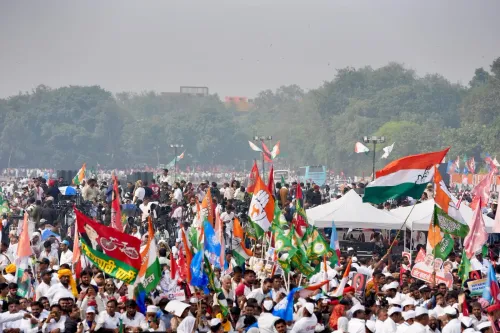
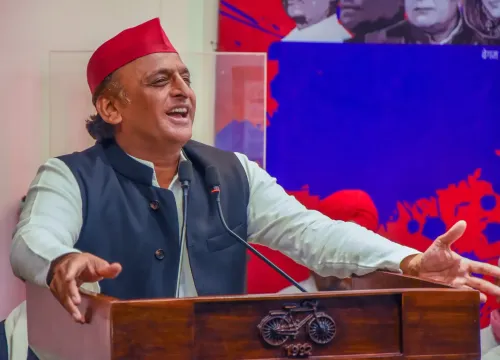
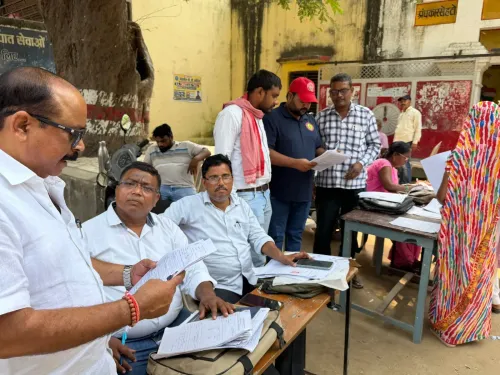
A voter-list revision exercise has become the latest flashpoint in Indian electoral politics — and Samajwadi Party president Akhilesh Yadav is charging that the BJP is using it not to clean rolls, but to surgically erase the citizenship rights of millions, particularly the poor, the elderly, and the communities his party calls the PDA (Pichhda, Dalit, Alpsankhyak).
The mid-day meal barb that cuts to the bone
Akhilesh opened with a pointed rhetorical question that sliced through the procedural language of electoral revision: if children cannot have a Voter ID because they are not adults, he asked, does that mean the BJP's new logic would also deny them mid-day meals under the school feeding programme — since they are not registered beneficiaries? The sarcasm is deliberate. The Mid-Day Meal Scheme, now implemented as PM POSHAN, has fed crores of schoolchildren since its national rollout in 1995 without demanding a voter card. His argument: once a government ties welfare entitlement to voter-list status, every ration card, every Ayushman card, every scholarship becomes hostage to a bureaucratic revision exercise.
The SP chief then went further, citing figures attributed to Uttar Pradesh Chief Minister Yogi Adityanath's own statements to argue that 1 crore 27 lakh majority-community voters in the state stand to lose their names from rolls. Add other deletions from the ongoing Special Intensive Revision (SIR), he claimed, and the total number of people stripped of rights could reach nearly 3 crore. 'SIR ke baad itne naam hatne ka samachar hai' — 'news of so many names being removed after SIR has emerged,' he said.
Senior citizens and biometrics: the access trap
One of the sharpest specific grievances in Akhilesh's post concerns elderly voters. He pointed out that very old senior citizens often cannot provide biometric authentication — fingerprints fade, and iris scans fail — meaning they would automatically be excluded from government welfare programmes that now demand Aadhaar-linked biometric verification. The implication: a process that looks administrative on paper functions as an exclusion mechanism in practice, quietly cutting off Ayushman Bharat health cover, ration access, gas subsidies, and pension benefits for the most vulnerable.
Nine states, one pattern — the geography of grievance
Akhilesh's post is notable for its geographic sweep. He listed Maharashtra, Bihar, Bengal, Rajasthan, Madhya Pradesh, Odisha, Chhattisgarh, Gujarat, and Goa as states where complaints about voter-list harassment are mounting — all either BJP-governed or states the party is contesting. Opposition parties have made similar allegations in earlier electoral cycles, particularly before assembly elections, claiming that aggressive roll-revision exercises disproportionately delete names in constituencies with high minority or opposition-leaning populations.
The SP chief also folded in a charged religious grievance: he alleged that Sanatan Hindu society has grown deeply alienated from the BJP following an alleged theft at the Ram Temple in Ayodhya and a controversial sermon by an unnamed preacher touching on Lord Ram and Lord Krishna. His charge is that the BJP, fearing this backlash, is now trying to remove those very aggrieved Hindu voters from the electoral rolls before the next elections. 'SIR nagarikata chhinne ka ek bahut bada shadyantra hai' — 'SIR is a massive conspiracy to strip citizenship,' he wrote.
PDA sentinels and the mobilisation call
The post is as much a political mobilisation document as it is a critique. Akhilesh called on every 'PDA Prahri' (PDA sentinel) — his party's grassroots outreach network — to circulate a video of an unnamed central minister and explain to the public how the BJP is trying to 'grab the benefits of government schemes.' The call is explicit: register every eligible voter, build a 'PDA government,' and vote the BJP out permanently. 'Ab BJP hamesha ke liye haregi' — 'Now the BJP will lose forever,' he declared in closing.
With the Election Commission of India conducting electoral roll revisions under the Representation of the People Act, the political stakes around who is listed — and who is quietly dropped — have rarely felt this sharp. If even a fraction of these deletion numbers hold up to scrutiny, the voter rolls of India's largest state could be the defining battleground long before a single ballot is cast.
Point of View
Land rights, and even school meals, he is calibrating a message aimed squarely at the PDA social coalition (backward castes, Dalits, minorities) that the SP is working to consolidate. The invocation of Sanatan Hindu alienation from the BJP — over the Ayodhya temple controversy — is a tactical play for upper-caste and OBC Hindu voters the party has historically struggled to hold. Whether the specific deletion numbers withstand scrutiny is a separate question from the political potency of the anxiety they stoke: in a state where welfare delivery is tied to biometric authentication, exclusion from the voter roll can feel, to ordinary citizens, like exclusion from the state itself.
NationPress
7 Nov 2026
Frequently Asked Questions
What is SIR and why is it controversial?
SIR stands for Special Intensive Revision, an exercise conducted by the Election Commission of India to update electoral rolls by adding eligible new voters and removing ineligible or deceased ones. It has become controversial because opposition parties allege that in BJP-governed states the process disproportionately deletes names of minority, Dalit, and opposition-leaning voters, effectively suppressing their political participation.
What did Akhilesh Yadav say about the mid-day meal scheme and voter IDs?
Akhilesh Yadav argued that if the BJP's logic requires a Voter ID to access government welfare benefits, then school children — who are not adults and have no Voter ID — would logically be denied mid-day meals under the PM POSHAN school feeding programme. He used this as a reductio ad absurdum to highlight what he called the absurdity and danger of linking citizenship rights to voter-roll status.
How many voters does Akhilesh Yadav claim could be removed from UP's rolls?
Akhilesh Yadav claimed, citing figures he attributed to UP Chief Minister Yogi Adityanath, that 1 crore 27 lakh majority-community voters in Uttar Pradesh stand to lose their names. He further alleged that adding other names being deleted under SIR could push the total to nearly 3 crore citizens across the state. These figures are as yet unverified.
Why does Akhilesh Yadav say elderly voters are at risk from the voter revision process?
Akhilesh Yadav pointed out that very elderly senior citizens often cannot provide biometric authentication — their fingerprints may be too faint and iris scans may fail — which could disqualify them from accessing Aadhaar-linked government welfare schemes. He argued this makes age-related biometric failure an inadvertent exclusion mechanism for some of the most vulnerable citizens.
What is PDA and who does Akhilesh Yadav mean by 'PDA Prahari'?
PDA stands for Pichhda (backward castes), Dalit, and Alpsankhyak (minorities) — the social coalition that the Samajwadi Party under Akhilesh Yadav has built its electoral strategy around. 'PDA Prahari' (PDA sentinels) refers to grassroots party workers and supporters tasked with voter outreach, registration drives, and political mobilisation within these communities.