Giriraj Singh champions Vocal for Local, calls for artisan empowerment
Synopsis
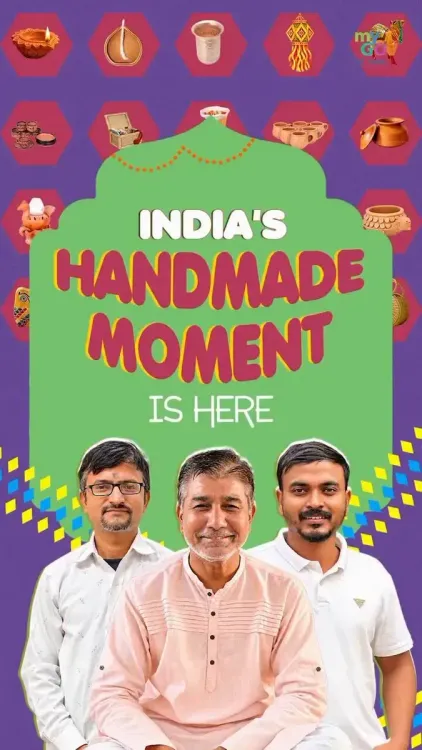
Union Textiles Minister Giriraj Singh amplified PM Modi's Vocal for Local call on 6 November 2026, urging Indians to choose indigenous products and support artisans — linking cultural heritage to economic empowerment under the Atmanirbhar Bharat framework.
Key Takeaways
Union Textiles Minister Giriraj Singh posted on 6 November 2026 backing the #VocalForLocal campaign on X.
He called on citizens to adopt indigenous products, advance local talent, and strengthen Atmanirbhar Bharat .
The Vocal for Local movement was formally launched by PM Narendra Modi in May 2020 as part of the Atmanirbhar Bharat Abhiyan .
Singh's ministry directly oversees handloom clusters, GI-tagged textile traditions, and artisan-linkage schemes.
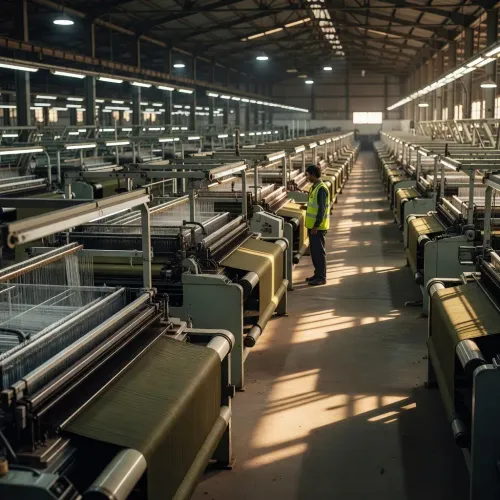
India's handloom sector employs millions of weavers across states including Bihar , Uttar Pradesh , West Bengal , and Tamil Nadu .
Expansion of GI registrations and public-procurement preferences for local goods remain key policy levers to watch.
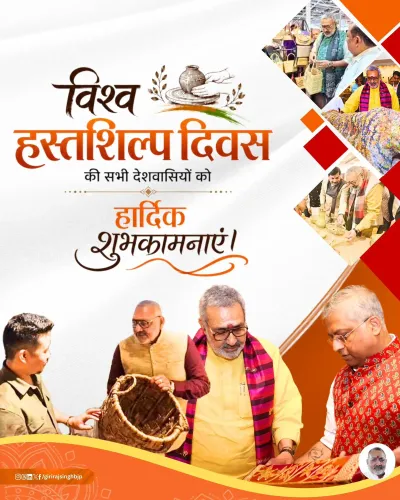
India's traditional crafts and indigenous goods carry the weight of centuries — and Union Textiles Minister Giriraj Singh wants every Indian household to feel that weight in their daily choices. On Friday, 6 November 2026, Singh took to X to amplify Prime Minister Narendra Modi's #VocalForLocal call, urging citizens to embrace homegrown products and champion the artisans who make them.
Posting in Hindi, Singh wrote: 'Bharat ki paramparik kala, shilp aur sthaniya utpad hamari samridh virasat aur saamarthya ke pratik hain' — 'India's traditional art, craft and local products are symbols of our rich heritage and capability.' He called on citizens to 'adopt indigenous products, advance local talent, and strengthen an self-reliant India.'
From Modi's 2020 call to a living campaign
The Vocal for Local movement traces its formal birth to May 2020, when PM Modi announced the Atmanirbhar Bharat Abhiyan — the Self-Reliant India Mission — in the wake of the pandemic-era push to reduce import dependence. The campaign asked citizens to actively prefer Indian-made goods, from daily consumables to handloom textiles and artisanal crafts. More than six years on, the messaging has become a steady drumbeat from the government's economic communications.
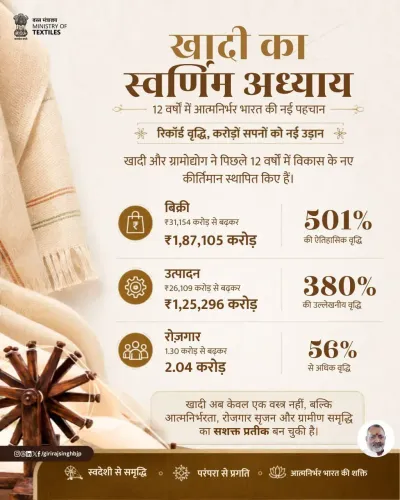
As the minister directly responsible for handloom, handicrafts and the broader textile sector, Singh sits at the operational centre of this push. The Ministry of Textiles oversees programmes supporting handloom clusters, Geographical Indication-tagged fabric traditions, and schemes that connect rural artisans to modern markets — giving his endorsement of Vocal for Local a direct policy dimension, not merely rhetorical weight.
Why artisans and small enterprises are the real audience
The post explicitly names two beneficiaries: artisans and small enterprises. These are the constituencies most directly affected when consumer choices tilt toward imported or large-scale manufactured goods. India's handloom sector alone employs millions of weavers — many of them in states like Bihar, Uttar Pradesh, West Bengal, and Tamil Nadu — for whom a sustained shift in domestic demand can mean the difference between a thriving craft and a dying one.
Singh's framing links cultural pride directly to economic consequence: heritage is not museum-worthy antiquity, it is active livelihood. The minister's own constituency of Begusarai, Bihar sits within a region where traditional crafts remain a significant source of household income, adding a personal dimension to the advocacy.
What signals the next chapter of Vocal for Local
The broadening of GI-tag registrations for Indian textiles and crafts, the expansion of handloom cluster schemes, and the government's stated preference for locally sourced goods in public procurement are the concrete levers that will determine whether Vocal for Local moves from slogan to structural shift. For the textile ministry, the pipeline includes deepening market linkages for artisan clusters and promoting heritage fabrics on export platforms — turning domestic pride into global demand.
India's craft economy has the heritage, the talent, and now the political backing. Whether the marketplace follows the minister's call is the question every weaver and potter will answer one order at a time.
Point of View
His endorsement carries institutional weight: it signals that artisan-focused procurement and market-linkage schemes remain priorities well into the government's current term. The consistent amplification of Atmanirbhar Bharat messaging by cabinet ministers also reflects a deliberate communications strategy to maintain public ownership of economic nationalism as an electoral and governance identity. The real test, analysts would note, is whether downstream policy instruments — GI expansion, cluster funding, e-commerce integration for weavers — are keeping pace with the ministerial rhetoric.
NationPress
7 Nov 2026
Frequently Asked Questions
What is the Vocal for Local campaign in India?
Vocal for Local is a campaign launched by Prime Minister Narendra Modi in May 2020 as part of the Atmanirbhar Bharat Abhiyan, urging citizens to buy and promote Indian-made goods to support local artisans and reduce import dependence.
What did Giriraj Singh say about Vocal for Local?
On 6 November 2026, Union Textiles Minister Giriraj Singh posted on X calling India's traditional art and crafts symbols of the country's heritage, and urged citizens to adopt indigenous products, advance local talent, and strengthen self-reliant India.
What is Atmanirbhar Bharat Abhiyan?
Atmanirbhar Bharat Abhiyan, or the Self-Reliant India Mission, was announced by PM Narendra Modi in May 2020 to boost domestic manufacturing, support traditional sectors, and reduce India's dependence on imports across industries including textiles.
What schemes does the Textiles Ministry run for artisans?
The Union Ministry of Textiles oversees programmes supporting handloom clusters, Geographical Indication-tagged fabric traditions, and artisan market-linkage schemes aimed at connecting rural weavers and craftspeople to larger domestic and export markets.
Which states have large handloom sectors in India?
India's major handloom-producing states include Bihar, Uttar Pradesh, West Bengal, and Tamil Nadu, where millions of weavers depend on sustained domestic demand for traditional textiles as a primary source of household income.