Giriraj Singh hails Khadi as symbol of Atmanirbhar Bharat
Synopsis
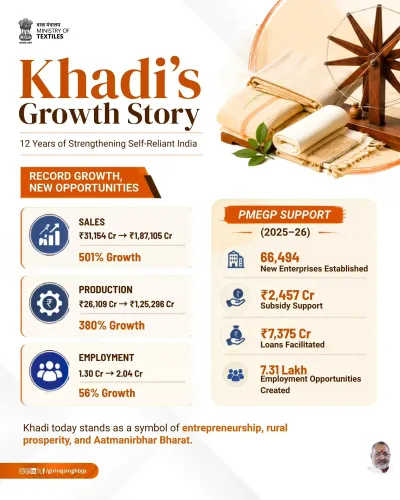
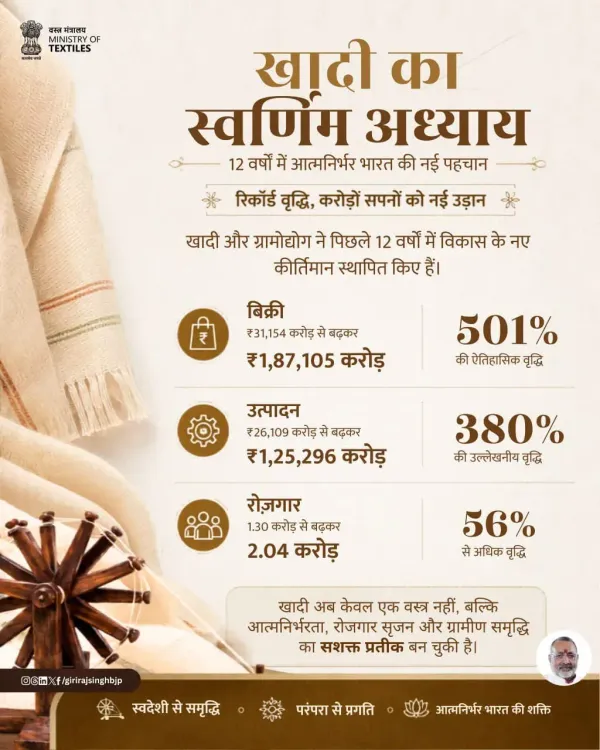
Union Textiles Minister Giriraj Singh on 28 May 2026 celebrated Khadi's success as a symbol of crores of artisans' hard work and India's Atmanirbhar Bharat resolve, calling it an inspiring journey from Swadeshi to prosperity.
Key Takeaways
Union Textiles Minister Giriraj Singh posted on 28 May 2026 framing Khadi's success as a national achievement tied to artisan labour and self-reliance.
He described Khadi as an 'inspiring journey from Swadeshi to prosperity,' invoking both historical and contemporary policy themes.
The Khadi and Village Industries Commission (KVIC) , established in 1957 , remains the statutory body driving Khadi production and rural artisan support.
The Atmanirbhar Bharat package launched in May 2020 explicitly included promotion of indigenous products such as Khadi under the Vocal for Local banner.
Government marketing efforts since 2016 have expanded Khadi's reach into urban retail and e-commerce channels, broadening its commercial base.
Upcoming KVIC annual data and potential Union Budget allocations will be key indicators of how Khadi policy translates into measurable artisan welfare outcomes.
Union Textiles Minister Giriraj Singh on Thursday, 28 May 2026, took to X to celebrate the success of Khadi, framing it not merely as a textile product but as a testament to the toil of crores of artisans and India's resolve toward self-reliance under the Atmanirbhar Bharat mission.
In his post, the minister wrote: 'Khadi ki safalta kewal ek utpad ki nahi, balki croro karigarom ke parishram aur Atmanirbhar Bharat ke sankalp ki safalta hai. Yeh swadeshi se samridhi ki prerak yatra hai.' ['The success of Khadi is not merely the success of a product, but of the hard work of crores of artisans and the resolve of a self-reliant India. This is an inspiring journey from Swadeshi to prosperity.']
Context
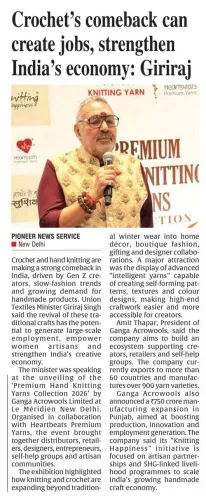
Khadi, the hand-spun and hand-woven cloth that became a defining symbol of India's independence movement under Mahatma Gandhi, has in recent years been repositioned as a commercial and cultural flagship under successive central governments. Giriraj Singh, who holds the Textiles portfolio and represents Begusarai in Bihar as a Lok Sabha MP, has been among the most vocal advocates for linking traditional crafts to modern economic frameworks.
The minister's remarks align with a broader government push to use Khadi as an emblem of the Vocal for Local and Swadeshi movements, both of which gained renewed political salience after 2014.
Policy Backdrop
The Khadi and Village Industries Commission (KVIC), a statutory body established by Parliament in 1957, remains the nodal agency for promoting Khadi production and supporting rural artisans across India. Since 2016, KVIC has expanded its retail and fashion tie-ups, bringing Khadi into mainstream urban markets and e-commerce platforms.
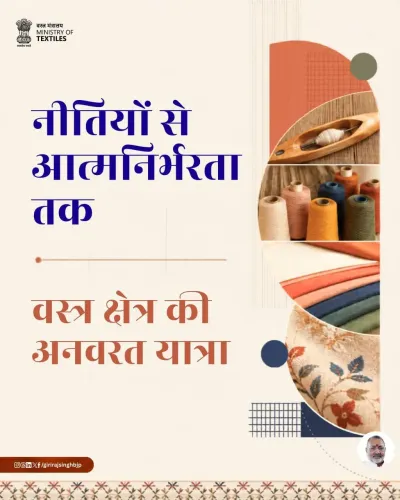
The Atmanirbhar Bharat package, announced in May 2020, explicitly incorporated the promotion of indigenous products including Khadi, connecting traditional village industries to a national self-sufficiency agenda. Skill development programmes and updated production targets have since been layered onto this framework to modernise artisan livelihoods.
Post-2014 policy emphasis has combined the historical symbolism of Swadeshi with updated production targets and export channel development, positioning Khadi not as a relic but as a growth sector within India's broader textiles economy.
Stakeholders and Impact
The primary beneficiaries of sustained Khadi promotion are the country's rural weavers and artisans — a constituency that spans multiple states and includes a significant proportion of women workers. Consistent government patronage and marketing support have helped sustain livelihoods in villages where Khadi production remains a primary source of income.
Urban consumers, fashion designers, and export buyers have also become increasingly relevant stakeholders as Khadi's brand equity has grown. The intersection of heritage craft and contemporary retail has opened new demand channels that reinforce the minister's framing of Khadi as a vehicle for broad-based prosperity.
What's Next
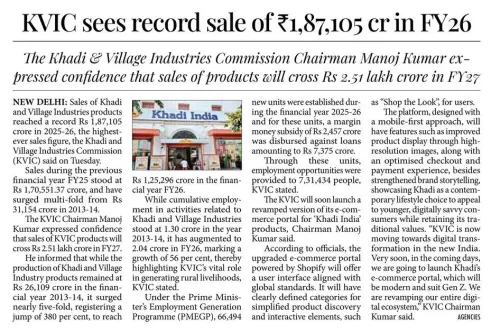
Analysts and industry watchers will look to the annual KVIC production and sales data for a quantitative measure of Khadi's commercial trajectory. Any revision to the national Textile Policy or new artisan welfare allocations in the forthcoming Union Budget would give further policy substance to the minister's stated vision.
With the government continuing to position traditional crafts within the Atmanirbhar Bharat narrative, Khadi's role as both an economic instrument and a cultural statement is likely to remain a central theme of India's textiles policy discourse.
Point of View
The minister shifts credit toward a moral-economic narrative rather than a bureaucratic one. This framing is consistent with a broader pattern in which the ruling dispensation uses Swadeshi symbolism to reinforce domestic demand and rural employment arguments simultaneously. The post signals that Khadi will remain a high-visibility policy symbol ahead of any forthcoming budget or textile-sector announcements.
NationPress
14 Oct 2026
Frequently Asked Questions
What did Giriraj Singh say about Khadi on 28 May 2026?
Giriraj Singh posted on X that Khadi's success belongs not just to a product but to the hard work of crores of artisans and India's Atmanirbhar Bharat resolve, calling it an inspiring journey from Swadeshi to prosperity.
What is KVIC and what role does it play in Khadi promotion?
KVIC, or the Khadi and Village Industries Commission, is a statutory body established by Parliament in 1957 to organise Khadi production and support rural artisans; it remains the nodal agency for all government-backed Khadi initiatives.
How is Khadi connected to Atmanirbhar Bharat?
The Atmanirbhar Bharat package announced in May 2020 explicitly included promotion of indigenous products like Khadi under the Vocal for Local campaign, linking traditional village industries to India's self-sufficiency agenda.
Who benefits most from government Khadi promotion policies?
Rural weavers, artisans — including a significant share of women workers — across multiple states are the primary beneficiaries, while urban consumers and export buyers have become growing stakeholders as Khadi's commercial profile has expanded.
What should one watch for next in India's Khadi policy?
The release of annual KVIC production and sales data and any new artisan welfare allocations or Textile Policy revisions in the forthcoming Union Budget will be the clearest indicators of policy direction.