CM Hemant Soren Showcases Jharkhand's 6 GI Products at BharatTex2026
Synopsis
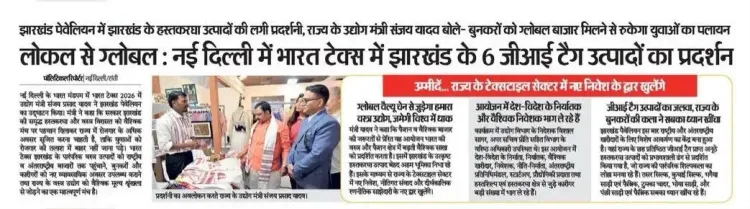
The Jharkhand CMO announced on 15 July 2026 that six GI-tagged products — including Tasar-Kuchai silk, Sohrai art, and Dumka Chadar — are being showcased at BharatTex2026 at Bharat Mandapam in New Delhi, crediting CM Hemant Soren's leadership for bringing the state's weaving heritage to a global stage.
Key Takeaways
Six GI-tagged products from Jharkhand are being displayed at BharatTex2026 at Bharat Mandapam, New Delhi.
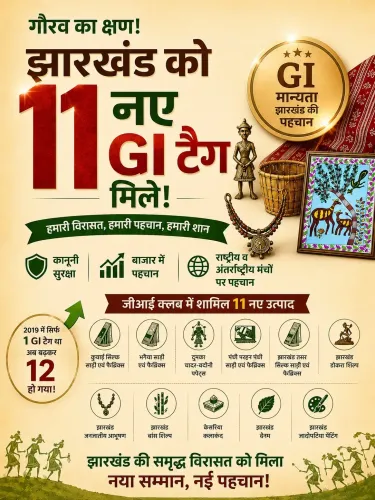
Products on display include Tasar-Kuchai silk, Sohrai art, and Dumka Chadar , representing the state's tribal textile and folk art traditions.
GI tags are granted under the Geographical Indications of Goods (Registration and Protection) Act, 1999 , certifying regional origin and quality.
The initiative is aimed at connecting tribal weavers and handloom artisans with domestic and international buyers.
The announcement was credited to the 'visionary leadership' of Chief Minister Hemant Soren of the JMM.
The Chief Minister's Office of Jharkhand announced on Wednesday, 15 July 2026 that six Geographical Indication (GI) tagged products from the state are being showcased at BharatTex2026, a national textile exhibition held at Bharat Mandapam, New Delhi, marking a significant step in bringing the state's weaving heritage to a global audience.
Context
The CMO's post, written in Hindi, celebrated the occasion as an honour to the bunakar bhai-behenon (weaver brothers and sisters), noting that products ranging from Tasar-Kuchai silk to Sohrai art, Dumka Chadar, and other crafts are now reaching a global platform. The post attributed this achievement to the 'visionary leadership' of Chief Minister Hemant Soren of the Jharkhand Mukti Morcha (JMM).
BharatTex2026 is a major national-level textile exhibition designed to connect regional producers with domestic and international buyers, with Bharat Mandapam serving as the host venue — one of India's largest convention and exhibition centres.
Policy Backdrop
The six products being displayed carry Geographical Indication tags, a form of intellectual property protection granted under the Geographical Indications of Goods (Registration and Protection) Act, 1999. GI tags certify that a product originates from a specific region and possesses qualities or a reputation attributable to that origin.
Jharkhand, an eastern Indian state with a significant tribal population, has a rich tradition of handloom weaving and folk art. Tasar silk, produced from silkworms found in the state's forests, and Sohrai, a traditional tribal art form practised largely in the Hazaribagh region, are among the most recognised cultural products associated with the state. The Dumka Chadar is another textile linked to the Santhal Parganas region.
The central government and state governments across India have increasingly leveraged GI registrations and large trade exhibitions to promote regional crafts, aiming to expand export potential while preserving traditional knowledge held by artisan communities.
Stakeholders and Impact
The primary beneficiaries of this platform are tribal weavers and handloom artisans from Jharkhand, many of whom belong to indigenous communities for whom these crafts represent both livelihood and cultural identity. Exposure at a national exhibition like BharatTex2026 offers direct access to larger markets and potential bulk buyers that would otherwise be difficult to reach.
Eastern and central Indian states have followed a broader pattern of highlighting tribal-linked products at national platforms, and Jharkhand's participation fits within this trend. GI protection also provides artisans with legal recourse against imitation products, helping sustain the economic value of their work.
What's Next
The key measure of success from BharatTex2026 will be any buyer commitments or export orders that emerge for Jharkhand's GI-tagged products following the exhibition. Observers will also watch whether the state files additional GI applications for other textile and craft categories, building on the momentum generated by this showcase. The government's ability to convert exhibition visibility into sustained market linkages for weavers will determine the longer-term impact of this initiative.
Point of View
The CMO is reinforcing a political identity built around tribal welfare and indigenous heritage — a consistent theme for the JMM government. The choice of Bharat Mandapam, the central government's flagship convention venue, also signals a willingness to work within national frameworks to advance state interests. Whether this translates into measurable market gains for weavers, rather than symbolic visibility alone, will be the real test of the initiative.
NationPress
15 Jul 2026
Frequently Asked Questions
What is BharatTex2026 and where is it held?
BharatTex2026 is a national-level textile exhibition held at Bharat Mandapam in New Delhi , designed to showcase Indian textile products to domestic and international buyers.
Which Jharkhand products are being shown at BharatTex2026?
Jharkhand is displaying six GI-tagged products including Tasar-Kuchai silk, Sohrai art, and Dumka Chadar , among others, representing the state's tribal weaving and folk art traditions.
What is a GI tag and why does it matter for Jharkhand artisans?
A Geographical Indication (GI) tag, granted under the GI Act of 1999 , certifies that a product originates from a specific region and has qualities tied to that origin. For Jharkhand's weavers, it provides legal protection against imitation and helps establish premium market value.
What is Tasar silk and where is it produced in Jharkhand?
Tasar silk is a variety of wild silk produced from silkworms found in the forests of Jharkhand. It is one of the state's most recognised traditional products and carries a GI tag.