Goa CM Sawant Backs Youth Skilling on World Youth Skills Day
Synopsis
Goa Chief Minister Pramod Sawant marked World Youth Skills Day on 15 July 2026 by highlighting PM Kaushal Vikas Yojana, the Skill India Mission and NEP 2020 as critical tools to build a future-ready workforce and advance India's Viksit Bharat vision.
Key Takeaways
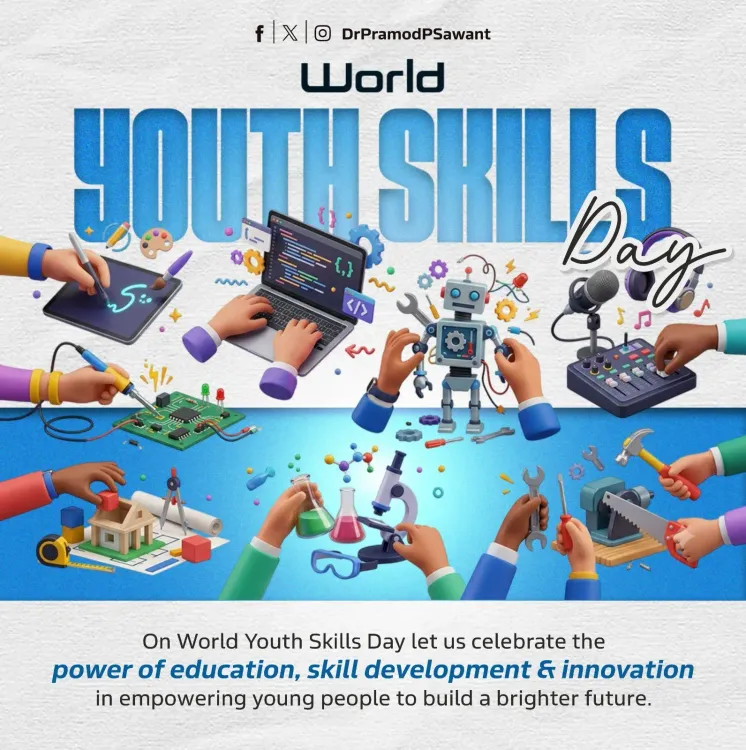
Goa CM Pramod Sawant posted on World Youth Skills Day, 15 July 2026 , calling for continued investment in youth skill development.
He cited PM Kaushal Vikas Yojana , the Skill India Mission and the National Education Policy 2020 as flagship enablers of youth empowerment.
The Skill India Mission and PMKVY were launched in 2015 and have run through multiple phases targeting over 400 million trainees.
NEP 2020 mandates vocational education from Class 6 onwards, integrating skill modules into mainstream curricula.
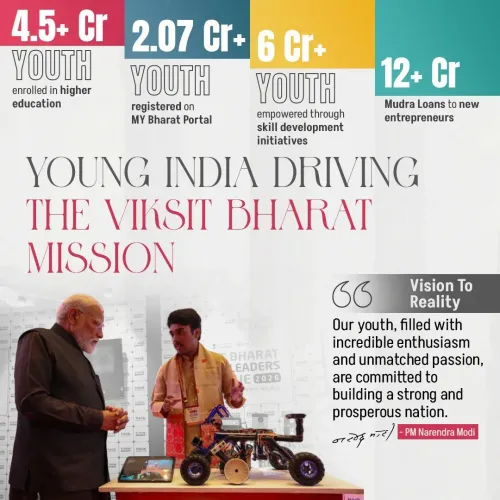
Sawant linked these initiatives to the Viksit Bharat goal of making India a developed nation by 2047 .
State-level NEP implementation reports and fresh PMKVY targets in the next Union Budget will be key milestones to watch.
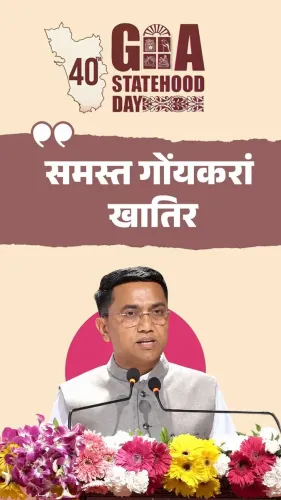
Goa Chief Minister Pramod Sawant on Wednesday, 15 July 2026 called for sustained investment in youth skill development, marking World Youth Skills Day with a post on X that highlighted central government skilling initiatives as essential to India's economic growth and nation-building goals.
Context
World Youth Skills Day, observed annually on 15 July, was established by the United Nations to recognise the importance of equipping young people with skills for employment and entrepreneurship. Chief Minister Sawant used the occasion to underscore the role of education and innovation in shaping India's demographic future, stating that 'equipping our youth with industry-relevant skills is essential for driving economic growth and nation-building.'
His post specifically cited three pillars: the Ministry of Skill Development and Entrepreneurship's Skill India Mission, the PM Kaushal Vikas Yojana (PMKVY), and the National Education Policy 2020, framing them as tools enabling young people to become 'future-ready and seize emerging opportunities.'
Policy Backdrop
The Skill India Mission and PM Kaushal Vikas Yojana were launched in 2015 to scale short-term vocational training across sectors, with multiple implementation phases running through 2023. The programme aimed to train over 400 million people by aligning course curricula with industry demand.
The National Education Policy 2020, approved by the Union Cabinet in July 2020, mandated the integration of vocational education from Class 6 onwards and encouraged multidisciplinary learning across school and higher education. Its rollout has accelerated the embedding of skill modules into mainstream academic curricula, with state-level implementation reports due in the 2025–26 cycle.
Since 2014, the central government has treated skill development as a core lever to harness India's demographic dividend and reduce dependence on imported skilled labour. Successive Union Budgets have allocated funds to state skill development missions, which states including Goa access through centrally sponsored frameworks.
Stakeholders and Impact
The primary beneficiaries of these programmes are India's young workforce, particularly those seeking industry-aligned credentials outside traditional degree pathways. State education departments and private training partners serve as delivery channels, translating central policy into local certification and placement outcomes.
For a small state like Goa, participation in national skilling frameworks carries particular significance given the state's economy, which relies heavily on tourism and services — sectors that demand a trained, adaptable workforce. CM Sawant's endorsement of central schemes signals continued state-level alignment with the Viksit Bharat vision, the government's stated goal of transforming India into a developed nation by 2047.
What's Next
Fresh PMKVY targets and skilling allocations are expected to be announced in the next Union Budget, which will set the direction for the programme's next phase. State-level NEP 2020 implementation reports, due in the 2025–26 cycle, will provide a clearer picture of how vocational integration is progressing across school and college systems.
As India's youth population remains one of the largest in the world, the convergence of NEP reforms, PMKVY outreach, and Skill India's infrastructure will be closely watched as a measure of the country's readiness to convert its demographic advantage into sustained economic output.
Point of View
Particularly around the Viksit Bharat 2047 arc. For Goa, a services-driven economy, visible endorsement of central skilling schemes also serves a local political purpose: signalling that the state government is actively channelling national resources toward youth employment. The real test, however, will come with the publication of state NEP implementation data and the next PMKVY phase targets, which will move the conversation from aspiration to accountability.
NationPress
15 Jul 2026
Frequently Asked Questions
What is World Youth Skills Day and why does India observe it?
World Youth Skills Day is observed every year on 15 July , established by the United Nations to highlight the importance of skilling youth for employment and entrepreneurship. India marks the day by showcasing national programmes like the Skill India Mission and PM Kaushal Vikas Yojana.
What is PM Kaushal Vikas Yojana (PMKVY)?
PM Kaushal Vikas Yojana is a flagship central scheme launched in 2015 to provide short-term, industry-aligned skill training to Indian youth. It has run through multiple phases and aims to make trainees employment-ready across sectors.
How does the National Education Policy 2020 support skill development?
The National Education Policy 2020 , approved in July 2020 , mandates vocational education from Class 6 onwards and integrates skill modules into higher education curricula, aligning academic learning with industry and employment needs.
What is the Viksit Bharat vision that Pramod Sawant referred to?
Viksit Bharat is the Indian government's stated goal of transforming India into a fully developed nation by 2047 , the centenary of independence. It has been a recurring theme in policy statements since 2023 , linking economic growth, education and infrastructure.
What is Goa's role in national skill development programmes?
Goa participates in centrally sponsored skilling frameworks through its state skill development mission, receiving central funding and standards from the Ministry of Skill Development and Entrepreneurship to deliver training aligned with national targets.