CM Rekha Gupta calls handloom purchases a salute to India's artisans
Synopsis
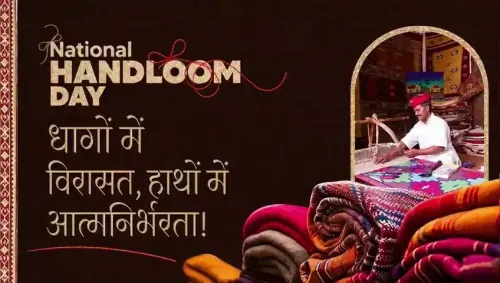
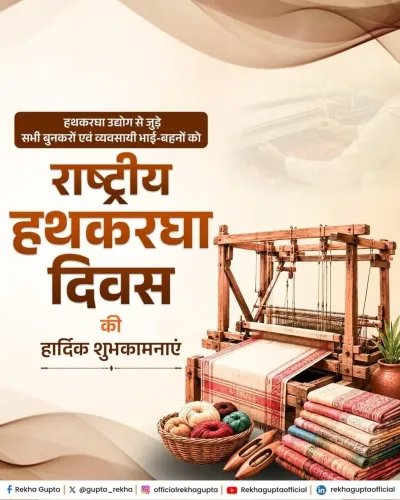
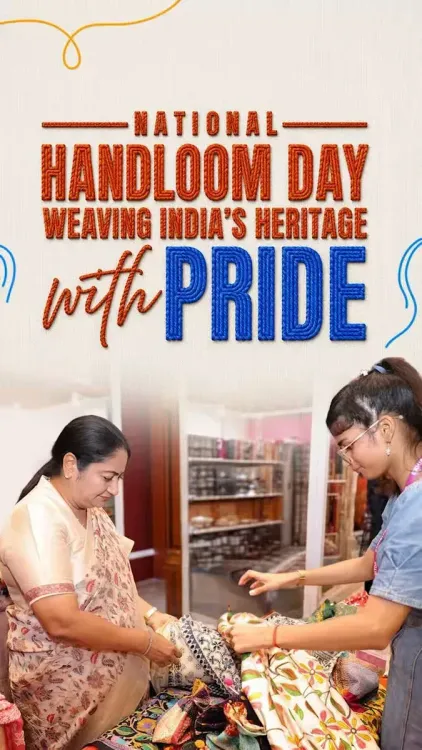
On National Handloom Day, 7 August 2026, Delhi CM Rekha Gupta called on Indians to treat every handloom purchase as a tribute to the country's weavers, linking the appeal to PM Modi's Vocal for Local and Aatmanirbhar Bharat campaigns.
Key Takeaways
Delhi CM Rekha Gupta posted a National Handloom Day message on 7 August 2026 , urging conscious support for Indian weavers.
National Handloom Day is observed every 7 August to commemorate the 1905 Swadeshi movement ; the first official observance was held in 2015 .
Gupta anchored her appeal in PM Modi's Vocal for Local vision and the Aatmanirbhar Bharat Abhiyan , launched in May 2020 .
The post reinforces a pattern of BJP-led state governments using national craft days to amplify central self-reliance campaigns at the grassroots level.
India's handloom sector supports millions of weavers across clusters including Varanasi, Pochampally, Chanderi, and Sualkuchi .
Every thread tells a story — and on National Handloom Day, 7 August 2026, Delhi Chief Minister Rekha Gupta asked Indians to let their next fabric purchase do the talking. In a post on X, Gupta invoked Prime Minister Narendra Modi's Vocal for Local vision, urging citizens to strengthen Swadeshi and 'weave the future of an Aatmanirbhar Bharat.'
A day rooted in the Swadeshi spirit of 1905
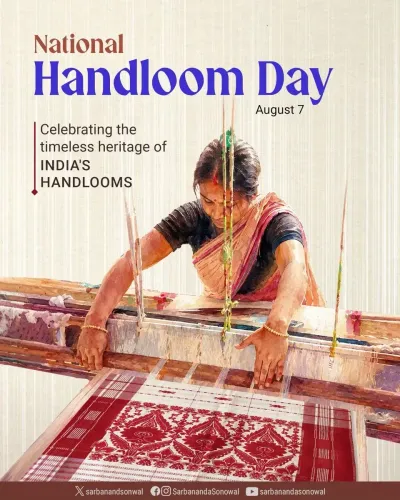
National Handloom Day falls every year on 7 August — the date chosen deliberately to honour the Swadeshi movement launched in 1905, when Indians pledged to buy homespun cloth as an act of resistance. The first official observance was held in 2015, reviving that symbolism for a new generation of consumers and weavers. For India's handloom artisans — among the largest craft communities in the world — the day is both recognition and reminder.
Vocal for Local and Aatmanirbhar Bharat: the policy thread running through
Gupta's message draws directly from two interlocking national campaigns. Aatmanirbhar Bharat Abhiyan, announced by PM Modi in May 2020, set self-reliance as a defining economic goal. Vocal for Local became its cultural arm — a call to consciously choose Indian-made products over imports. Since then, central and state leaders across BJP-governed territories have regularly amplified the message on sector-specific national days, turning ceremonial observances into grassroots advocacy moments. Handloom, with its deep rural employment base and export potential, fits squarely at the centre of that push.
What a purchase can mean for a weaver
Behind the hashtag is a livelihood. India's handloom sector supports millions of weavers and allied workers, many of them in rural clusters across states like Varanasi, Pochampally, Chanderi, and Sualkuchi. Each consumer choice — a saree, a stole, a fabric length — feeds directly into that ecosystem in a way that machine-made alternatives do not. CM Gupta's framing of a purchase as a 'salute' reframes consumption as a civic act, not just a transaction.
As state governments gear up for the next round of textile sector budget discussions, calls like this often precede concrete handloom procurement drives or cluster development announcements. The rhetoric and the policy tend to travel together.
Point of View
Such high-visibility endorsements from state chief ministers can translate into procurement policy and cluster funding. The real test is whether the rhetoric generates measurable uptick in handloom sales or institutional buying — or remains a well-intentioned annual ritual.
NationPress
21 Sept 2026
Frequently Asked Questions
Why is National Handloom Day celebrated on 7 August?
7 August was chosen to commemorate the launch of the Swadeshi movement in 1905 , when Indians pledged to use homespun cloth as a form of resistance against colonial rule. The first National Handloom Day was officially observed in 2015 .
What is the Vocal for Local initiative?
Vocal for Local is a campaign promoted by PM Narendra Modi that encourages Indians to consciously purchase domestically made products over imports. It became a core element of the Aatmanirbhar Bharat Abhiyan announced in May 2020 .
What did Delhi CM Rekha Gupta say on National Handloom Day 2026?
Delhi CM Rekha Gupta posted on X calling on Indians to let every handloom purchase become 'a salute to India's artisans,' linking the appeal to PM Modi's Vocal for Local vision and the goal of an Aatmanirbhar Bharat .
What is Aatmanirbhar Bharat?
Aatmanirbhar Bharat Abhiyan — meaning 'Self-Reliant India Mission' — was launched by PM Narendra Modi in May 2020 as a comprehensive economic programme aimed at boosting domestic production and reducing India's dependence on imports.
How does buying handloom products help Indian weavers?
India's handloom sector supports millions of weavers and allied workers in rural clusters across states. Direct consumer purchases — of sarees, stoles, or fabric — feed income straight into these communities in a way that machine-made alternatives do not.