PM Modi Outlines Four Pillars of Bilateral Cooperation

Synopsis
Prime Minister Narendra Modi on June 16, 2026, outlined four pillars of a high-level bilateral meeting: trade and economy, energy, technology, and people-to-people ties, reflecting India's multi-alignment foreign policy approach.
Key Takeaways
Prime Minister Narendra Modi disclosed the agenda of a bilateral meeting on June 16, 2026 , via a post on X.
Discussions were structured around four pillars : trade and economy, energy, technology, and people-to-people ties.
The four-pillar framework is a recurring template in India's high-level diplomatic engagements since 2014 .
Stakeholders include business communities, energy importers, technology firms, and diaspora networks.
Follow-up joint statements and ministerial-level working groups are expected to detail specific commitments under each pillar.
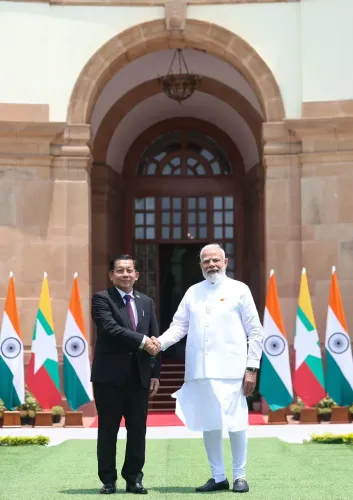
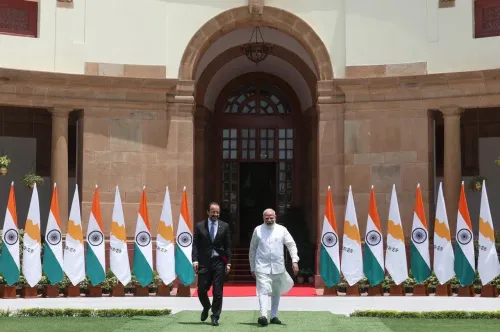
Prime Minister Narendra Modi on Tuesday, June 16, 2026, outlined the framework of a high-level bilateral meeting, stating that discussions covered extensive cooperation across four key pillars: trade and economy, energy, technology, and people-to-people ties.
Context
In his post on X, Prime Minister Modi described the scope of talks, writing: 'We discussed extensive cooperation in the following pillars: Trade and economy. Energy. Technology. People-to-people ties.' The structured framing signals a comprehensive strategic engagement rather than a single-issue dialogue.
The four-pillar architecture is a recurring template in India's high-level diplomatic engagements, reflecting the government's multi-alignment foreign policy doctrine that has been a hallmark of New Delhi's outreach since 2014.
Policy Backdrop
Since Prime Minister Modi first took office in 2014, India has consistently structured its bilateral partnerships around diversified economic and strategic interests. Trade and economy discussions typically encompass market access, investment flows, and supply-chain integration, while energy cooperation has grown in strategic importance as India seeks to secure stable supplies and advance its clean-energy transition.
Technology collaboration has become an increasingly prominent pillar, spanning semiconductors, digital infrastructure, space, and defence manufacturing. People-to-people ties — covering diaspora engagement, educational exchanges, tourism, and cultural diplomacy — round out the framework, providing a societal foundation for government-level agreements.
This four-pronged approach has appeared in strategic partnerships across the Indo-Pacific, the Middle East, and Europe, underscoring India's intent to build resilient, multi-directional relationships rather than rely on any single alliance.
Stakeholders and Impact
Business communities on both sides stand to benefit from any trade and investment commitments that emerge from the talks. Energy importers and infrastructure developers will watch closely for announcements on supply agreements, joint ventures, or financing frameworks linked to the energy pillar.
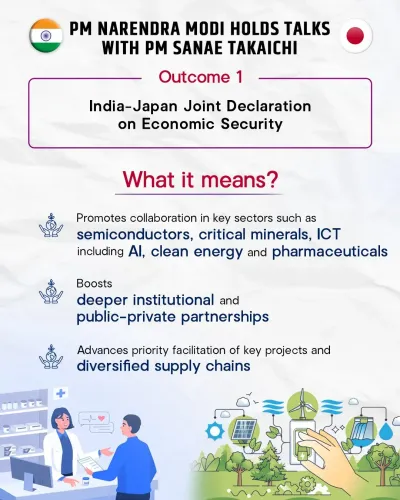
Technology firms — particularly those operating in semiconductors, artificial intelligence, and clean-energy solutions — are key stakeholders in the technology cooperation track. Diaspora networks and academic institutions are the primary constituencies for people-to-people initiatives, which can translate into visa facilitation, scholarship programmes, and cultural exchange agreements.
What's Next
Follow-up joint statements and the possible formation of ministerial-level working groups are expected to provide granular detail on commitments made under each pillar. Specific investment figures, technology transfer arrangements, or energy supply terms, if announced, will define the substantive outcome of this engagement.
The structured pillars outlined by Prime Minister Modi suggest that implementation mechanisms — rather than broad declarations — will be the benchmark against which this bilateral meeting is ultimately assessed. Observers will track whether concrete deliverables emerge in the weeks and months ahead.
Point of View
Energy, technology, people-to-people — has become the standard scaffolding of Indian diplomacy under Prime Minister Modi, signalling continuity in a multi-alignment doctrine that deliberately avoids exclusive strategic dependence. By publicly naming each pillar, Modi signals to domestic and international audiences that the engagement is comprehensive and structured, not merely ceremonial. The absence of a named counterpart in the post is notable; it may reflect protocol, sequencing of announcements, or the sensitivity of the partnership. The real test will be whether the pillars yield binding deliverables — investment figures, technology transfer terms, or energy agreements — rather than remaining aspirational headlines.
NationPress
15 Sept 2026
Frequently Asked Questions
What are the four pillars PM Modi discussed in his bilateral meeting?
Prime Minister Modi stated that discussions covered four pillars: trade and economy, energy, technology, and people-to-people ties.
When did PM Modi post about the bilateral meeting?
Prime Minister Modi posted about the bilateral meeting on Tuesday, June 16, 2026 , on the social media platform X.
What is India's multi-alignment foreign policy?
India's multi-alignment foreign policy, pursued since 2014 , seeks diversified economic and strategic partnerships across the Indo-Pacific , the Middle East , and Europe without exclusive alignment to any single power or bloc.
Why does India emphasise people-to-people ties in bilateral meetings?
People-to-people ties — covering diaspora engagement, educational exchanges, and cultural diplomacy — provide a societal foundation for government-level agreements and help sustain partnerships beyond political cycles.
What happens after a bilateral summit like the one PM Modi described?
Typically, follow-up joint statements are issued and ministerial-level working groups are formed to translate summit commitments into specific investment, energy, or technology agreements over the coming months.