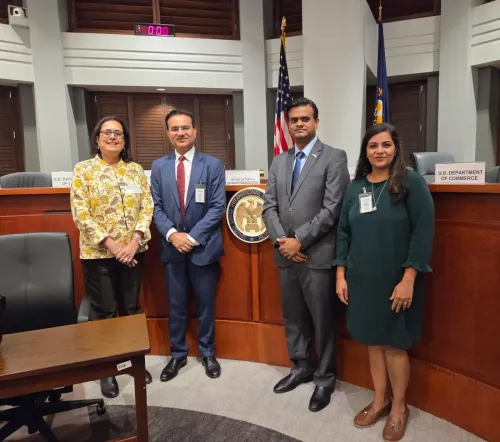
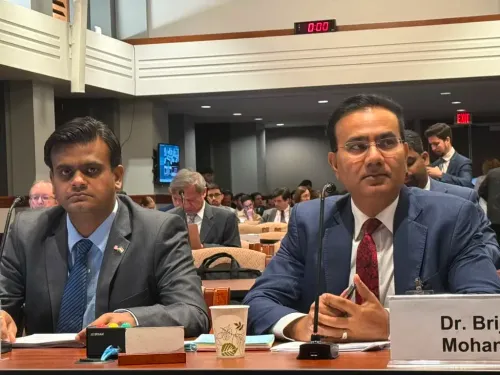
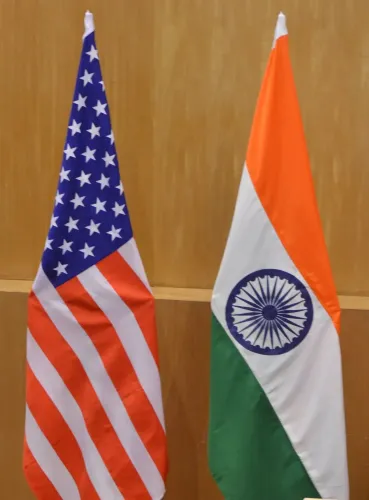
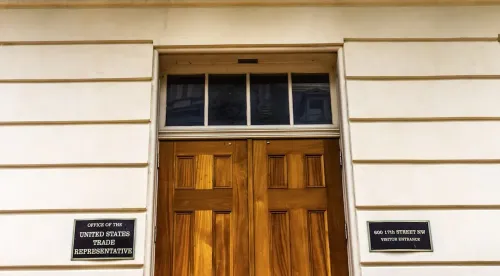
FICCI, CII oppose USTR's 12.5% tariff on Indian imports at Section 301 hearing
Synopsis
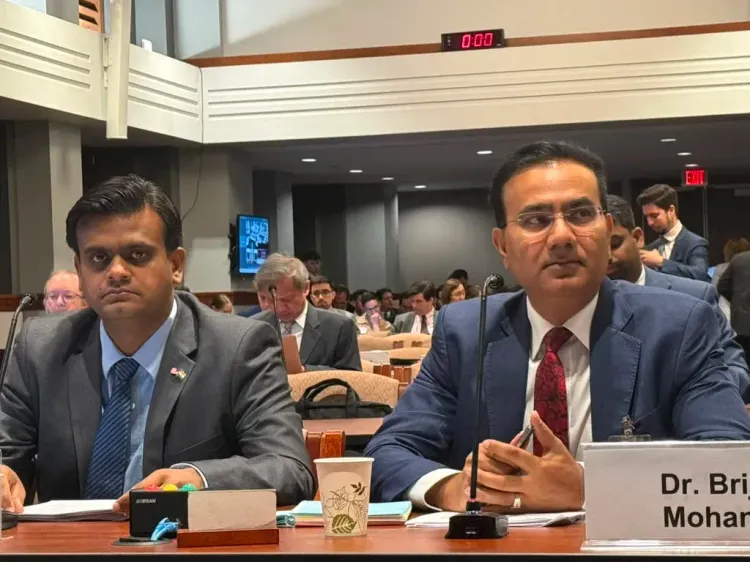
India's two most powerful industry lobbies walked into a Washington hearing room on 8 July and made a pointed case: a blanket 12.5% tariff on Indian imports would punish compliant exporters, drive up costs for American manufacturers, and do nothing to eliminate forced labour. The USTR's Section 301 process is now squarely in the crosshairs of New Delhi's corporate establishment.
Key Takeaways
FICCI and CII testified before the USTR Section 301 hearing on 8 July , opposing a proposed 12.5 per cent tariff on Indian imports.
FICCI 's Poornima Shenoy called the measure 'overly broad,' urging a targeted, risk-based approach instead of economy-wide tariffs.
CII 's Shuchita Sonalika said the duty would 'penalise a compliant industry without advancing the stated policy goal.' India 's legal framework — including the Bonded Labour System (Abolition) Act , ILO convention ratifications, and BRSR mandates for top 1,000 listed firms — was cited as evidence of existing safeguards.
Both bodies argued that tariffs would raise costs for U.S. manufacturers, retailers, and consumers, not just Indian exporters.
FICCI and CII called for cooperation with U.S. authorities rather than punitive trade restrictions.
India's top industry bodies, the Federation of Indian Chambers of Commerce and Industry (FICCI) and the Confederation of Indian Industry (CII), on 8 July urged the United States Trade Representative (USTR) to withdraw its proposed 12.5 per cent additional tariff on Indian imports, arguing that the measure would penalise a compliant industry while doing little to advance the stated goal of eliminating forced labour from global supply chains.
What Was Said at the USTR Hearing
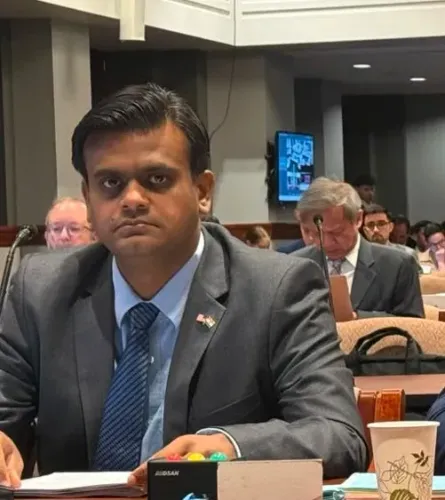
Appearing before a USTR Section 301 hearing in Washington, representatives of both bodies acknowledged the global objective of rooting out forced labour but disputed the basis for applying economy-wide tariffs on India. Presenting FICCI's case, Poornima Shenoy said Indian businesses had invested heavily in responsible sourcing, supply chain due diligence, traceability, and environmental, social and governance (ESG) compliance because 'responsible business has become a commercial necessity.'
Shenoy warned that the proposed measure adopted an 'overly broad approach.' In her testimony, she said: 'Our first concern is that the measure adopts a broad-based approach that applies across all sectors and products, irrespective of the individual risk profile in the supply chain.' She argued that supply chains differ in governance, sourcing practices, and compliance mechanisms, and called for a 'targeted, evidence-based and risk-based approach' instead.
India's Legal Safeguards, CII's Three-Point Case
Representing CII — which counts more than 10,500 direct members and over 3,65,000 enterprises indirectly — Shuchita Sonalika said the proposed 12.5 per cent additional duty was 'not warranted' and would 'penalise a compliant industry without advancing the stated policy goal.'
Sonalika outlined three principal arguments. First, she cited India's comprehensive legal framework against forced labour, including constitutional protections, the Bonded Labour System (Abolition) Act, modern labour codes, criminal penalties, and ratification of the International Labour Organization (ILO)'s core conventions on forced labour. She also noted that India mandates Business Responsibility and Sustainability Reporting for its top 1,000 listed companies, covering human rights, forced labour complaints, and supply chain assessments.
Second, she argued that Indian companies already operate within rigorous global compliance systems, citing the aluminium, textile, foundry, forging, and agricultural machinery sectors as examples. She further noted that none of India's major sources of manufactured goods imports appears on the U.S. Trafficking Victims Protection Reauthorization Act list.
Third, Sonalika challenged the USTR's own economic analysis, contending that the report failed to establish that India's policy framework burdens U.S. commerce.
The Cost Argument: U.S. Buyers Would Also Pay
Shenoy stressed that additional tariffs would raise costs not only for Indian exporters but also for U.S. manufacturers, retailers, and consumers. 'Many U.S. industries rely on long-standing sourcing relationships with Indian suppliers because they deliver products of quality and reliability and ensure full compliance,' she said. This cost-transmission argument is significant: it reframes the tariff debate from a bilateral trade dispute into a supply-chain resilience concern for American industry itself.
Cooperation Over Punitive Measures
When committee members asked how exempting exports from additional duties would incentivise countries under investigation to clean up labour practices, Sonalika responded that 'compliance and cooperation-based mechanisms would be far more effective than the applications' of tariffs. She highlighted CII's ongoing work with the ILO and the United Nations Development Programme (UNDP) on responsible business practices, and said India would welcome joint compliance initiatives with U.S. authorities rather than punitive trade measures.
Both FICCI and CII called on the USTR to reconsider the proposed tariffs in light of India's legal safeguards, existing compliance ecosystems, and the strategic importance of resilient U.S.-India supply chains. The USTR is yet to issue a final ruling on the Section 301 investigation.
Point of View
They are appealing to U.S. industry lobbies to push back from the inside. The USTR, however, faces domestic political pressure to show action on labour standards, which means a clean withdrawal of the proposed tariff is far from certain. The outcome will signal how much goodwill the bilateral relationship can absorb when trade politics collide with strategic intent.
NationPress
7 Oct 2026
Frequently Asked Questions
What is the USTR's proposed 12.5% tariff on Indian imports?
The U.S. Trade Representative has proposed a 12.5 per cent additional tariff on Indian imports under a Section 301 investigation focused on forced labour concerns in global supply chains. India's industry bodies argue the measure is overly broad and not supported by evidence specific to Indian exporters.
Why are FICCI and CII opposing the USTR tariff?
FICCI and CII argue that Indian businesses already comply with stringent labour laws, ESG frameworks, and international standards, making a blanket tariff unjustified. They also contend the tariff would raise costs for U.S. manufacturers and consumers without meaningfully addressing forced labour.
What legal protections against forced labour does India have?
India's framework includes constitutional prohibitions, the Bonded Labour System (Abolition) Act, modern labour codes, criminal penalties, and ratification of ILO core conventions on forced labour. The top 1,000 listed companies are also required to disclose human rights and forced labour data under Business Responsibility and Sustainability Reporting norms.
What alternative did Indian industry propose to the USTR?
Both FICCI and CII urged the USTR to pursue cooperation and dialogue rather than punitive tariffs, suggesting that compliance-based mechanisms — including joint initiatives with the ILO and UNDP — would be more effective at eliminating forced labour than economy-wide duties.
What happens next in the USTR Section 301 process?
The USTR is yet to issue a final ruling following the Section 301 hearing held on 8 July. The testimonies from FICCI and CII will form part of the public record considered before any final tariff determination is made.