India challenges USTR's 12.5% tariff, cites lack of Section 301 proof
Synopsis
India's Ministry of Commerce went on the offensive at a USTR public hearing, arguing that Washington's own trade data — on cotton, rice, and tobacco — directly contradicts its case for a 12.5% tariff under Section 301. The challenge is as much about legal process as economics: New Delhi says the USTR failed to meet its own evidentiary threshold.
Key Takeaways
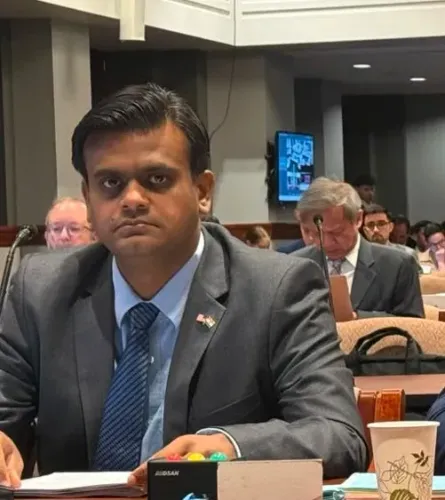
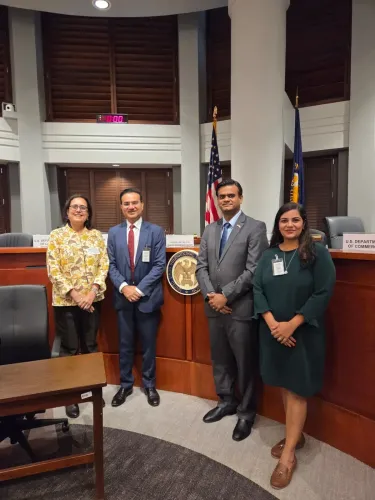
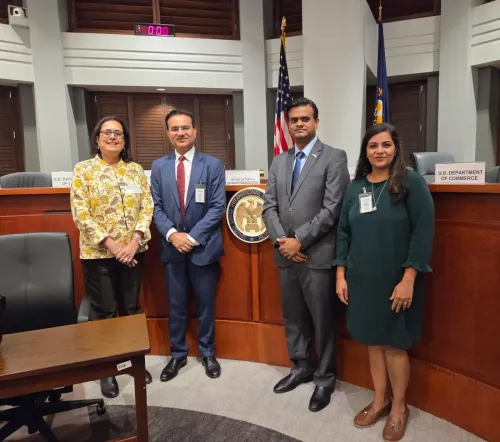
India formally contested the USTR 's proposed 12.5 per cent tariff on Indian imports at a public hearing on 8 July in Washington .
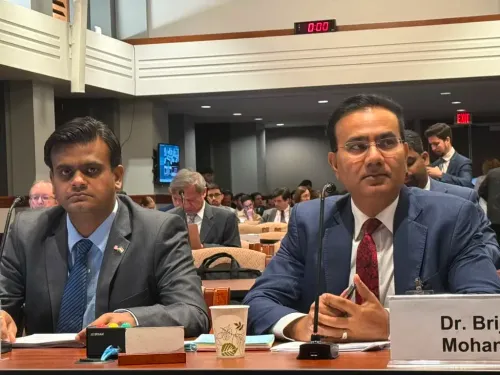
Brij Mohan , Ministry of Commerce and Industry, argued the USTR failed to establish a causal link between India's policies and harm to U.S. commerce under Section 301 .
India cited USTR's own Appendix A data on cotton, rice, and tobacco as contradicting the adverse findings against New Delhi.
The forced labour argument was rejected — India said the absence of an explicit import ban does not amount to permitting forced labour, citing ILO frameworks.
India called the USTR's methodology 'particularly flawed,' saying it used broad trade patterns rather than India-specific evidence.
Mohan urged the USTR to reconsider, noting inconsistencies between the investigation report and the Federal Register notice.
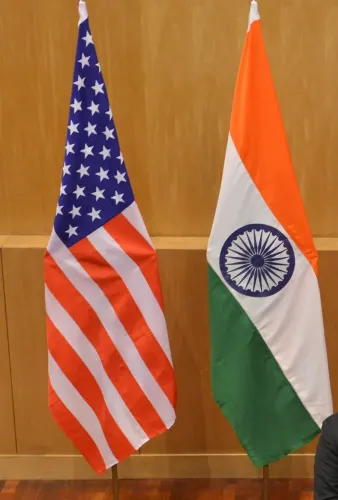
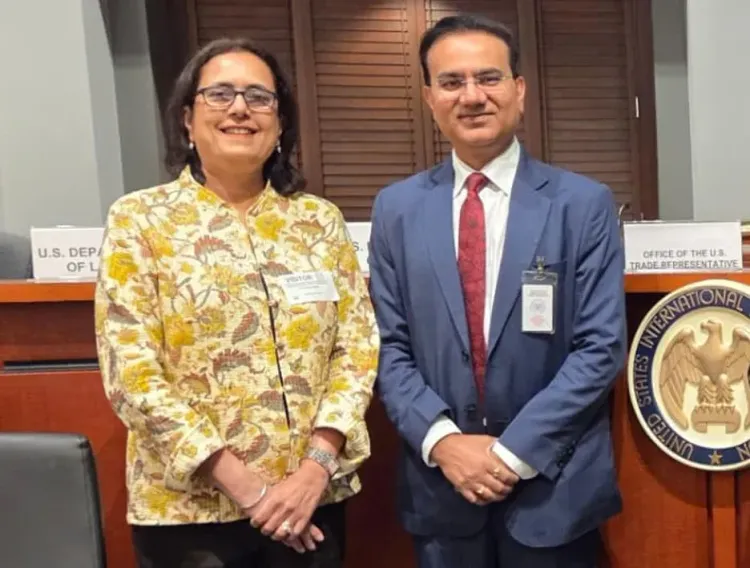
India on Wednesday, 8 July formally challenged the U.S. Trade Representative (USTR)'s proposed 12.5 per cent tariff on Indian imports at a USTR public hearing in Washington, arguing that the measure lacks both the legal grounding and evidentiary basis required under Section 301 of U.S. trade law. New Delhi contends that Washington has failed to establish any causal link between India's trade policies and harm to U.S. commerce.
India's Core Legal Argument
Dr. Brij Mohan of the Ministry of Commerce and Industry, presenting India's case, said the USTR investigation rested on broad assumptions rather than country-specific evidence. 'The USTR has neither identified nor engaged with the discrete elements of Section 301 for any country, including India, that directly amounts to an unreasonable act, policy or practice,' he said in his testimony.
Dr. Mohan further argued that the current determination represented 'a departure from the USTR's previous determination' in earlier Section 301 investigations — a significant procedural inconsistency, in India's view.
The Forced Labour Clause Dispute
A key flashpoint in the hearing was the USTR's apparent inference that India's absence of an explicit import ban on goods made with forced labour constitutes acquiescence to such practices. India rejected that reading outright.
'The absence of an explicit forced labour import ban does not constitute acquiescing to or permitting forced labour in any form,' Dr. Mohan said. He cited the International Labour Organization (ILO)'s framework, which recognises that eliminating forced labour requires multiple, country-tailored policy measures — not solely import prohibitions.
USTR's Own Data Contradicts Its Findings, India Says
India pointed to what it described as a self-defeating contradiction within the USTR's own report. Dr. Mohan highlighted data in Appendix A of the USTR filing — covering cotton, rice, and tobacco — which, he argued, shows rising U.S. exports to India and negligible or declining third-country competition in those categories.
'USTR's data in Appendix A, such as in relation to cotton, rice and tobacco, contradicts' the adverse findings against India, he said. According to Dr. Mohan, this data undermines the claim that India's policies have harmed U.S. commerce — a threshold requirement under Section 301.
Methodology Challenged
India also took aim at the methodology used to compile Appendices B and C of the USTR report, calling it 'particularly flawed.' Dr. Mohan said the analysis relied on a simple 'yes or no' assessment and broad trade patterns, rather than evidence demonstrating that inputs allegedly produced with forced labour were actually incorporated into goods exported from India to the United States.
He argued the USTR had merely identified overlapping trade flows without establishing any factual connection between India's exports and forced labour concerns. The proposed uniform tariff, he added, was based on studies involving only a handful of economies and lacked sector-specific or contract-specific evidence applicable to India.
What India Is Asking For
Dr. Mohan urged the USTR to reconsider the proposed action, citing what he described as internal inconsistencies between the investigation report and the Federal Register notice. This comes amid broader India-U.S. trade negotiations, with both sides seeking to finalise a bilateral trade agreement. The USTR hearing marks a formal step in the Section 301 review process; a final determination is yet to be announced.
Point of View
New Delhi is not just defending its trade record — it is attacking the legal coherence of the entire Section 301 process as applied to India. The forced labour framing is the more politically charged front; the USTR's inference that silence equals complicity is a stretch that India is right to contest on ILO grounds. What this hearing reveals is a broader pattern: U.S. trade enforcement tools built for China are being applied to India with blunt, country-agnostic methodology — and that mismatch is becoming harder to ignore as both sides negotiate a bilateral trade deal.
NationPress
7 Oct 2026
Frequently Asked Questions
What is the USTR's proposed 12.5% tariff on India about?
The U.S. Trade Representative has proposed a 12.5 per cent tariff on nearly all imports from India under Section 301 of U.S. trade law, citing concerns about India's trade policies including the absence of an explicit import ban on goods made with forced labour. India disputes both the legal basis and the evidentiary standard used to justify the measure.
What is Section 301 and why does it matter here?
Section 301 of the U.S. Trade Act allows the USTR to investigate and impose tariffs on countries whose trade policies are deemed unreasonable or burdensome to U.S. commerce. India argues the USTR has not met the legal threshold required under Section 301 — specifically, it has not demonstrated that India's policies cause actual harm to U.S. commerce.
How did India use the USTR's own data against it?
Dr. Brij Mohan pointed to data in Appendix A of the USTR's own report covering cotton, rice, and tobacco, arguing it shows rising U.S. exports to India and negligible third-country competition — directly contradicting the claim that India's policies have hurt U.S. commerce.
What is India's position on the forced labour argument?
India rejected the USTR's inference that the absence of an explicit forced labour import ban amounts to permitting such practices. Dr. Mohan cited the International Labour Organization's framework, which holds that eliminating forced labour requires multiple country-specific policy measures, not just import prohibitions.
What happens next after the USTR public hearing?
The USTR public hearing is a formal step in the Section 301 review process; a final determination has not yet been announced. India has urged the USTR to reconsider the proposed action, citing internal inconsistencies between the investigation report and the Federal Register notice.