India challenges USTR's 12.5% tariff proposal, cites flawed methodology
Synopsis
India has formally pushed back at a USTR public hearing against a proposed 12.5 per cent blanket tariff on its exports, arguing the Section 301 forced labour report is legally deficient, methodologically flawed, and — by the USTR's own trade data — contradicted by the evidence. The objection arrives as India and the U.S. are simultaneously negotiating a bilateral trade deal, making the USTR's next move unusually consequential.
Key Takeaways
India formally challenged the USTR at a public hearing in Washington on 8 July over a proposed 12.5 per cent tariff on Indian imports.
Brij Mohan of the Ministry of Commerce and Industry presented four objections: legal insufficiency, flawed assumption on import bans, defective methodology, and absence of causal harm to U.S. commerce.
India cited the USTR's own Appendix A data on cotton, rice, and tobacco as contradicting the report's conclusions.
New Delhi argued the tariff methodology relied on a handful of economies and broad trade patterns, not India-specific evidence.
India called for bilateral consultations rather than unilateral Section 301 action, and reaffirmed its constitutional commitment to eliminating forced labour.
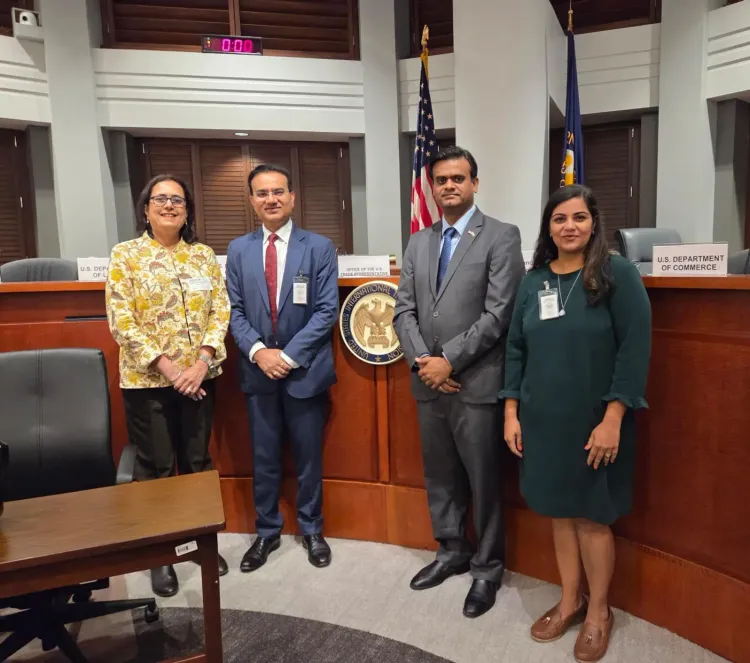
India on Wednesday, 8 July formally challenged the U.S. Trade Representative (USTR) at a public hearing in Washington, accusing the agency of disregarding evidence and arguments submitted by New Delhi in its Section 301 investigation into forced labour — an inquiry that has led to a proposed 12.5 per cent tariff on nearly all Indian imports.
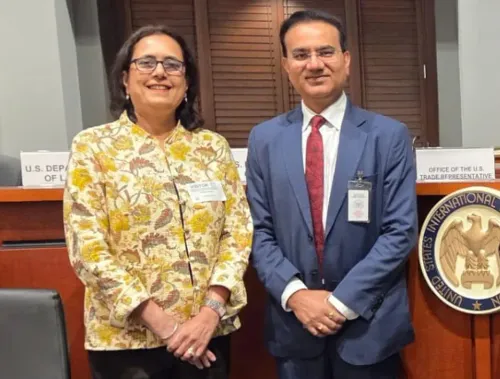
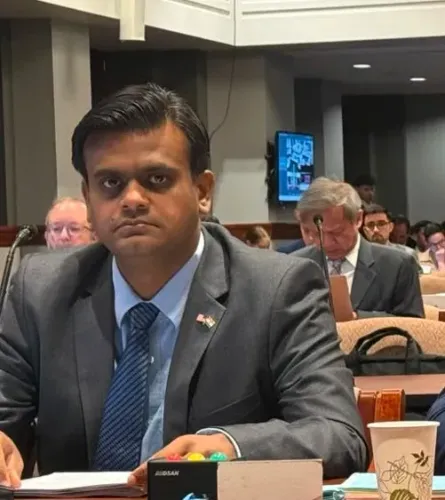
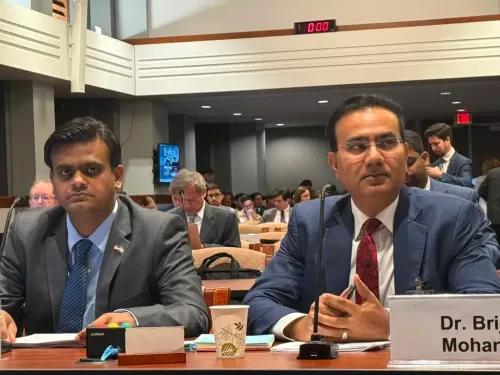
The challenge was mounted by Dr. Brij Mohan of India's Ministry of Commerce and Industry, who told the USTR committee that the agency's report had failed to adequately consider India's prior submissions and engagement during the investigation.
Four Principal Objections
Dr. Mohan laid out four distinct legal and methodological objections to the USTR's findings. First, he argued that the investigation had not met the legal standards set out in Section 301 of the U.S. Trade Act, contending that the mere absence of a specific import prohibition cannot, by itself, constitute an unreasonable trade practice under that statute.
'The USTR has neither identified nor engaged with the discrete elements of Section 301 for any country, including India, that directly amounts to an unreasonable act, policy or practice,' Dr. Mohan said, adding that the determination also marked a departure from previous USTR Section 301 investigations.
Second, India rejected the assumption that countries without explicit bans on goods produced with forced labour were effectively condoning such practices. Dr. Mohan cited the International Labour Organization (ILO), which recognises that eliminating forced labour requires multiple, country-specific policy instruments — of which import bans are only one.
Flawed Methodology, Absent Causal Link
Third, India criticised the proposal to impose a blanket 12.5 per cent country-wide tariff, arguing that the underlying methodology drew on studies covering only a handful of economies and relied on broad trade patterns rather than sector-specific or product-specific evidence relating to India. 'The adopted methodology is particularly flawed,' Dr. Mohan said.
Fourth, and perhaps most pointedly, India argued that the USTR had failed to establish any causal link between India's trade policies and harm to U.S. commerce. Dr. Mohan pointed to Appendix A of the USTR's own report, contending that trade data on cotton, rice, and tobacco actually showed rising U.S. exports and negligible or declining third-country competition in India — directly contradicting the report's conclusions.
'There is inadequate, insufficient evidence' that India's lack of an import prohibition creates an unfair competitive advantage for Indian exporters or harms American industry, he said.
India's Broader Constitutional Stand
Dr. Mohan also challenged the methodology used in the report's appendices, saying they merely identified overlapping trade flows rather than demonstrating that goods allegedly made with forced labour were actually incorporated into exports shipped to the United States from India.
He stressed that India remained committed to eliminating forced labour 'as a constitutional obligation, law and a matter of principle,' framing New Delhi's objection not as a defence of exploitative practices but as a pushback against what it characterises as an legally insufficient and methodologically unsound process.
India's Preferred Path: Bilateral Dialogue
Dr. Mohan urged the USTR to reconsider the proposed tariff, citing what he described as internal inconsistencies between the report and the Federal Register notice. He indicated that India remained willing to engage constructively with Washington through consultations on any specific concerns, but maintained that such issues should be resolved through bilateral trade discussions rather than unilateral measures under Section 301.
The hearing marks a significant escalation in trade tensions between the world's two largest democracies, coming at a moment when both sides are simultaneously negotiating a broader bilateral trade agreement. How the USTR responds to India's formal objections is expected to shape the trajectory of those negotiations.
Point of View
The policy logic, the statistical methodology, and the causal chain, all in one submission. What stands out is the use of the USTR's own Appendix A data to undermine the report's conclusions: if Washington's own trade figures on cotton, rice, and tobacco show no adverse impact on U.S. commerce, the legal foundation for a country-wide tariff becomes difficult to defend. The timing is also telling — this confrontation unfolds as both sides are negotiating a bilateral trade agreement, which means the USTR's response will be read not just as a tariff decision but as a signal of how much leverage India actually has at the table.
NationPress
7 Oct 2026
Frequently Asked Questions
Why is the USTR proposing a 12.5 per cent tariff on Indian imports?
The USTR has proposed a 12.5 per cent tariff on nearly all Indian imports as part of a Section 301 investigation into forced labour, arguing that India's lack of an explicit ban on goods produced with forced labour constitutes an unreasonable trade practice. India disputes both the legal basis and the factual findings of that investigation.
What are India's main objections to the USTR's Section 301 report?
India raised four objections: the investigation did not meet Section 301's legal standards; the assumption that absent import bans equal condoning forced labour is wrong; the tariff methodology is flawed, relying on broad trade patterns rather than India-specific evidence; and there is no demonstrated causal link between India's policies and harm to U.S. commerce.
Who represented India at the USTR public hearing?
Dr. Brij Mohan of India's Ministry of Commerce and Industry represented New Delhi at the USTR public hearing in Washington on 8 July, presenting India's formal objections to the proposed tariff.
How does India's own trade data contradict the USTR report?
Dr. Mohan pointed to Appendix A of the USTR's own report, which contains trade data on cotton, rice, and tobacco showing rising U.S. exports and negligible or declining third-country competition in India — suggesting that the absence of an import ban in India has not harmed U.S. commerce.
What does India want instead of the Section 301 tariff?
India has urged the USTR to reconsider the proposed tariff and expressed willingness to engage through bilateral consultations and dialogue. New Delhi maintains that any concerns about forced labour should be addressed through bilateral trade discussions rather than unilateral measures.