White House Claims 'Trump Effect' as U.S. Manufacturing Rebounds
Synopsis
The White House on July 8, 2026, posted on X claiming a U.S. manufacturing resurgence under the 'Trump Effect' banner. The assertion draws on a policy architecture built around the 2017 Tax Cuts and Jobs Act, steel and aluminium tariffs, and the USMCA trade agreement, though independent verification of specific figures remains pending.
Key Takeaways
The White House posted on July 8, 2026 , declaring 'U.S. manufacturing is back' and attributing the trend to the 'Trump Effect.' The claim builds on the Tax Cuts and Jobs Act of 2017 , which cut the corporate tax rate to 21 percent to spur domestic investment.
Tariffs on steel, aluminium, and Chinese goods imposed from 2018 onward were designed to protect American industrial producers.
The USMCA , effective 2020 , restructured North American supply chains to favour regional manufacturing over overseas sourcing.
Independent economists note that attributing manufacturing trends to any single administration is contested, given automation and global demand cycles.
Monthly Bureau of Labor Statistics data on manufacturing employment will be the key independent benchmark for validating the White House's claim.
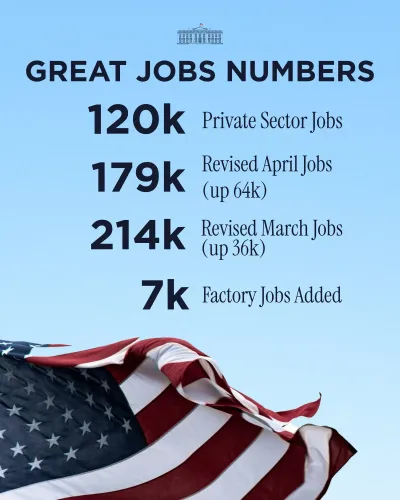
The White House, the official communications account of the Executive Office of the President of the United States, on Wednesday, July 8, 2026, posted on X claiming a resurgence in American manufacturing, attributing the trend directly to President Donald Trump under the banner 'THE TRUMP EFFECT!'
Context
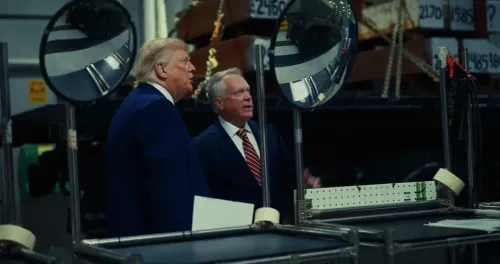
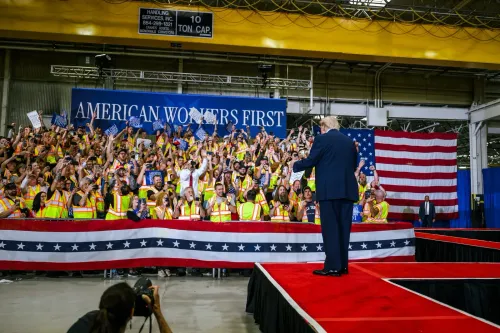
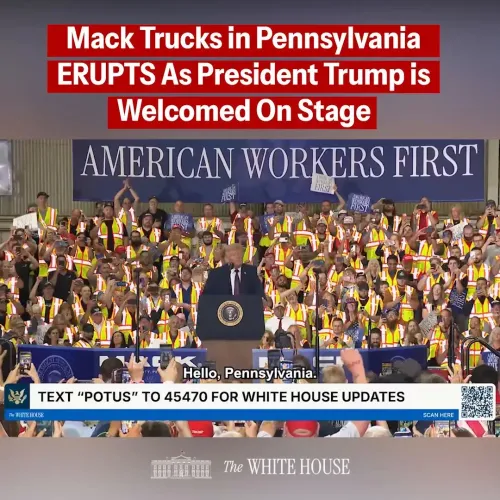
The post, accompanied by an image, declared 'U.S. manufacturing is back' alongside the American flag emoji, framing the development as a signature achievement of the Trump administration. While the post links to supporting material, the specific statistics cited in that linked content fall outside independently verifiable public records available at this time.
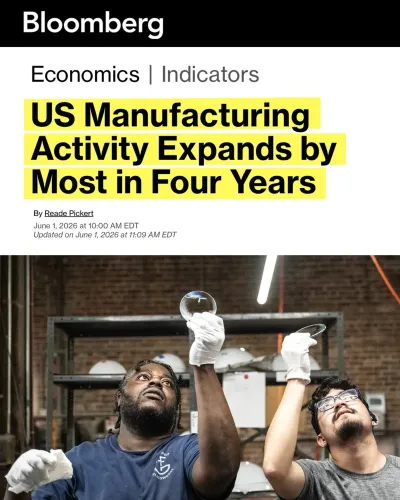
Manufacturing employment and industrial output have long served as bellwether metrics for American economic health. The sector has faced structural headwinds for decades, including automation, globalisation, and supply chain offshoring, making any short-term revival politically significant for the administration claiming credit.
Policy Backdrop
The Trump administration's economic architecture rests on several interlocking pillars. The Tax Cuts and Jobs Act of 2017 reduced the corporate tax rate to 21 percent, explicitly designed to incentivise domestic business investment and factory expansion over overseas production.
From 2018 onward, the administration imposed sweeping tariffs on steel, aluminium, and a broad range of Chinese goods, aiming to narrow trade deficits and shield American producers from import competition. The USMCA, which replaced NAFTA and took effect in 2020, further restructured North American supply chains to favour regional over overseas manufacturing.
Together, these measures formed the policy lineage that the White House now presents as the foundation of a manufacturing comeback. However, economists and public records consistently note that attribution of manufacturing trends to any single administration's policies is contested, given the simultaneous roles of automation, pandemic-era disruptions, and global demand cycles.
Stakeholders and Impact
The primary beneficiaries of a genuine manufacturing revival would be American factory workers, domestic manufacturers, and supply chain firms that have faced intense competition from lower-cost overseas producers. Rust Belt states with historically high concentrations of industrial employment carry particular electoral and economic weight in this narrative.
For Indian businesses and policymakers, a resurgent American manufacturing sector carries mixed implications. Stronger U.S. domestic production could reduce demand for certain imported goods, including components and finished products from Asian supply chains, while also signalling a continued preference for trade agreements that protect American industrial interests.
The Bureau of Labor Statistics releases monthly data on manufacturing employment and industrial production, and these figures will be closely scrutinised by analysts seeking to validate or challenge the White House's characterisation of the trend.
What's Next
Upcoming monthly jobs and industrial output reports from federal statistical agencies will serve as the primary independent measure of whether manufacturing gains are broad-based and sustained. Further tariff announcements or trade-agreement developments from the current administration are also being watched as potential amplifiers or disruptors of the trend.
With the White House aggressively framing economic data around the 'Trump Effect' brand, the political contest over manufacturing numbers is set to intensify through the remainder of 2026, with implications for both domestic policy debates and U.S. trade relationships worldwide.
Point of View
Tariffs, and USMCA — the administration is constructing a coherent causal story that is difficult to disentangle from broader global and cyclical factors. For observers in India and across Asia, the message carries a secondary signal: the U.S. intends to keep prioritising domestic industrial capacity over open-trade orthodoxy. How the monthly statistical releases square with the White House's triumphalist tone will determine whether this narrative holds or invites sustained challenge.
NationPress
9 Jul 2026
Frequently Asked Questions
What is the 'Trump Effect' the White House is referring to?
The 'Trump Effect' is the White House's phrase for the set of economic policies — including the 2017 corporate tax cuts, steel and aluminium tariffs, and the USMCA trade deal — that the administration credits with reviving U.S. manufacturing output and employment.
Is U.S. manufacturing actually growing in 2026?
The White House posted on July 8, 2026, claiming manufacturing is back, but the specific statistics cited in the linked content are not independently verifiable from established public records at this time. Monthly Bureau of Labor Statistics reports are the primary independent benchmark.
How did Trump's tariffs affect American manufacturing?
Tariffs on steel, aluminium, and Chinese goods imposed from 2018 onward were designed to shield domestic producers from cheaper imports. Their net effect on manufacturing employment and output remains debated among economists, who also point to automation and global demand as major variables.
What is the USMCA and how does it support U.S. factories?
The USMCA replaced NAFTA in 2020 and tightened rules of origin for North American goods, incentivising manufacturers to source more components regionally rather than from lower-cost overseas suppliers, particularly in the automotive sector.
What does a U.S. manufacturing revival mean for India?
A stronger American manufacturing base could reduce U.S. demand for certain imported components and finished goods, potentially affecting Indian exporters. It also signals that Washington's trade policy will continue to prioritise domestic industrial interests over open-market arrangements.