White House Claims Trump Tariff Policy Earned US Billions
Synopsis
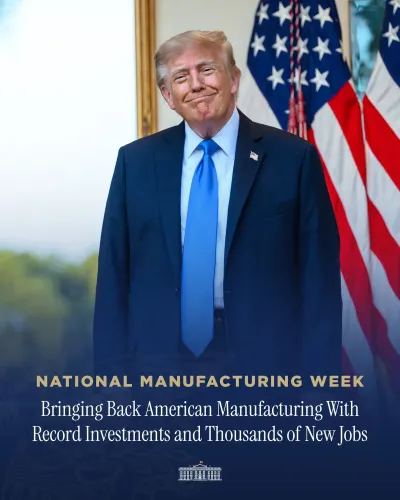
The White House declared on June 9, 2026 that President Trump's tariff policy has generated billions for the United States, vowing to continue the administration's push to 'make America rich again.' The claim draws on a tariff framework built around Section 232 and Section 301 duties that has reshaped US trade since 2018.
Key Takeaways
The White House posted on June 9, 2026 that President Trump 's tariff policy has made the US 'BILLIONS.' The administration signalled it would not stop its campaign to 'make America rich again' through trade measures.
Section 232 tariffs of 25% on steel and 10% on aluminum were first imposed in March 2018 , affecting China , the EU , and Canada .
Section 301 tariffs covered roughly $360 billion of Chinese goods across four tranches between 2018 and 2019 .
While Customs and Border Protection has recorded substantial tariff revenue, economists note that US importers and consumers also bear a share of these costs.
American agricultural exporters faced retaliatory tariffs from China during the 2018-2020 trade war escalation.
The White House, the official communications account of the Executive Office of the President of the United States, on Tuesday, June 9, 2026, claimed that President Donald Trump's tariff policy has generated billions of dollars for the United States and vowed the administration would continue its push to 'make America rich again.'
Context
The post states: 'President Trump's effective tariff policy has made the United States BILLIONS. The Trump Administration won't stop fighting to make America rich again.' The declaration is the latest in a series of White House communications framing tariffs as a revenue-generating and economic-strengthening tool rather than a protectionist measure.
The claim echoes the administration's long-standing position that duties levied on imported goods flow directly into federal coffers, bolstering the case for maintaining or expanding tariff coverage. The emphasis on the word 'BILLIONS' — rendered in all capitals — signals an effort to underscore the scale of collections to a domestic audience.
Policy Backdrop
The Trump administration's tariff architecture has its roots in two landmark actions. In March 2018, the administration imposed 25% tariffs on steel and 10% tariffs on aluminum under Section 232 of the Trade Expansion Act, citing national security grounds. Those duties affected major suppliers including China, the European Union, and Canada, and were later modified by quotas and exclusions for select allies.
Between July 2018 and September 2019, escalating Section 301 tariffs were applied to Chinese products across four tranches, ultimately covering roughly two-thirds of all US imports from China — approximately $360 billion worth of goods. A Phase One trade agreement signed with China in 2020 secured commitments on agricultural purchases and intellectual property protections but left the bulk of these tariffs intact. Successor administrations retained many of the China-specific duties even as they pursued different enforcement and subsidy strategies.
Customs and Border Protection data have documented substantial revenue collections from these duties. However, economists and trade analysts have consistently noted that the net economic effect is more complex: US importers and domestic manufacturers faced higher input costs, and American agricultural exporters bore the brunt of retaliatory tariffs imposed by trading partners.
Stakeholders and Impact
The primary beneficiaries cited by the administration are the US federal government and domestic industries shielded from foreign competition, particularly in steel, aluminum, and select manufacturing sectors. US importers and businesses reliant on global supply chains, however, have historically absorbed a significant share of tariff costs, which can be passed on to consumers in the form of higher prices.
American agricultural exporters faced retaliatory measures from China and other trading partners during the escalation of the US-China trade war between 2018 and 2020, affecting soybean, pork, and other commodity markets. The broader debate over who ultimately pays tariffs — foreign exporters or domestic buyers — remains a subject of active academic and policy discussion.
What's Next
Congressional consideration of reforms to tariff authority and any new exclusion processes remain active areas of legislative attention. Dispute settlement proceedings at the World Trade Organisation and ongoing bilateral trade negotiations could shape the scope and duration of existing duties.
The White House's renewed emphasis on tariff revenue and the 'make America rich again' framing suggests the administration intends to keep trade policy at the centre of its economic messaging. How trading partners — including major US import sources in Asia and Europe — respond to any further tariff actions will be a key variable in the months ahead.
Point of View
Framing tariffs not as a cost to American consumers but as a revenue windfall for the federal government. This framing has been a consistent feature of the Trump administration's trade communication strategy since 2018, sidestepping the more contested question of who ultimately bears the incidence of import duties. The renewed emphasis in mid-2026 suggests the administration is building a political case — likely for domestic audiences — ahead of potential further tariff actions or trade negotiations. The 'make America rich again' formulation also signals an effort to link trade policy directly to the broader economic identity of the administration.
NationPress
23 Oct 2026
Frequently Asked Questions
Has Trump's tariff policy actually made the US billions?
US Customs and Border Protection has documented substantial revenue from tariffs imposed under the Trump administration, including Section 232 and Section 301 duties. However, economists note that domestic importers and consumers also bear a portion of these costs, and the net economic benefit is subject to ongoing debate.
What are Section 301 and Section 232 tariffs?
Section 301 tariffs were imposed starting in 2018 on approximately $360 billion of Chinese goods to address intellectual property concerns and trade deficits. Section 232 tariffs, also from 2018, placed 25% duties on steel and 10% on aluminum imports on national security grounds.
Did Trump's tariffs cause a trade war with China?
Yes. Between 2018 and 2020, the US and China engaged in escalating tariff exchanges. China retaliated with duties on American agricultural products including soybeans and pork. A Phase One deal in 2020 eased some tensions but left most tariffs in place.
What does 'make America rich again' mean in trade policy terms?
The phrase is the White House's framing for a trade agenda centred on tariffs, bilateral pressure, and domestic industry protection. It positions tariff revenue and reduced trade deficits as direct economic gains for the United States.
How do US tariffs affect India?
India has been subject to US tariffs on steel and aluminum under Section 232, and has had its own trade disputes with Washington. Indian exporters in metals and certain manufactured goods sectors have monitored US tariff policy closely for its direct and indirect market effects.