Will Tariffs Remain Central to Trump's Economic Strategy?
Synopsis
In his year-end address, President Trump declared that tariffs will be a cornerstone of his economic policy, a decision that could impact international trade relations. He linked tariffs to significant investments and job creation, framing them as an essential tool for reshaping global trade and strengthening national security.
Key Takeaways
Tariffs are a key component of Trump's economic strategy.
Investment and job growth have been linked to tariffs.
Indian exports may face higher costs due to increased scrutiny.
Tariffs are seen as a revenue source for government initiatives.
Reshoring is framed as a national security issue.
Washington, Dec 18, (NationPress) President Donald Trump emphasized that tariffs will continue to be a fundamental element of his economic strategy, a position that may strain trade relations with multiple countries as the US government encourages firms to relocate manufacturing to the United States.
During his year-end speech to the nation on Wednesday (local time), Trump consistently credited tariffs for boosting investment, factory development, and job creation, presenting import duties as a long-term instrument to transform global trade instead of just a temporary negotiation strategy.
“Much of this success has been achieved through tariffs,” Trump remarked, dubbing them his “favorite word,” and contended that businesses were coming back to the US in “record numbers” due to the absence of import duties on domestically produced goods.
He stated that tariffs had contributed to securing a “record-breaking $18 trillion of investment” in the United States, directly linking these inflows to trade barriers that favor domestic manufacturing while penalizing imports.
“If they build in America, there are no tariffs,” Trump insisted, asserting that the longstanding trade policies favoring foreign suppliers at the expense of US industries are now over.
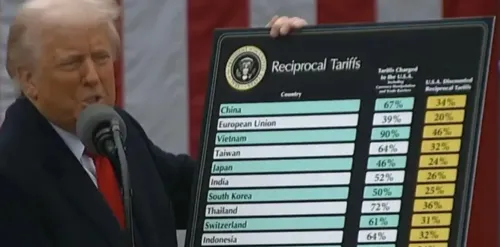
These statements heighten expectations that scrutiny on imports will increase, particularly from major trading partners like India. Indian exports to the US encompass pharmaceuticals, steel, aluminum, auto components, chemicals, textiles, and IT hardware.
For Indian businesses, the implication is clear: either absorb increased trade costs or expand manufacturing and assembly efforts within the United States.
Trump portrayed tariffs not just as an industrial strategy but also as a source of revenue, indicating that tariff collections support tax reductions and other spending initiatives, including the recently announced “Warrior Dividend” for US military personnel.
“We made significantly more money than anyone anticipated because of tariffs,” he stated, reinforcing the administration's view that trade duties can bolster domestic fiscal goals.
Additionally, Trump framed the reshoring of manufacturing as a national security necessity, linking new factory openings to “far greater national security” and asserting that private-sector job growth, rather than government expansion, is crucial for American strength.
For India, which has aimed to establish itself as an alternative manufacturing hub amid changing global supply chains, the US's inward focus sends mixed signals. While companies might diversify their production away from certain areas, Trump made it clear that his favored destination for investment remains the United States.
India and the US have strengthened collaboration in defense, technology, and vital supply chains in recent years, yet trade continues to be one of the most delicate aspects of the relationship.
The US is India's largest trading partner, and American officials have increasingly recognized India as a pivotal ally in diversifying supply chains and mitigating economic concentration risks.
India is seeking greater access for its goods and services while resisting demands to significantly lower tariffs across the board. Trump’s statements suggest that tariff levels will persist as a central topic in any upcoming negotiations.
Point of View
It is vital to recognize the implications of President Trump's tariff policies. While they aim to bolster domestic manufacturing and create jobs, they may also complicate relationships with key trading partners. A balanced approach is essential for maintaining economic stability and fostering international cooperation.
NationPress
18 Sept 2026
Frequently Asked Questions
How do tariffs impact the US economy?
Tariffs can boost domestic production by making imported goods more expensive, potentially leading to job growth and increased investment within the US.
What are the potential downsides of tariffs?
Tariffs can lead to higher prices for consumers and may provoke retaliation from trading partners, which could harm international trade relations.
What industries are most affected by tariffs?
Industries such as steel, aluminum, and technology are significantly impacted, as they often rely on imported materials or components.
How does Trump's tariff policy affect India?
India may face increased trade costs and pressure to invest in manufacturing within the US, impacting its export strategies.
What is the future of US tariffs?
The future of US tariffs will likely hinge on ongoing negotiations with trading partners and the administration's economic priorities.