PM Modi Hails Didgeridoo-Tabla Duet as Symbol of India-Australia Ties
Synopsis
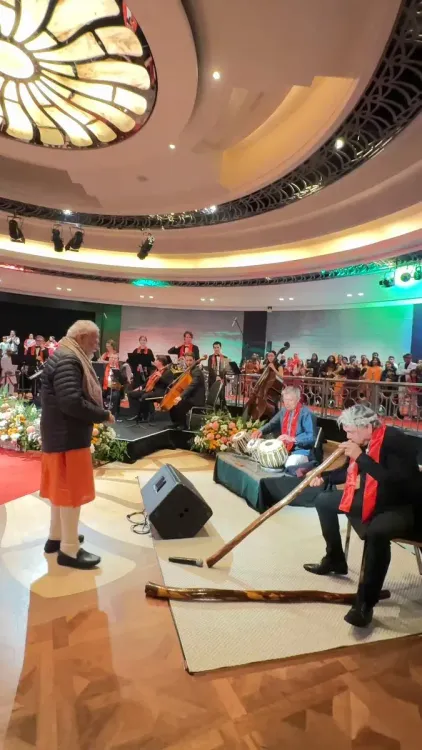
Prime Minister Narendra Modi on 8 July 2026 praised a live performance pairing Australia's Didgeridoo with India's Tabla, saying the harmony between the two ancient instruments reflected the deep cultural connect between the two nations. The moment underscores a sustained cultural diplomacy track running alongside India-Australia's Comprehensive Strategic Partnership.
Key Takeaways
PM Modi on 8 July 2026 publicly praised a Didgeridoo-Tabla duet as a symbol of India-Australia cultural ties.
He personally complimented performers Mr.
Sam in his post on X.
The Didgeridoo is an ancient instrument of Australia's Aboriginal communities ; the Tabla is a pillar of Indian classical music .
India and Australia elevated their relationship to a Comprehensive Strategic Partnership in 2020 , with cultural exchange listed as a key pillar.
Cultural events pairing Aboriginal and Indian classical instruments are a recurring feature of official bilateral programming between the two countries.
Institutional follow-up by the Indian Council for Cultural Relations or the Australia-India Council is likely in the wake of the Prime Minister's endorsement.
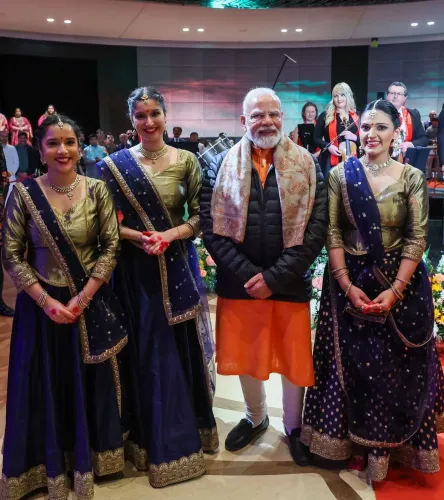
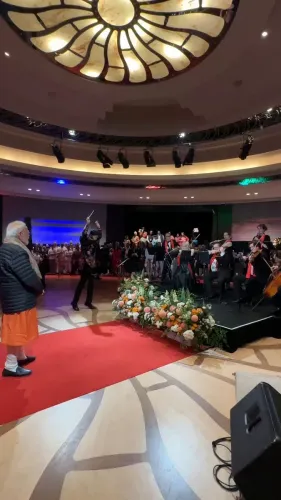
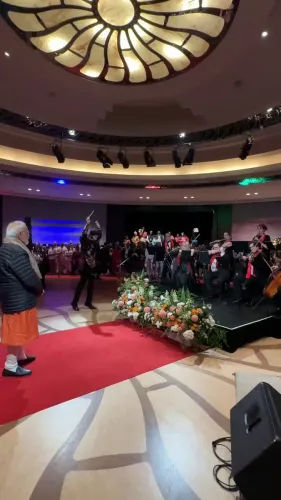
Prime Minister Narendra Modi on Wednesday, 8 July 2026, shared his admiration for a live musical performance that brought together Australia's ancient Didgeridoo and India's classical Tabla, describing the duet as a powerful symbol of the cultural bond between the two nations.
Posting on X, Modi wrote: 'Witnessed a truly exceptional musical performance featuring Australia's ancient Didgeridoo and India's Tabla. The harmony between these two timeless instruments beautifully reflected the deep cultural connect between our two nations.' He extended compliments to performers Mr. Ron Murray and Dr. Sam.
Context
The Didgeridoo is one of the world's oldest wind instruments, originating with Australia's Aboriginal communities, while the Tabla is a cornerstone of Indian classical and devotional music. Their pairing in an official or semi-official setting is a recurring motif in cultural programming between the two countries, designed to draw a symbolic parallel between two ancient civilisations with deep artistic traditions.
The Prime Minister's personal acknowledgement of the performers — Mr. Ron Murray and Dr. Sam — lends the event added visibility, amplifying the reach of what would otherwise be a niche cultural exchange.
Policy Backdrop
Cultural diplomacy has been a consistent thread in India-Australia relations under Modi. In 2014, he became the first Indian Prime Minister to visit Australia in 28 years, and the visit's joint statement explicitly included cultural cooperation as a bilateral priority.
The relationship was elevated further in 2020 with the signing of the Comprehensive Strategic Partnership, which listed expanded cultural and educational exchanges alongside defence, trade, and Quad cooperation as pillars of the upgraded relationship. People-to-people ties — anchored by a large Indo-Australian diaspora — have since grown steadily.
Stakeholders and Impact
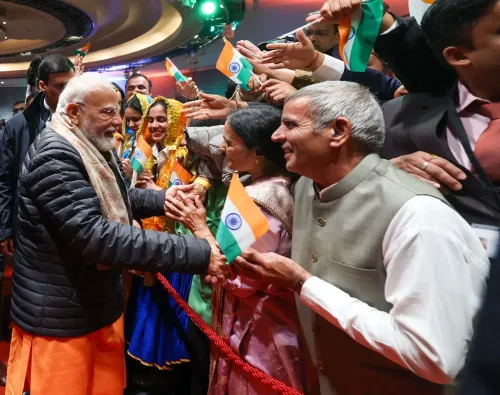
The event directly spotlights traditional and classical artists from both countries, giving cultural practitioners a moment of high-profile diplomatic recognition. For the Indo-Australian diaspora — one of Australia's fastest-growing communities — such gestures reinforce a sense of shared identity between their country of origin and their adopted home.
Institutions such as the Indian Council for Cultural Relations (ICCR) and the Australia-India Council are the principal bodies that organise and fund such exchanges. A Prime Ministerial endorsement of this kind typically generates follow-on programming and increased institutional interest in similar cross-cultural collaborations.
What's Next
Observers will watch for any formal follow-up by the ICCR or the Australia-India Council, including possible tours or residencies for the performers. The moment also sets a cultural tone ahead of any planned high-level bilateral engagements between New Delhi and Canberra. More broadly, it reinforces India's strategy of weaving cultural diplomacy into the fabric of its strategic partnerships across the Indo-Pacific.
Point of View
He personalises what could have been a generic diplomatic gesture, giving the artists a platform that extends well beyond the room in which they performed. This fits a broader pattern in which New Delhi treats cultural diplomacy not as an afterthought but as a soft-power instrument running in parallel with harder tracks of defence and trade. The timing, amid an active Indo-Pacific strategic agenda, suggests the government is keen to ensure the India-Australia relationship is seen as multidimensional rather than purely transactional.
NationPress
9 Jul 2026
Frequently Asked Questions
What did PM Modi say about the Didgeridoo and Tabla performance?
PM Modi said he 'witnessed a truly exceptional musical performance' featuring Australia's ancient Didgeridoo and India's Tabla, adding that the harmony between the two instruments 'beautifully reflected the deep cultural connect' between the two nations.
Who performed the Didgeridoo-Tabla duet praised by PM Modi?
PM Modi extended compliments to Mr. Ron Murray and Dr. Sam for the performance, though further details about the performers were not included in his post.
What is the Didgeridoo and why is it significant?
The Didgeridoo is one of the world's oldest wind instruments, originating with Aboriginal communities of Australia. Its pairing with India's classical Tabla instrument is a recurring symbol used in official cultural programming between India and Australia.
What is the India-Australia Comprehensive Strategic Partnership?
The Comprehensive Strategic Partnership was signed in 2020 and elevated India-Australia ties beyond a standard dialogue partnership. It covers defence, trade, Quad cooperation, and expanded cultural and educational exchanges.
How has PM Modi used cultural diplomacy with Australia?
Modi has consistently incorporated cultural cooperation into India-Australia engagements since his landmark visit to Australia in 2014 — the first by an Indian Prime Minister in 28 years — and has continued to highlight people-to-people ties as a cornerstone of the bilateral relationship.