India challenges USTR Section 301 tariff plan as self-contradictory
Synopsis
India's commerce ministry took an unusual tack at the USTR hearing on 8 July — rather than simply opposing the tariffs, it turned Washington's own logic against itself. By pointing to exemptions for coffee and textiles that the U.S. Department of Labour itself flags as forced-labour risks, New Delhi exposed a structural contradiction at the heart of the Section 301 framework, and made a case that bilateral talks, not sweeping restrictions, are the right venue.
Key Takeaways
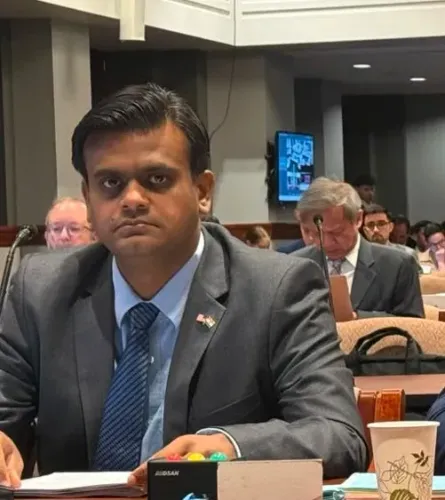
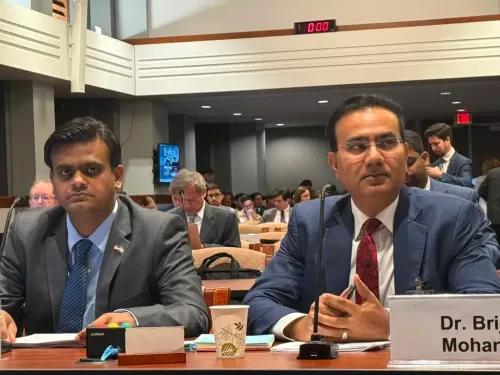
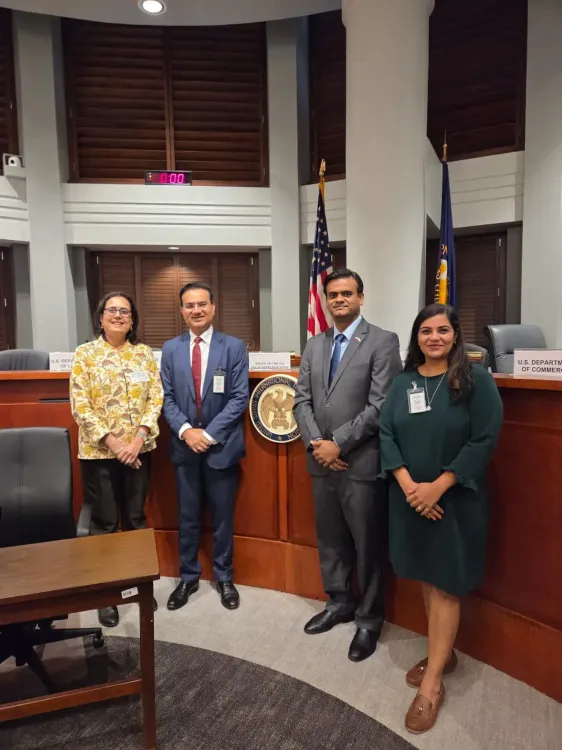
Brij Mohan of the Ministry of Commerce and Industry testified at the USTR public hearing on 8 July , challenging the Section 301 tariff framework.
India argued that USTR-proposed exemptions for products unavailable domestically contradict the stated goal of eliminating forced labour from supply chains.
A textile provision allowing lower tariffs tied to use of U.S.-origin inputs was flagged as rewarding commercial sourcing rather than addressing forced labour.
Exemptions for coffee , vanilla , cinnamon , and cloves were highlighted as contradicting the U.S.
Department of Labour's own forced labour risk list.
India called for concerns to be addressed through bilateral US-India trade negotiations , not the current USTR investigation.
India formally challenged the U.S. Trade Representative's (USTR) proposed Section 301 tariff framework on 9 July 2025, arguing before a public USTR hearing that the plan contradicts its own stated objective of eliminating forced labour by carving out exemptions for certain products while simultaneously seeking sweeping import restrictions on countries including India. New Delhi urged Washington to pursue bilateral trade negotiations rather than economy-wide punitive measures.
India's Core Argument at the Hearing
The case was presented by Dr. Brij Mohan of the Ministry of Commerce and Industry during the USTR's public hearing on 8 July, following a USTR official's questions about India's earlier written submission. Dr. Mohan clarified that India's objection was not to exemptions per se, but to what New Delhi viewed as methodological inconsistencies in the USTR's own framework.
He pointed out that the USTR had itself proposed exemptions for products that cannot be grown or produced in sufficient quantities in the United States or sourced from alternative suppliers. 'What we submitted... is inconsistent with the overall approach,' he said, arguing that such carve-outs undermine the rationale for imposing economy-wide tariffs in the first place.
The Textile Provision Under Scrutiny
Dr. Mohan also drew attention to a provision in the Federal Register notice that would allow reduced tariff treatment for certain textile and apparel imports contingent on the use of U.S.-origin textile inputs. Under this mechanism, trading partners that source American raw materials would be permitted to export corresponding volumes of finished goods to the United States at lower tariff rates.
He argued that this arrangement rewards sourcing decisions on commercial grounds rather than addressing whether the products in question are actually connected to forced labour. It effectively creates an arbitrary incentive for manufacturers to use American raw materials while allowing corresponding exports to qualify for preferential treatment, he said.
Agricultural Exemptions Flagged as Contradictory
Among the most pointed critiques, Dr. Mohan highlighted exemptions granted to agricultural commodities including coffee, vanilla, cinnamon, cloves, and several fruits. He noted that some of these products appear on the U.S. Department of Labour's own list of goods associated with child labour or forced labour risks — including coffee and cocoa.
'This creates a contradiction and inconsistency in the US's own approach,' he said, arguing that commercial considerations behind the exemptions weaken the USTR's case that economy-wide import restrictions are necessary to eliminate forced labour from international supply chains.
India Calls for Bilateral Trade Dialogue
Despite the sharp critique, Dr. Mohan reiterated India's willingness to engage constructively with Washington. 'We remain open to dialogue and cooperating to resolve any specific concerns that may arise from India's imports and exports involving any such issues,' he said. He added that such matters should be addressed 'in the framework of Indian US... Trade negotiation, and not in this investigation.'
India's written submission to the USTR had earlier contended that the proposed exemptions 'do not reconcile with and undermine' the USTR's stated position that eliminating forced labour is both 'an economic and moral imperative' and that import prohibitions are a key instrument for achieving that goal. The hearing exchange signals that India intends to press this contradiction formally as US-India trade talks continue.
Point of View
But it is also a deflection. The stronger question is whether India has itself made sufficient progress on supply-chain transparency to sustain the moral high ground it is claiming. Pushing the dispute into bilateral trade negotiations is tactically sound for New Delhi, but it risks kicking a genuine forced labour accountability conversation into a forum where commercial interests routinely override labour standards. Washington's framework may be inconsistent; that does not automatically make India's supply chains clean.
NationPress
7 Oct 2026
Frequently Asked Questions
What is India's objection to the USTR Section 301 tariff plan?
India argues that the USTR's proposed Section 301 tariff framework contradicts its own stated objective of eliminating forced labour by granting exemptions to certain products — including agricultural commodities flagged on the U.S. Department of Labour's own forced labour risk list — while simultaneously seeking broad import restrictions on countries like India. New Delhi contends these exemptions undermine the rationale for economy-wide tariffs.
Who represented India at the USTR public hearing on 8 July?
Dr. Brij Mohan of India's Ministry of Commerce and Industry presented India's arguments at the USTR public hearing on 8 July, responding to questions about India's earlier written submission to the trade body.
What specific exemptions did India highlight as contradictory?
India pointed to two categories: first, a textile and apparel provision granting lower tariff rates to imports that use U.S.-origin raw materials, which India says rewards commercial sourcing rather than addressing forced labour; and second, exemptions for agricultural commodities including coffee, vanilla, cinnamon, and cloves — some of which appear on the U.S. Department of Labour's own list of goods associated with forced or child labour risks.
What does India want instead of the proposed tariffs?
India has urged the United States to address any specific trade or labour concerns through bilateral US-India trade negotiations rather than through the current USTR Section 301 investigation. Dr. Mohan stated that India remains open to dialogue and cooperation on any issues arising from its imports and exports.
What is the significance of the Section 301 tariff investigation for India?
A Section 301 action by the USTR can result in significant additional tariffs on a country's exports to the United States. For India, which is a major exporter of textiles, pharmaceuticals, and agricultural products to the US, a broad tariff regime could materially affect trade volumes and ongoing negotiations for a bilateral trade deal between the two countries.