USTR forced labour hearings: India to testify on July 8 amid Section 301 probe
Synopsis
The USTR has put India in the dock alongside 59 other economies, scheduling public hearings from July 7-9 on potential trade action under Section 301. India's government and industry bodies testify on July 8 — and unlike Canada or the EU, India is cited as having failed both to impose and enforce forced labour import bans, a distinction that raises the stakes considerably.
Key Takeaways
The USTR has scheduled three days of public hearings from July 7 to July 9 on proposed action against 60 economies , including India , under Section 301 forced labour investigations.
India is scheduled to testify on July 8 , with representatives from FICCI , CII , the Ministry of Commerce and Industry , and APEDA .
A USTR report dated June 2 found all 60 investigated economies failed to impose or enforce bans on goods produced with forced labour.
India was specifically categorised as having failed both to impose and to effectively enforce such prohibitions — a more serious finding than that applied to Canada , the EU , and others.
If investigations conclude action is warranted, the US could impose tariffs or other trade restrictions under Section 301 of the Trade Act of 1974 .
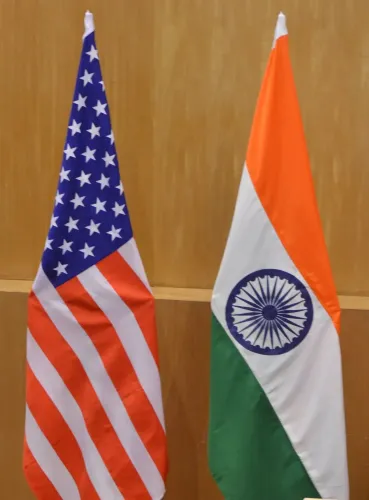
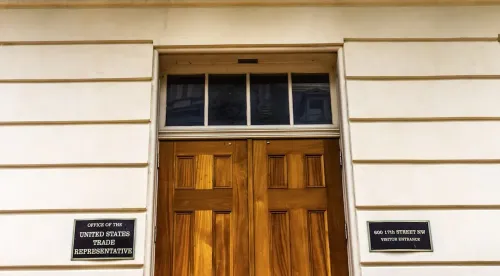
The Office of the United States Trade Representative (USTR) has scheduled three days of public hearings from July 7 to July 9 on proposed trade action against 60 economies, including India, under Section 301 investigations into what it describes as their failure to prohibit and effectively enforce bans on imports of goods produced with forced labour. India is among the economies cited as having failed both to impose and to effectively enforce such prohibitions.
India's Appearance and Key Representatives
India is scheduled to appear on the second day of the hearings, July 8. The day's eighth panel will feature industry representatives Poornima Shenoy of the Federation of Indian Chambers of Commerce and Industry (FICCI) and Shuchita Sonalika of the Confederation of Indian Industry (CII).
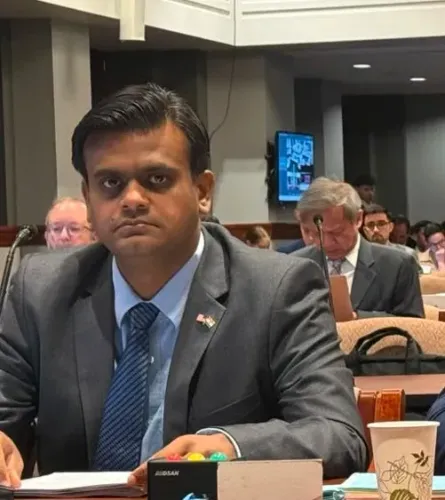
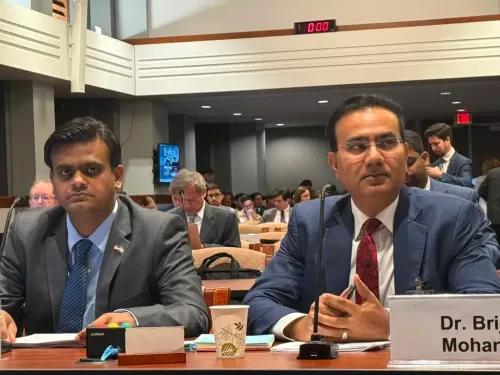
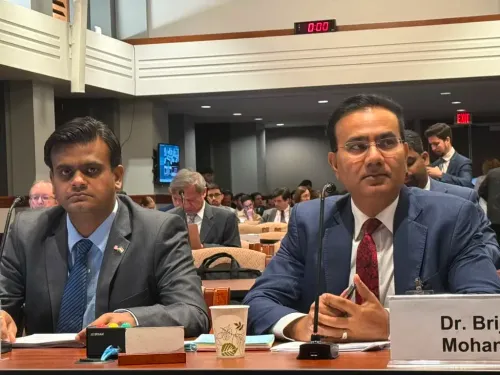
A subsequent panel will include Indian government officials: Dr Brij Mohan of the Ministry of Commerce and Industry and Shubham Arora of the Agricultural and Processed Food Products Export Development Authority (APEDA). They will testify alongside representatives from Jordan, Kazakhstan, Malaysia, and Pakistan.
Scope of the Three-Day Hearings
The hearings will draw testimony from foreign governments, US businesses, industry associations, labour organisations, and advocacy groups. Participants are scheduled from a broad range of countries including Chile, Ecuador, Guatemala, Honduras, Mexico, Peru, South Africa, South Korea, Sri Lanka, and Vietnam, as well as representatives from numerous US industries.
The USTR Report That Triggered the Hearings
The hearings follow a USTR report released on June 2 that concluded all 60 investigated economies had either failed to impose, or failed to effectively enforce, prohibitions on imports of goods produced with forced labour. The report determined that the acts, policies, and practices of these economies were 'unreasonable' and 'burden or restrict US commerce', making them actionable under Section 301 of the Trade Act of 1974.
Notably, the report drew a distinction among the 60 economies: Canada, Ecuador, the European Union, Indonesia, Mexico, and Pakistan were found to have legal prohibitions on forced labour imports but to have failed to enforce them effectively. India and the remaining economies were found to have failed on both counts — neither imposing nor effectively enforcing such prohibitions.
What Section 301 Could Mean for India
Section 301 of the US Trade Act of 1974 authorises the US Trade Representative to investigate foreign acts, policies, and practices deemed unreasonable or discriminatory that burden or restrict US commerce. If investigations result in a final determination that action is appropriate, the law permits the United States to impose responsive measures — including tariffs or other trade restrictions — subject to presidential direction. This comes amid broader US scrutiny of global supply chain labour standards, a trend that has intensified across multiple administrations.
Point of View
Who at least have laws on the books. The July 8 testimony is effectively a first line of defence against potential Section 301 tariffs, and the presence of both industry bodies and government officials signals New Delhi is treating this as a trade threat, not a procedural formality. What is missing from the public record so far is any indication of what remedial steps, if any, India intends to offer — a gap that will matter enormously when USTR moves toward a final determination. With 59 other economies also in the frame, there is a political question about sequencing: the US may not act against all simultaneously, but India's bilateral trade exposure makes it a high-stakes case regardless of where it falls in the queue.
NationPress
1 Oct 2026
Frequently Asked Questions
What are the USTR Section 301 forced labour hearings about?
The USTR has scheduled public hearings from July 7 to July 9 to examine proposed trade action against 60 economies, including India, for allegedly failing to prohibit or enforce bans on imports of goods produced with forced labour. The hearings follow a June 2 USTR report that found all 60 economies actionable under Section 301 of the Trade Act of 1974.
Why is India being investigated under Section 301?
According to the USTR's June 2 report, India has failed both to impose and to effectively enforce prohibitions on the importation of goods produced with forced labour. This places India in a more serious category than economies such as Canada or the EU, which have laws in place but were found to lack effective enforcement.
Who will represent India at the USTR hearings?
India will testify on July 8. Industry representatives Poornima Shenoy of FICCI and Shuchita Sonalika of CII will appear on one panel. Government officials Dr Brij Mohan of the Ministry of Commerce and Industry and Shubham Arora of APEDA will testify on a subsequent panel.
What action could the US take against India after these hearings?
Under Section 301 of the Trade Act of 1974, if the USTR makes a final determination that action is appropriate, the US may impose tariffs or other trade restrictions on the implicated economy, subject to presidential direction. No final determination has been made yet.
Which other countries are part of the USTR forced labour investigation?
The investigation covers 60 economies in total. Countries scheduled to testify at the July 7-9 hearings include Chile, Ecuador, Guatemala, Honduras, Mexico, Peru, South Africa, South Korea, Sri Lanka, Vietnam, Jordan, Kazakhstan, Malaysia, and Pakistan, among others.