India gets 10% US tariff in forced labour trade action, avoids higher rate
Synopsis
India avoided the steeper 12.5% US tariff by adopting a forced labour import prohibition mid-investigation — a reactive policy shift that paid off in trade terms. With 60 economies now facing new Section 301 duties effective 24 July, Washington is signalling that labour standards are no longer a soft diplomatic ask but a hard trade lever.
Key Takeaways
India will face a 10 per cent tariff — the lower rate — under the US Section 301 forced labour enforcement action effective 24 July .
India is one of 17 economies in the lower-rate category, alongside Bangladesh , Canada , Mexico , UK , and others.
India qualified for the lower rate after adopting a forced labour import prohibition following the USTR's proposed action in June .
Economies including China , Brazil , Vietnam , and Saudi Arabia face the higher 12.5 per cent tariff.
The action covers 60 economies accounting for 99.4 per cent of US imports; investigations began on 12 March .
Exemptions cover pharmaceuticals, semiconductor equipment, and certain raw materials critical to US supply chains.
India will face a 10 per cent tariff — the lower of two rates — under the Trump administration's new Section 301 enforcement action targeting forced labour imports, after the United States determined that New Delhi had adopted a forced labour import prohibition during the course of the investigation. The new duties took effect on 24 July and place India in a more favourable category than dozens of other trading partners.
What the USTR Action Covers
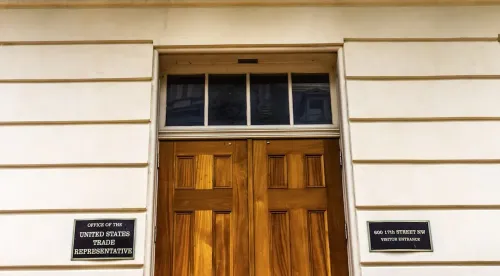
The Office of the US Trade Representative (USTR) announced on Thursday, 24 July that, at President Donald Trump's direction, it is imposing tariffs on imports from 60 economies for failing to prohibit or effectively enforce bans on goods produced with forced labour. The new duties range from 10 per cent to 12.5 per cent, depending on each country's forced labour import regime. The action covers the top 60 US trading partners, which together account for 99.4 per cent of total US imports.
India's Position in the Lower-Rate Category
India is one of 17 economies subject to the lower 10 per cent tariff, alongside Bangladesh, Canada, Indonesia, Malaysia, Mexico, Pakistan, Sri Lanka, and the United Kingdom, among others. According to the USTR, India moved into this category after adopting a forced labour import prohibition following the publication of the agency's proposed action in June. Cambodia, Guatemala, Honduras, Sri Lanka, and Trinidad and Tobago similarly adopted such prohibitions after investigations began, while Jordan committed to equivalent measures through an Agreement on Reciprocal Trade.
What the US Trade Representative Said
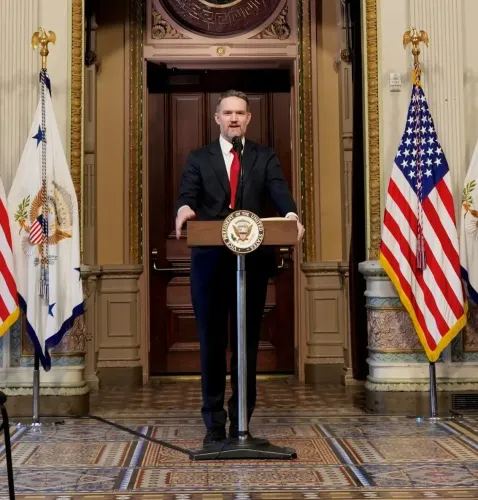
US Trade Representative Jamieson Greer stated: 'President Trump recognises that decades of moral suasion have not eradicated forced labour from global supply chains. The United States has had a forced labour import ban for nearly a century, and rigorously enforces it; it's well past time for our trading partners to do the same.' Greer added that he was 'encouraged by the trading partners who have moved quickly to adopt forced labour import prohibitions' and said he looks forward to 'ensuring their effective enforcement.'
Countries Facing the Higher 12.5% Rate
Most other investigated economies — including China, Australia, Brazil, Saudi Arabia, the United Arab Emirates, Vietnam, and South Africa — will face the steeper 12.5 per cent tariff. The European Union, Japan, South Korea, Switzerland, and Taiwan are subject to a different formula that applies tariffs net of existing Most-Favoured-Nation duty rates.
Exemptions and What Comes Next
The USTR announced broad product exemptions covering certain raw materials, goods critical to domestic supply chains, pharmaceuticals, and semiconductor manufacturing equipment — categories where tariffs could cause significant economic disruption or fail to advance the policy objective. Additional tariff-rate quotas are to be developed for Bangladesh, Cambodia, Indonesia, and Malaysia to encourage imports made with US textile and cotton inputs. The investigations that concluded with Thursday's action were launched on 12 March, included two rounds of public hearings, consultations with more than 45 governments, over 2,100 public comments, and testimony from more than 100 witnesses. The USTR formally determined on 2 June that the practices of all 60 economies were 'unreasonable' and burdened US commerce under Section 301 of the Trade Act of 1974.
Point of View
But it was reactive rather than proactive — New Delhi adopted its forced labour import prohibition only after the USTR published its proposed action, suggesting the policy shift was trade-motivated rather than rights-driven. That distinction matters: Washington has explicitly said it will monitor 'effective enforcement,' meaning a paper prohibition that lacks domestic implementation machinery could still invite escalation. More broadly, the Trump administration's expansion of Section 301 from China-specific trade disputes to a 60-country labour-standards sweep signals a structural shift in US trade enforcement — one that India, as a major export-dependent economy, cannot afford to treat as a one-time compliance exercise.
NationPress
22 Oct 2026
Frequently Asked Questions
Why is India facing a 10% US tariff under the Section 301 forced labour action?
India is subject to a 10 per cent tariff — the lower of two rates — because it adopted a forced labour import prohibition after the USTR published its proposed action in June, qualifying it for a more favourable category. The tariffs, directed by President Trump, took effect on 24 July and target 60 economies for failing to ban or enforce restrictions on goods made with forced labour.
What is Section 301 of the Trade Act of 1974?
Section 301 gives the US Trade Representative authority to investigate and respond to foreign government practices deemed unreasonable or discriminatory that burden US commerce. Previous administrations used it primarily in disputes with China; the Trump administration has expanded its use to cover labour-related trade practices across 60 economies.
Which countries face the higher 12.5% tariff?
Economies including China, Australia, Brazil, Saudi Arabia, the United Arab Emirates, Vietnam, and South Africa will face the steeper 12.5 per cent tariff. The EU, Japan, South Korea, Switzerland, and Taiwan are subject to a separate formula based on Most-Favoured-Nation duty rates.
Are any goods exempt from the new US forced labour tariffs?
Yes. The USTR announced broad exemptions for certain raw materials, pharmaceuticals, semiconductor manufacturing equipment, and other goods where tariffs could cause significant US economic disruption or fail to advance the policy objective. Additional tariff-rate quotas are also being developed for Bangladesh, Cambodia, Indonesia, and Malaysia.
What happens if countries do not enforce their forced labour import bans?
US Trade Representative Jamieson Greer indicated that the USTR will monitor effective enforcement by trading partners that adopted prohibitions. Countries that fail to implement their commitments in practice could face further action, as the agency has made enforcement — not just adoption — the benchmark for relief.