CII tells USTR: Compliance cooperation beats tariffs on forced labour
Synopsis
At a USTR Section 301 hearing in Washington, CII's Shuchita Sonalika made a pointed case against a proposed 12.5% tariff on Indian imports, arguing that India's existing compliance architecture — backed by SEBI's BRSR framework, ILO collaboration, and ESG standards — makes bilateral cooperation a far more credible tool than punitive duties for addressing forced labour concerns.
Key Takeaways
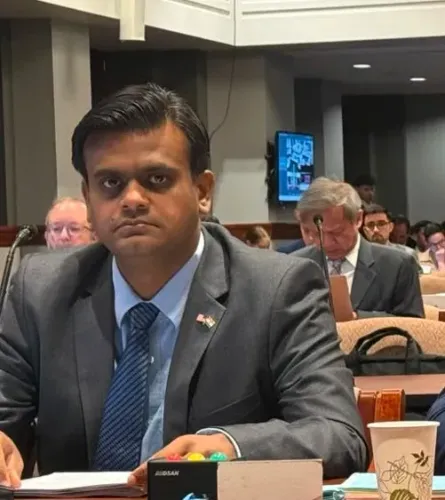
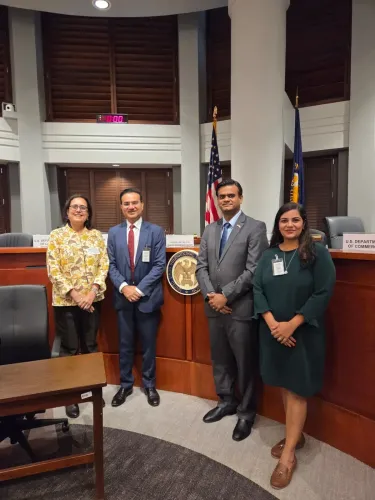
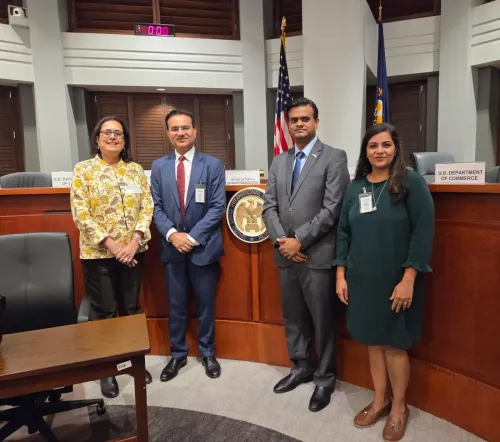
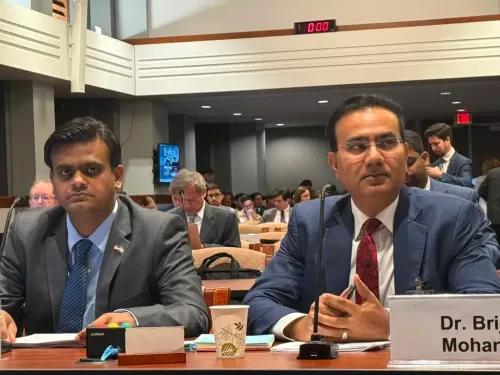
The Confederation of Indian Industry (CII) testified at a USTR Section 301 public hearing in Washington on Wednesday, 9 July .
CII representative Shuchita Sonalika opposed a proposed 12.5 per cent tariff on Indian imports, calling it unsupported by evidence and counterproductive.
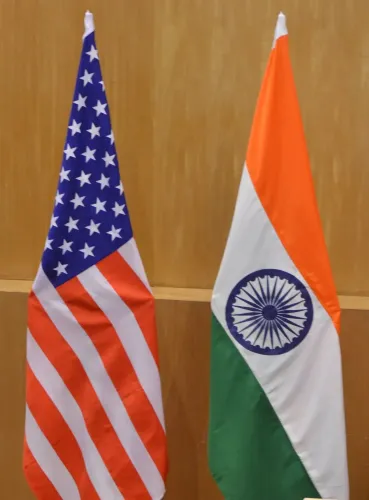
CII urged the USTR to pursue engagement through the India-US Trade Policy Forum , established in 2005 .
India's compliance framework cited includes SEBI's BRSR mandate for the top 1,000 listed companies and the BRSR Lite framework for SMEs.
CII highlighted its partnerships with the ILO and UNDP on responsible business practices and offered deeper cooperation with US authorities.
The Confederation of Indian Industry (CII) on Wednesday urged the United States Trade Representative (USTR) to pursue compliance-based bilateral engagement rather than imposing additional tariffs on Indian imports, arguing at a Section 301 public hearing in Washington that punitive trade measures would undermine one of the world's fastest-growing bilateral economic partnerships without addressing the stated concern over forced labour.
CII's Core Argument at the USTR Hearing
Presenting CII's position at the hearing, Shuchita Sonalika said the proposed 12.5 per cent tariff on Indian imports was 'neither supported in the evidence presented nor likely to advance the stated policy goal.' She argued that such a measure would instead penalise industries already compliant with international labour standards, raise costs for US manufacturers, and disrupt established supply chains.
'We believe compliance-based cooperation, not punitive tariffs, is the most effective pathway forward,' Sonalika told the hearing.
She called on the USTR to refrain from imposing tariff or non-tariff measures on Indian industry and to instead deepen engagement through the existing India-US Trade Policy Forum, which was established in 2005 and has been revived in recent years as both countries work to expand commercial ties.
India's Existing Compliance Architecture
Sonalika highlighted that Indian companies already operate under comprehensive compliance frameworks, including corporate codes of conduct, supplier codes, ethics policies, and environmental, social and governance (ESG) standards. She pointed specifically to the Securities and Exchange Board of India's (SEBI) Business Responsibility and Sustainability Reporting (BRSR) framework, which applies to India's top 1,000 listed companies, as well as the BRSR Lite framework introduced for small and medium enterprises.
She also noted CII's ongoing collaboration with the International Labour Organization (ILO) and the United Nations Development Programme (UNDP) on responsible business conduct, and said Indian industry would welcome deeper cooperation with US authorities to further strengthen these systems.
Response to USTR's Direct Question
A USTR official asked how exempting Indian exports from additional duties would encourage countries under investigation to eliminate unfair labour practices. Sonalika replied directly that 'compliance and cooperation-based mechanisms would be far more effective than the application of tariffs,' adding that India fully supports the elimination of forced labour from global supply chains.
She argued that India's existing legal and institutional framework already prohibits forced labour, and that exporters function under rigorous compliance systems driven by multinational buyers, international certification bodies, and domestic regulatory requirements — providing, in her view, a stronger foundation for bilateral cooperation than unilateral trade action.
Broader Trade Context
The Section 301 hearing is part of a US review process that can result in additional duties on imports from countries deemed to have unfair trade practices. The proposed 12.5 per cent tariff has drawn concern from Indian industry at a time when the US-India bilateral trade relationship is expanding rapidly across goods, services, and technology sectors.
This comes amid broader US-India trade negotiations, with both governments working toward a bilateral trade agreement. How the USTR weighs CII's compliance-first argument against domestic political pressure on supply-chain labour standards could shape the next phase of that negotiation.
Point of View
It attempts to shift the burden of proof back onto the USTR: if robust systems already exist, the tariff becomes harder to justify on policy grounds. The risk, however, is that Washington's Section 301 process is as much about domestic political signalling as it is about evidence. India's compliance argument is sound; whether it carries weight in a US trade review shaped by labour-union lobbying and election-cycle optics is a different question entirely.
NationPress
8 Oct 2026
Frequently Asked Questions
What did CII say at the USTR Section 301 hearing?
CII urged the USTR not to impose a proposed 12.5 per cent tariff on Indian imports, arguing that compliance-based bilateral cooperation through the India-US Trade Policy Forum would be more effective at addressing forced labour concerns than punitive trade measures. CII representative Shuchita Sonalika said the tariff was unsupported by evidence and would penalise already-compliant industries.
What is the proposed US tariff on Indian imports about?
The proposed 12.5 per cent tariff is part of a US Section 301 review process examining concerns over forced labour in Indian supply chains. Section 301 allows the US to impose additional duties on imports from countries deemed to have unfair or unreasonable trade practices.
What compliance frameworks does India already have in place?
India's compliance architecture includes SEBI's Business Responsibility and Sustainability Reporting (BRSR) framework for the top 1,000 listed companies and the BRSR Lite framework for small and medium enterprises. Indian exporters also operate under corporate codes of conduct, supplier codes, ESG standards, and international certification requirements.
What is the India-US Trade Policy Forum?
The India-US Trade Policy Forum is a bilateral platform established in 2005 to address trade and investment issues between the two countries. It has been revived in recent years as both governments seek to deepen commercial ties and negotiate solutions to market access and regulatory concerns.
How did CII respond to the USTR's question on labour practice enforcement?
When a USTR official asked how exempting Indian exports from additional duties would encourage elimination of unfair labour practices, CII's Shuchita Sonalika said compliance and cooperation-based mechanisms would be far more effective than tariffs. She also offered to deepen CII's engagement with US authorities, citing existing partnerships with the ILO and UNDP.