Pradhan Launches Deep-Sea Fishing Authorisation in Bhubaneswar
Synopsis
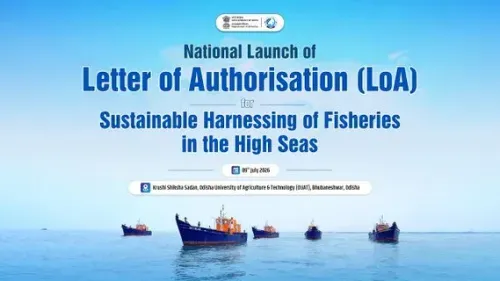
Union Education Minister Dharmendra Pradhan attended the national launch of the Letter of Authorisation for Sustainable Deep-Sea Fishing in Bhubaneswar on July 9, 2026, calling it a new era for India's blue economy. The framework grants licensed deep-sea access to fishermen under a structured regulatory regime rooted in the 2020 PMMSY.
Key Takeaways
Union Education Minister Dharmendra Pradhan attended the national launch of the Letter of Authorisation for Sustainable Deep-Sea Fishing in Bhubaneswar on July 9, 2026 .
The Letter of Authorisation is a licensing instrument granting regulated access to deep-sea fishing zones beyond inshore waters.
The launch builds on the Pradhan Mantri Matsya Sampada Yojana (PMMSY) , introduced in 2020 to modernise India's fisheries sector.
The framework aligns with India's National Blue Economy Policy and SDG 14 commitments on sustainable use of marine resources.
Coastal fishing communities, vessel operators, and coastal state governments are the primary stakeholders in the rollout.
The national launch in Odisha is expected to be followed by extension of the authorisation process to other major coastal states.
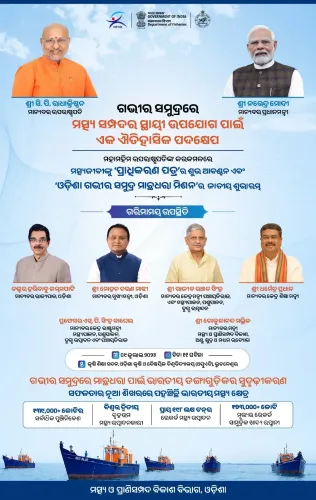
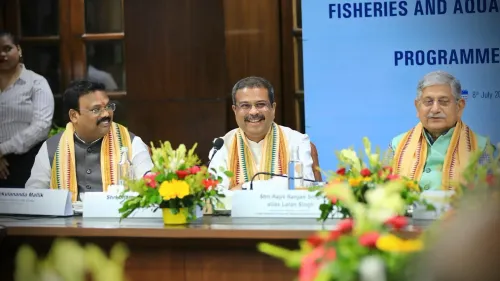
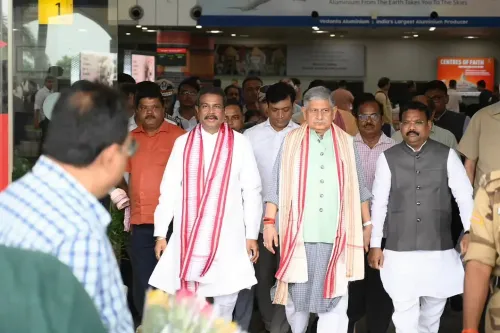
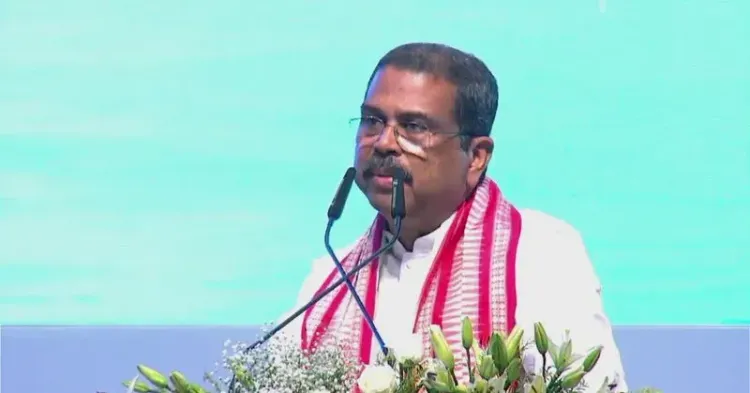
Union Education Minister Dharmendra Pradhan on Thursday, July 9, 2026, attended the national launch of the Letter of Authorisation for Sustainable Deep-Sea Fishing in Bhubaneswar, marking what he described as the beginning of 'a new era for India's blue economy.'
Context
The Letter of Authorisation is a regulatory instrument designed to grant licensed access to deep-sea fishing zones, enabling vessels to operate beyond inshore waters under a structured, government-approved framework. The national launch in Bhubaneswar, capital of the coastal state of Odisha, signals the Centre's intent to anchor the rollout in a state with large traditional fishing communities and significant marine resource potential.
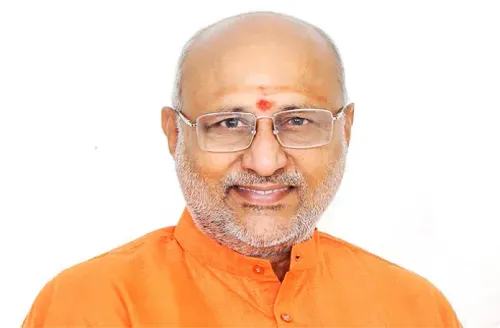
Pradhan, a senior BJP leader who represents Odisha in the Union Cabinet, characterised the event as a transformative moment for India's maritime economy, linking it to the broader goal of sustainable exploitation of oceanic resources.
Policy Backdrop
The launch sits within a layered policy architecture that has been building since at least 2020. The Pradhan Mantri Matsya Sampada Yojana (PMMSY), a central sector scheme introduced that year, laid the foundation for modernising India's fisheries sector — covering vessel upgradation, production targets, and sustainability mandates.
Around the same period, a draft National Policy on Blue Economy was circulated to integrate marine sectors — fisheries, shipping, coastal tourism, and offshore energy — into a unified economic planning framework aligned with SDG 14 commitments on life below water. The Letter of Authorisation mechanism represents a concrete regulatory step within that broader architecture, aimed at controlling access to deeper waters to prevent the over-exploitation that has depleted inshore fish stocks in several coastal regions.
India's push into deep-sea fishing is also driven by the need to raise overall seafood production and export earnings while relieving pressure on near-shore ecosystems, a balance that successive administrations have sought to strike through licensing controls and vessel-capacity regulations.
Stakeholders and Impact
The primary beneficiaries — and those most directly affected — are traditional and mechanised fishing communities along India's roughly 7,500-kilometre coastline. For fishermen in Odisha and other coastal states, access to authorised deep-sea zones could open new livelihood avenues that inshore fishing can no longer sustain given declining catch volumes.
Coastal state governments will play a critical role in implementing the authorisation process at the ground level, coordinating with the Union Ministry of Fisheries, Animal Husbandry and Dairying. The framework also has implications for marine conservation, as structured licensing is intended to prevent unregulated deep-water trawling that can damage fragile seabed ecosystems.
Industry stakeholders — vessel operators, fish processors, and export houses — stand to gain from a more predictable regulatory environment that could attract investment in larger, ocean-going fishing fleets.
What's Next
The Bhubaneswar launch is framed as a national rollout, suggesting the authorisation framework will be extended to other coastal states including Andhra Pradesh, Tamil Nadu, Kerala, Gujarat, and Maharashtra in subsequent phases. The pace and uniformity of that expansion will determine how meaningfully the policy shifts fishing activity from congested inshore zones to deeper, more productive waters.
Observers will also watch for any related amendments to fisheries regulations and whether Parliament takes up legislative changes to underpin the new authorisation regime. For India's blue economy ambitions to translate into durable gains, the Letter of Authorisation must be accompanied by vessel financing, training for deep-sea navigation, and robust monitoring of catch limits — making the Bhubaneswar launch a beginning, not an endpoint.
Point of View
And anchoring a blue economy milestone in the state reinforces the BJP's outreach to a coastal electorate with deep ties to fishing livelihoods. The Letter of Authorisation mechanism is the regulatory capstone of a policy arc stretching back to the 2020 PMMSY, moving the fisheries sector from aspiration to structured access rights. However, the real test lies in implementation: whether authorisations reach small and medium fishermen or are captured by larger vessel operators will define the scheme's equity credentials. If the rollout is extended swiftly and equitably across all nine major coastal states, it could mark a genuine structural shift in how India governs its maritime commons.
NationPress
9 Jul 2026
Frequently Asked Questions
What is the Letter of Authorisation for Sustainable Deep-Sea Fishing?
It is a government-issued licence that grants fishing vessels regulated access to deep-sea zones beyond inshore waters, under a structured framework designed to promote sustainable exploitation and prevent over-fishing.
Why was the deep-sea fishing authorisation launched in Bhubaneswar?
Bhubaneswar is the capital of Odisha, a major coastal state with large traditional fishing communities. The city was chosen for the national launch, with Union Minister Dharmendra Pradhan — a senior BJP leader from Odisha — presiding over the event.
What is the Pradhan Mantri Matsya Sampada Yojana and how does it relate to this launch?
The Pradhan Mantri Matsya Sampada Yojana (PMMSY) is a central sector scheme launched in 2020 to modernise India's fisheries sector through vessel upgradation, production targets, and sustainability mandates. The Letter of Authorisation framework is a regulatory step built on the foundation laid by PMMSY.
Who benefits from the deep-sea fishing authorisation scheme?
Traditional and mechanised fishing communities along India's coastline are the primary beneficiaries, along with vessel operators, fish processors, and export houses who gain access to a more predictable regulatory environment for deep-water fishing.
What is India's blue economy policy?
India's blue economy policy, outlined in a draft national framework circulated around 2020-21, aims to integrate marine sectors — including fisheries, shipping, coastal tourism, and offshore energy — into a unified economic planning framework aligned with sustainable development goals.