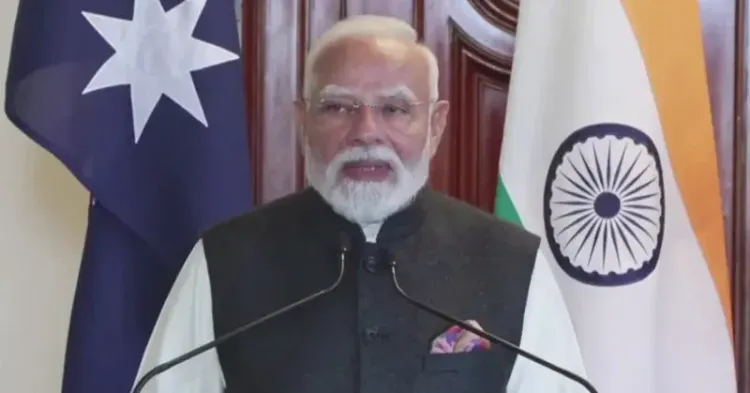
Rijiju shares live feed of PM Modi-Albanese joint press meet in Melbourne
Synopsis
Union Parliamentary Affairs Minister Kiren Rijiju shared a live broadcast on 9 July 2026 of PM Narendra Modi and Australian PM Anthony Albanese at a joint press conference in Melbourne, spotlighting the latest high-level engagement under the India-Australia Comprehensive Strategic Partnership.
Key Takeaways
Kiren Rijiju shared a live X broadcast link of the PM Modi-Albanese joint press conference in Melbourne on 9 July 2026 .
India and Australia upgraded their relationship to a Comprehensive Strategic Partnership in 2020 , committing to annual leader-level summits.
The India-Australia Economic Cooperation and Trade Agreement (ECTA) was signed in 2022 , forming the economic backbone of the partnership.
Both countries are also Quad members alongside the United States and Japan , anchoring their ties within a broader Indo-Pacific framework.
Key areas of bilateral focus include critical minerals , defence co-production , and student and worker mobility arrangements.
PM Modi addressed the Australian Parliament in 2014 , the first Indian prime minister to do so in 28 years .
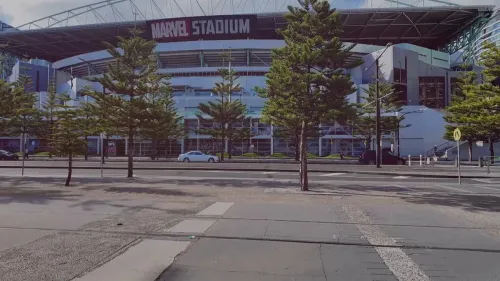
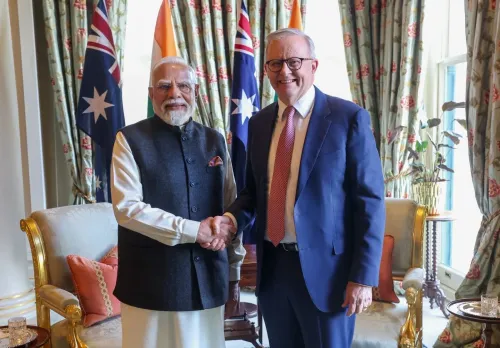
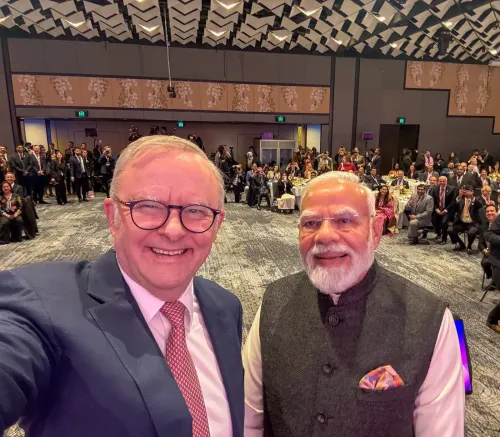
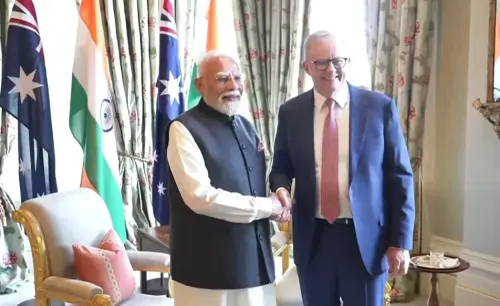
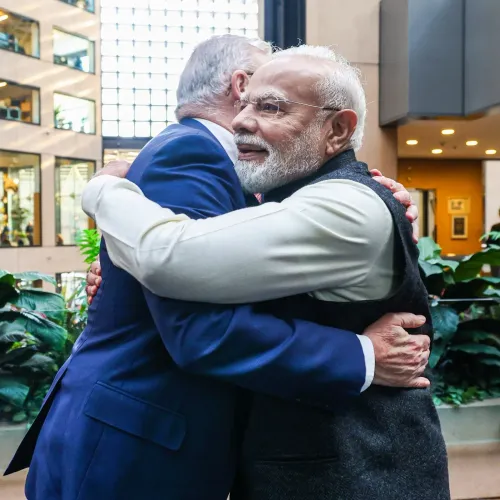
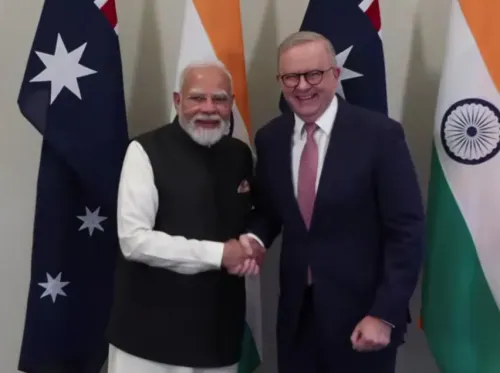
Union Parliamentary Affairs Minister Kiren Rijiju on Thursday, 9 July 2026 shared a live broadcast link of Prime Minister Narendra Modi and Australian Prime Minister Anthony Albanese attending a joint press conference in Melbourne, drawing public attention to the high-profile bilateral engagement.
Context
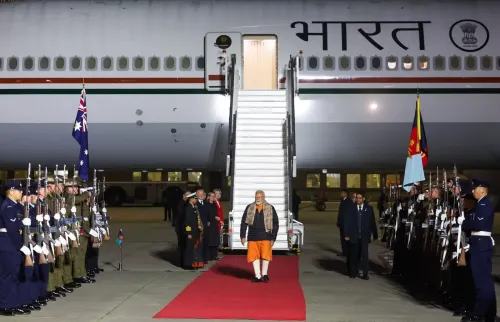
The joint press meet in Melbourne marks another chapter in the increasingly active India-Australia leader-level engagement that has become a near-annual fixture since 2014. PM Modi's visit to Australia underscores the strategic importance both nations attach to the bilateral relationship, which was elevated to a Comprehensive Strategic Partnership in 2020.
Rijiju's post, carrying the tag #WatchLive, directed followers to a live X broadcast of the press conference, signalling the government's intent to give citizens direct, real-time access to a significant diplomatic moment.
Policy Backdrop
The India-Australia Comprehensive Strategic Partnership, upgraded during a virtual summit in 2020, committed both sides to annual leader meetings, a 2+2 ministerial dialogue covering foreign and defence ministers, and expanded defence exercises. The framework sits alongside the Quad grouping — comprising India, Australia, the United States, and Japan — as a pillar of both countries' Indo-Pacific strategies.
A landmark in the economic dimension came in 2022 with the signing of the India-Australia Economic Cooperation and Trade Agreement (ECTA), which reduced tariffs on a range of goods and opened new pathways for trade in services. Deliverables from such leader-level meetings have historically spanned critical minerals supply chains, joint defence production, and mobility arrangements for students and workers.
PM Modi has a long history of high-profile engagement with Australia: in 2014 he addressed the Australian Parliament — the first Indian prime minister to do so in 28 years — and in 2023 he attended the Quad Leaders' Summit hosted by Australia in Sydney.
Stakeholders and Impact
The bilateral relationship touches a wide set of stakeholders. Defence establishments on both sides benefit from joint exercises and emerging co-production arrangements. Trade and investment communities look to leader-level summits for signals on market access and regulatory alignment under ECTA.
The large Indian diaspora in Australia — one of the fastest-growing migrant communities in that country — and Indian students enrolled in Australian universities are also directly affected by mobility and recognition agreements that typically feature in bilateral outcomes. Critical minerals, in which Australia holds significant reserves and India has growing demand as it scales its clean-energy transition, represent another key area of mutual interest.
What's Next
Observers will watch for concrete announcements emerging from the Melbourne press conference, particularly on defence cooperation, critical minerals partnerships, and any updates to the mobility framework for workers and students. A follow-up 2+2 defence-and-foreign-ministers meeting would be the next institutional step to operationalise any commitments made at the summit. The Quad calendar will also be monitored for any joint leader statement that may accompany or follow the bilateral engagement.
Point of View
Trade, and technology. The Quad dimension gives this bilateral rhythm a minilateral weight that extends well beyond the two countries, making each summit a signal to the broader Indo-Pacific. Concrete deliverables — particularly on critical minerals and defence co-production — will determine whether this visit advances the partnership beyond its existing institutional architecture.
NationPress
7 Oct 2026
Frequently Asked Questions
Why did Kiren Rijiju share the Modi-Albanese press conference link?
Rijiju shared a live X broadcast link to give Indian audiences direct real-time access to PM Modi's joint press conference with Australian PM Anthony Albanese in Melbourne on 9 July 2026, in keeping with the government's practice of amplifying major diplomatic moments on social media.
What is the India-Australia Comprehensive Strategic Partnership?
The India-Australia Comprehensive Strategic Partnership was established and upgraded in 2020 to include annual leader-level summits, a 2+2 ministerial dialogue on defence and foreign affairs, expanded defence exercises, and closer cooperation on trade and technology.
What is the India-Australia ECTA?
The India-Australia Economic Cooperation and Trade Agreement (ECTA), signed in 2022, is a landmark trade deal that reduced tariffs on a range of goods and opened new pathways for services trade and professional mobility between the two countries.
What is the Quad and how does Australia fit in?
The Quad is a minilateral grouping of India, Australia, the United States, and Japan focused on maintaining a free and open Indo-Pacific. Australia hosted the Quad Leaders' Summit in Sydney in 2023, attended by PM Modi.
What outcomes are expected from PM Modi's Melbourne visit?
Analysts expect announcements on critical minerals supply chains, defence cooperation and co-production, and student and worker mobility arrangements, with a possible follow-up 2+2 defence-and-foreign-ministers meeting to implement summit commitments.