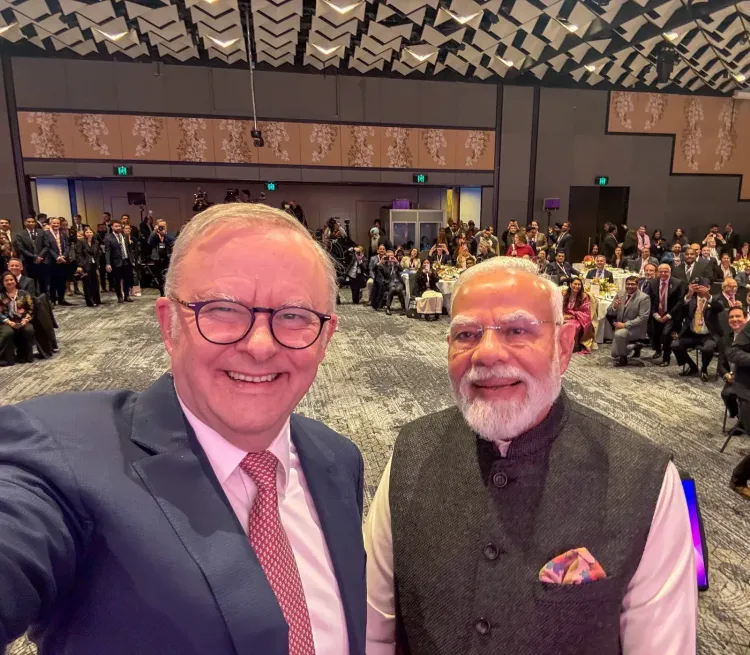
Rijiju Hails Modi-Albanese Selfie as Symbol of India-Australia Ties
Synopsis
Union Parliamentary Affairs Minister Kiren Rijiju on 9 July 2026 shared a photograph of PM Modi and Australian PM Albanese, describing it as a symbol of the enduring India-Australia partnership built on warmth and mutual trust, underscoring steady growth in bilateral ties across trade, defence and diplomacy.
Key Takeaways
Kiren Rijiju shared a photograph of PM Modi and PM Albanese on 9 July 2026 , calling it a symbol of 'an enduring partnership.' India and Australia elevated ties to a Comprehensive Strategic Partnership in June 2020 , covering security, trade and technology.
The India-Australia ECTA , signed in April 2022 and in force since December 2022 , has expanded market access for both countries.
Both nations are members of the Quad alongside the United States and Japan , with regular leader-level engagement since 2021 .
A 2+2 Foreign and Defence Ministers' Dialogue was instituted in 2021 to institutionalise annual security cooperation.
Cooperation on critical minerals , defence exercises and education has expanded steadily alongside the broader bilateral framework.
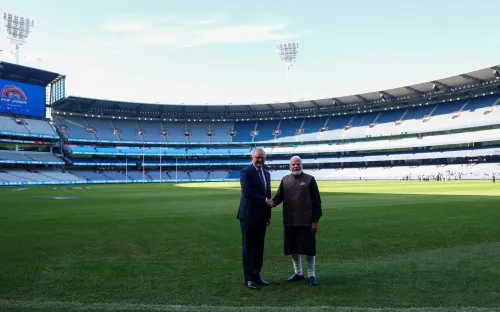
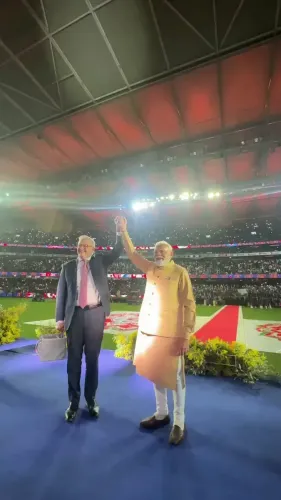
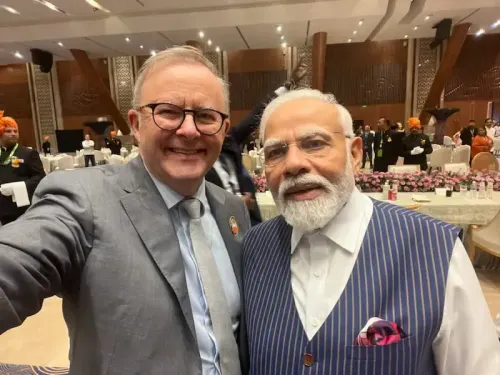
Union Parliamentary Affairs Minister Kiren Rijiju on Thursday, 9 July 2026 shared a photograph of Prime Minister Narendra Modi and Australian Prime Minister Anthony Albanese together, calling it a symbol of the enduring partnership between the two nations. Rijiju described the image as capturing 'warmth and mutual trust' between the two leaders, underlining the steady momentum in India-Australia bilateral relations.
Context
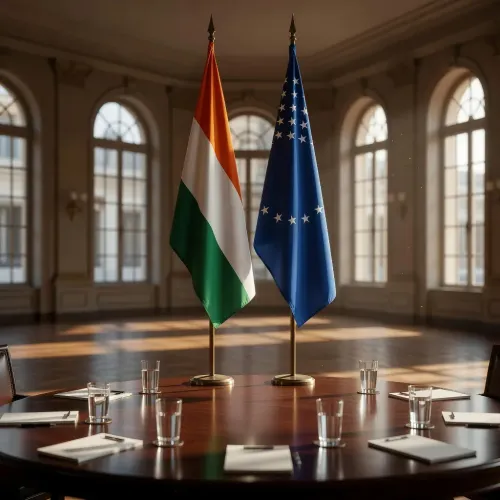
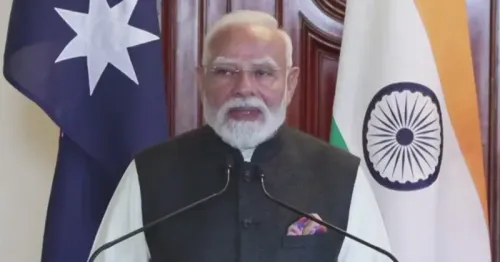
Rijiju's post — captioned 'One selfie. Two leaders. An enduring partnership' — accompanied a photograph showing PM Modi and PM Albanese together, with both the Indian and Australian flags featured. The post tagged both leaders' official handles and was widely read as a signal of continued high-level engagement between New Delhi and Canberra.
While the specific occasion of the photograph has not been independently confirmed, the image reflects the pattern of personal diplomacy that has characterised the relationship since Albanese took office in May 2022. Leader-level meetings between the two countries have become a regular feature of the bilateral calendar.
Policy Backdrop
India and Australia elevated their ties to a Comprehensive Strategic Partnership in June 2020, covering security, trade, and technology cooperation. This was followed by the signing of the India-Australia Economic Cooperation and Trade Agreement (ECTA) in April 2022, which entered into force in December 2022, reducing tariffs across hundreds of product categories and expanding market access for Indian exporters and Australian goods alike.
The two nations also institutionalised a 2+2 Foreign and Defence Ministers' Dialogue in 2021, bringing together the foreign and defence ministers of both countries annually. Both are members of the Quad — the Quadrilateral Security Dialogue alongside the United States and Japan — which was revived at summit level in 2021 and has since held regular leader-level meetings focused on Indo-Pacific stability.
Stakeholders and Impact
The deepening partnership has tangible consequences for a range of stakeholders. Indian students form one of the largest international student communities in Australia, and bilateral education frameworks have expanded alongside the broader relationship. Defence forces of both countries have increased joint exercises and intelligence-sharing arrangements under the strategic partnership umbrella.
Trade exporters on both sides stand to benefit from the ongoing implementation of ECTA, with both governments signalling interest in reviewing and potentially expanding the agreement's scope. Cooperation on critical minerals — where Australia is a leading supplier and India a growing consumer — has also emerged as a priority area, given its relevance to supply-chain resilience and clean-energy transitions.
What's Next
Observers will watch for details of any formal bilateral summit or ministerial engagement associated with the photograph shared by Rijiju. The next scheduled 2+2 dialogue and any progress on an ECTA review or defence industrial collaboration projects will be key markers of how the relationship continues to develop through 2026.
The broader arc of India-Australia relations — anchored in the Quad, shared democratic values, and growing economic interdependence — suggests that leader-level warmth, as captured in the photograph highlighted by Rijiju, is likely to be backed by substantive institutional follow-through in the months ahead.
Point of View
While ceremonial in tone, is consistent with the BJP government's deliberate use of personal diplomacy imagery to signal the health of key strategic relationships. The India-Australia partnership has moved well beyond symbolism — anchored in the Quad, a live trade agreement, and institutionalised defence dialogue — making even an informal photograph a meaningful data point in tracking bilateral momentum. The framing of 'warmth and mutual trust' echoes the language used at the 2020 Comprehensive Strategic Partnership announcement, suggesting continuity in the government's messaging architecture around Canberra. Analysts will look for whether this public signal is followed by a formal summit announcement or a concrete deliverable in the defence or critical minerals space.
NationPress
7 Oct 2026
Frequently Asked Questions
Why did Kiren Rijiju post about Modi and Albanese?
Rijiju shared a photograph of PM Modi and PM Albanese on 9 July 2026 to highlight the strong personal rapport and enduring partnership between India and Australia , describing it as a symbol of warmth and mutual trust between the two leaders.
What is the current status of India-Australia relations?
India and Australia share a Comprehensive Strategic Partnership established in June 2020 , covering security, trade and technology. The bilateral ECTA trade agreement has been in force since December 2022 , and both nations cooperate within the Quad alongside the US and Japan .
What is the India-Australia ECTA?
The India-Australia Economic Cooperation and Trade Agreement (ECTA) was signed in April 2022 and entered into force in December 2022 . It reduces tariffs across hundreds of product categories and expands market access for exporters on both sides.
Are India and Australia part of the Quad?
Yes. Both India and Australia are members of the Quad — the Quadrilateral Security Dialogue — alongside the United States and Japan . The grouping was revived at summit level in 2021 and focuses on Indo-Pacific stability and security.
What areas does India-Australia defence cooperation cover?
India and Australia have expanded joint military exercises, intelligence sharing and critical minerals cooperation under the Comprehensive Strategic Partnership . An annual 2+2 Foreign and Defence Ministers' Dialogue , instituted in 2021 , provides an institutional framework for security cooperation.