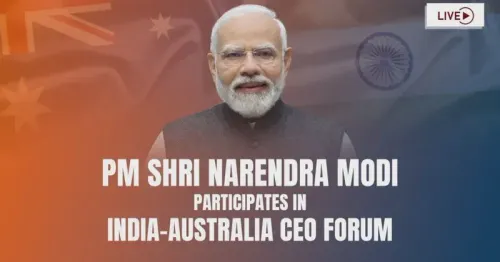
Kishan Reddy Hails PM Modi's Australia Visit as Milestone
Synopsis
Union Coal and Mines Minister G. Kishan Reddy has welcomed PM Modi's official visit to Australia as a defining milestone, highlighting strengthened cooperation in defence, maritime security, and energy under the Comprehensive Strategic Partnership — a relationship built steadily since 2014 through trade pacts, joint exercises, and Quad coordination.
Key Takeaways
Union Coal and Mines Minister G.
Kishan Reddy called PM Modi's Australia visit a 'defining milestone' in bilateral relations on 10 July 2026 .
The visit is framed as elevating the Comprehensive Strategic Partnership first upgraded in June 2020 .
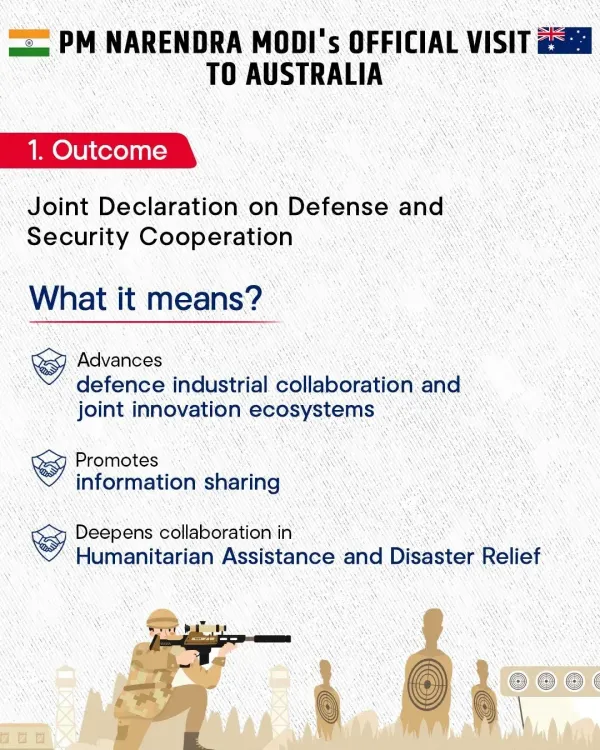
Key cooperation areas cited: defence, maritime security, and energy security .
India and Australia signed the Economic Cooperation and Trade Agreement (ECTA) in April 2022 , deepening economic ties.
A 2+2 Foreign and Defence Ministers' dialogue has been operational since 2019 as an institutional anchor.
Follow-up meetings on defence technology sharing and critical minerals supply chains are anticipated in coming months.
Union Coal and Mines Minister G. Kishan Reddy on Friday, 10 July 2026 called Prime Minister Narendra Modi's official visit to Australia a 'defining milestone' in bilateral relations, saying it elevates the Comprehensive Strategic Partnership between the two nations with key outcomes across defence, maritime, and energy security cooperation.
Context
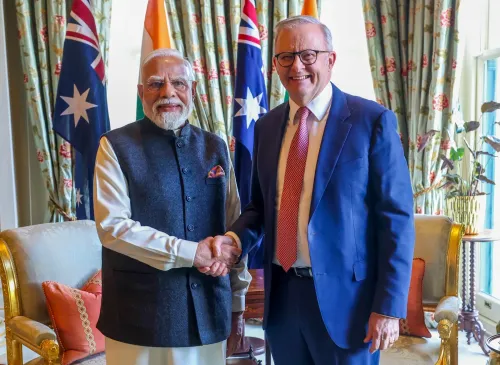
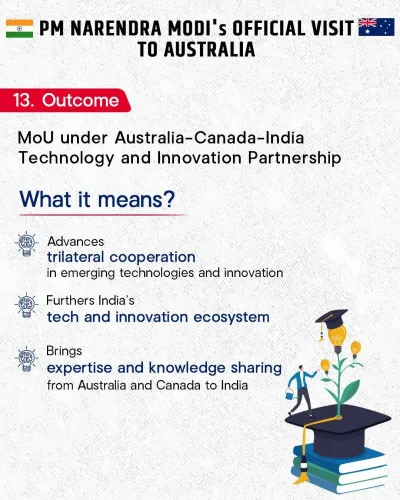
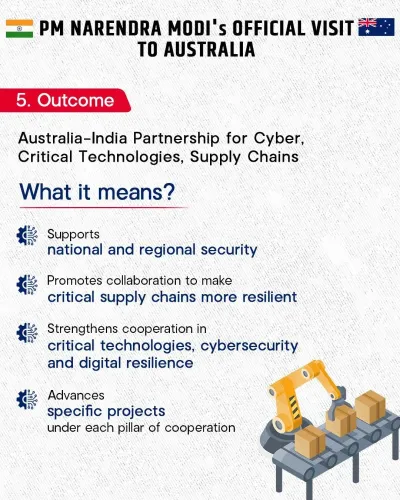
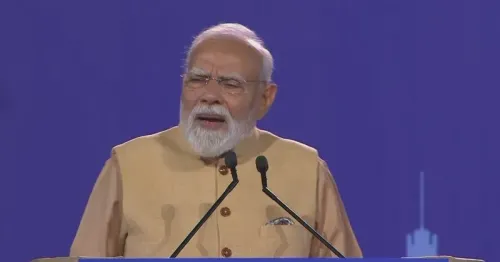
Reddy, who also serves as BJP's Telangana state president, posted on X that the visit strengthens cooperation between India and Australia across three strategic pillars: defence, maritime security, and energy security. The post was accompanied by four images, signalling high-level engagement around the visit. While the minister did not enumerate specific agreements, he described the outcomes as significant for both nations.
India and Australia share a Comprehensive Strategic Partnership framework that was first elevated during a virtual leaders' summit in June 2020. The two countries have since deepened ties through multiple institutional channels, including a 2+2 Foreign and Defence Ministers' dialogue established in 2019.
Policy Backdrop
India-Australia relations have followed a consistent upward trajectory since 2014, driven by New Delhi's Act East and Indo-Pacific policy frameworks. Defence and maritime cooperation has been operationalised through joint exercises such as AUSINDEX and India's participation in the Malabar naval exercise series alongside Quad partners.
On the economic front, the two countries signed the Economic Cooperation and Trade Agreement (ECTA) in April 2022, a landmark step that reduced tariffs on a wide range of goods. Energy security has emerged as a particularly important strand, with Australian LNG supplies and critical minerals — essential for India's manufacturing and clean-energy ambitions — forming the backbone of bilateral energy diplomacy.
The emphasis on energy security in Reddy's post is notable given his portfolio. As Union Minister of Coal and Mines, he oversees India's domestic mineral strategy, and Australia is a key supplier of coking coal and critical minerals that feed Indian industry.
Stakeholders and Impact
The sectors most directly affected by deeper India-Australia engagement include defence forces of both nations, which stand to benefit from expanded technology-sharing and interoperability frameworks. Energy companies — both state-owned and private — operating in LNG imports and critical mineral supply chains are also key stakeholders.
For India's broader industrial base, securing reliable access to Australian critical minerals such as lithium and cobalt is increasingly vital as the country scales up electric-vehicle manufacturing and battery storage capacity. A stable bilateral framework underpins long-term supply agreements that reduce India's dependence on single-source suppliers.
What's Next
Follow-up implementation meetings on defence technology sharing and critical minerals supply chain agreements are expected in the coming months as both governments work to translate summit-level commitments into operational arrangements. The 2+2 dialogue mechanism is likely to serve as a key vehicle for tracking progress across the defence and foreign policy tracks.
For India, the visit reinforces its Indo-Pacific positioning at a time of heightened regional competition, while Australia gains a deeper strategic partner with growing economic and military heft. The energy security dimension, underscored by Minister Reddy's remarks, signals that the relationship is maturing well beyond its earlier trade-and-tourism character.
Point of View
Not just strategic optics. The framing around the Comprehensive Strategic Partnership also reflects New Delhi's wider push to institutionalise Indo-Pacific alignments through durable bilateral frameworks rather than ad-hoc summitry. Taken together, the post positions the visit as both a foreign-policy achievement and a vindication of the government's long-term Act East strategy.
NationPress
8 Oct 2026
Frequently Asked Questions
What is the India-Australia Comprehensive Strategic Partnership?
The India-Australia Comprehensive Strategic Partnership is a bilateral framework elevated during a virtual leaders' summit in June 2020, covering defence, maritime security, trade, and critical minerals cooperation between the two countries.
Why did G. Kishan Reddy comment on PM Modi's Australia visit?
As Union Coal and Mines Minister and BJP Telangana state president, Kishan Reddy posted on X to welcome the visit as a defining milestone, highlighting its outcomes in defence, maritime, and energy security — areas that overlap with his own ministerial portfolio.
What is the India-Australia 2+2 dialogue?
The 2+2 Foreign and Defence Ministers' dialogue is a high-level bilateral mechanism established in 2019 that brings together the foreign and defence ministers of India and Australia to coordinate on strategic and security issues.
How does Australia contribute to India's energy security?
Australia is a significant supplier of LNG and critical minerals such as lithium and cobalt to India, supporting both its energy needs and its growing electric-vehicle and battery manufacturing sectors.
What is the India-Australia ECTA?
The Economic Cooperation and Trade Agreement (ECTA), signed in April 2022, is a bilateral trade pact between India and Australia that reduced tariffs on a wide range of goods and marked a major step in deepening economic ties.