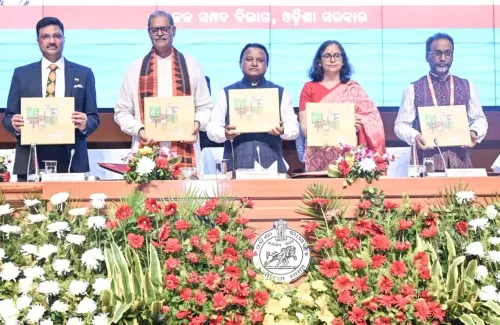
CM Majhi lays foundation for 3 lift irrigation projects in Keonjhar
Synopsis
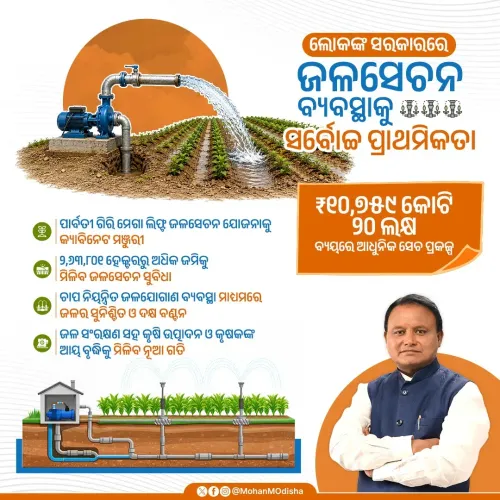
Chief Minister Mohan Charan Majhi laid the foundation for three lift irrigation projects at Raikala in Keonjhar on 7 November 2026, promising water to 4,280 hectares of farmland in Keonjhar and Mayurbhanj districts — a push to cut rainfed dependence in Odisha's tribal-majority north.
Key Takeaways
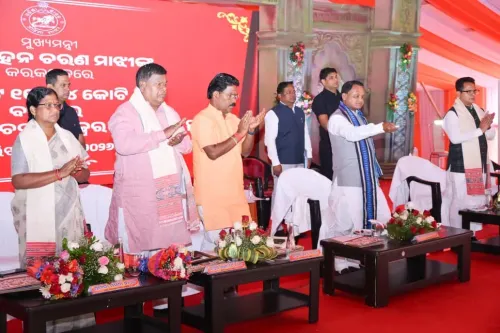
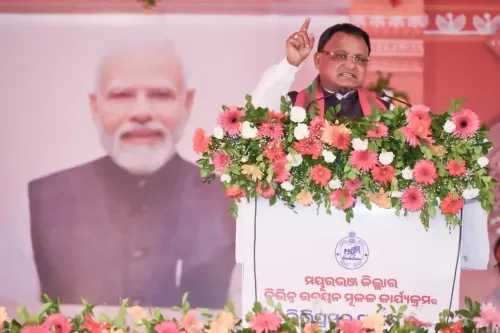
CM Mohan Charan Majhi laid foundation stones for three major lift irrigation projects on 7 November 2026 .
The ceremony was held at Raikala, Jhumpura block, Keonjhar district , Odisha.
The three projects will together provide water to 4,280 hectares of agricultural land once operational.
Beneficiary areas include Jhumpura block (Keonjhar district) and Jarkani area (Mayurbhanj district) .
The projects target reduced dependence on rainfed agriculture in Odisha's hilly, tribal-majority northern belt.
Odisha has pursued lift irrigation expansion in Keonjhar and Mayurbhanj since the 1990s due to terrain unsuitable for gravity-fed canals.
Water is arriving — on a promise — to 4,280 hectares of farmland across two of Odisha's northern districts. Chief Minister Mohan Charan Majhi on Saturday, 7 November 2026, laid the foundation stones for three major lift irrigation projects at Raikala in Jhumpura block, Keonjhar district, pledging uninterrupted water supply to farmers who have long depended on erratic rainfall.
Three projects, two districts, one Raikala site
All three projects were inaugurated at a single ceremony in Raikala, Jhumpura block. Once operational, the schemes will channel water to cropland across Jhumpura block in Keonjhar district and the Jarkani area of Mayurbhanj district — adjacent northern Odisha territories whose undulating terrain makes river-lift systems the most practical route to irrigation coverage. The post from the Chief Minister's Office of Odisha framed the move as a step toward 'strengthening the agricultural infrastructure of Keonjhar and Mayurbhanj districts and providing uninterrupted irrigation facilities to farmers' land.'
Why lift irrigation in Keonjhar and Mayurbhanj
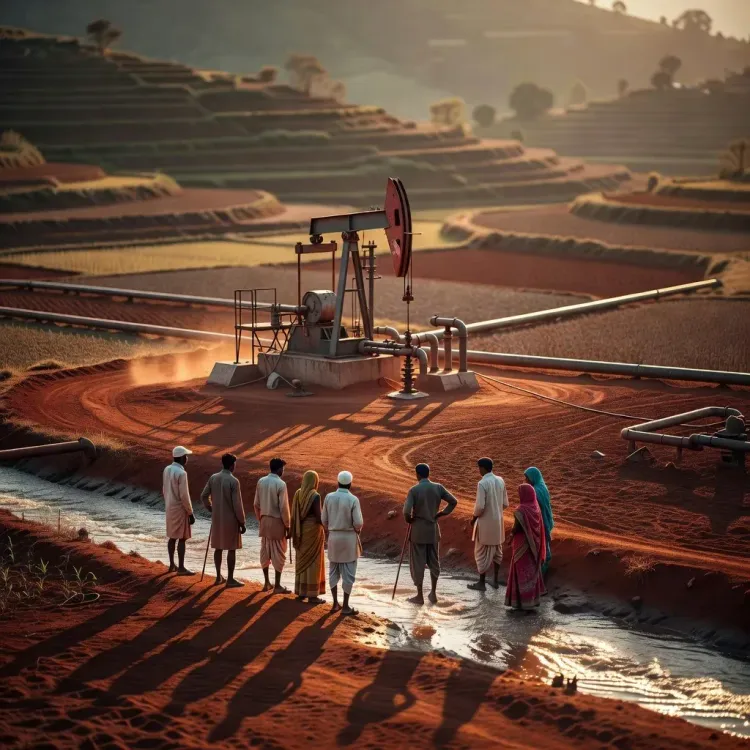
Both districts sit in a hilly northern belt where gravity-fed canal networks struggle to reach elevated fields, and groundwater tables are inconsistent. Odisha governments have pursued lift irrigation expansion in this region since the 1990s, threading pump-and-pipe systems off rivers to push water uphill to farms that conventional canals cannot serve. Keonjhar and Mayurbhanj are also among Odisha's most significant tribal-majority districts — raising cropping intensity here carries both economic and social weight, linking irrigation investment directly to rural income and food security goals.
What 4,280 hectares of irrigated farmland means on the ground
Put concretely: 4,280 hectares is roughly the area of more than 6,000 football pitches — farmland currently at the mercy of the monsoon. When these three projects move from foundation stone to operational status, farmers across Jhumpura and Jarkani will gain the ability to plan a second crop cycle, reducing the single-season risk that keeps smallholder incomes fragile. The state's broader target has been to lift cropping intensity in districts where rainfed agriculture still dominates, and projects of this scale move that needle meaningfully.
Point of View
Completing these projects before the next election cycle would provide a tangible agrarian dividend in Keonjhar and Mayurbhanj, two districts where tribal voter blocs are politically significant. The 4,280-hectare coverage figure is meaningful only if operational deadlines are met and maintained — the state's credibility on irrigation delivery will be tested at commissioning, not at the foundation stone. Watch for follow-up announcements linking these projects to micro-irrigation or crop-diversification programmes, which would signal a more integrated agricultural push rather than a standalone infrastructure gesture.
NationPress
8 Nov 2026
Frequently Asked Questions
What are the three lift irrigation projects CM Majhi inaugurated in Keonjhar?
Chief Minister Mohan Charan Majhi laid the foundation stones for three major lift irrigation projects at Raikala in Jhumpura block, Keonjhar district on 7 November 2026. The exact individual names and costs of the three projects have not been officially specified in the announcement.
How many hectares will benefit from the new Keonjhar lift irrigation projects?
The three projects together are expected to provide irrigation to a total of 4,280 hectares of agricultural land across Keonjhar and Mayurbhanj districts.
Which areas in Mayurbhanj will benefit from these irrigation projects?
The Jarkani area of Mayurbhanj district is specifically identified as a beneficiary region alongside Jhumpura block in Keonjhar district.
Why is lift irrigation used in Keonjhar and Mayurbhanj instead of canals?
Both districts feature undulating and hilly terrain that makes gravity-fed canal systems impractical for reaching elevated farmland. Lift irrigation uses pump-and-pipe systems to push water uphill from rivers, making it the most suitable technology for these areas.
What is CM Mohan Charan Majhi's focus on agriculture in Odisha?
Since taking office in 2024, CM Majhi has pursued infrastructure projects aimed at reducing rainfed agriculture dependence in Odisha, with a particular focus on northern and tribal-majority districts such as Keonjhar and Mayurbhanj.