Will Odisha Achieve 90% Irrigation Coverage by 2036?
Synopsis
In a bold move, Odisha's Chief Minister Mohan Charan Majhi has unveiled plans to expand irrigation facilities to over 90% of cultivable land by 2036. This vision aims to boost agricultural prosperity and economic growth in the state, focusing on sustainable practices and women's empowerment in water management.
Key Takeaways
90% irrigation coverage target by 2036 .
Expansion of irrigation to 1.5 million hectares in five years.
Emphasis on sustainable practices and technology in agriculture.
40,380 Pani Panchayats managing irrigation effectively.
Focus on empowering women and farmers through community engagement .
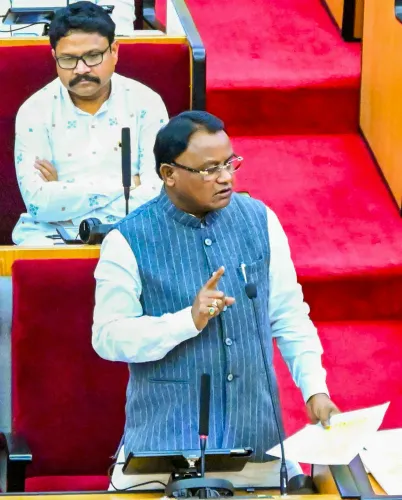
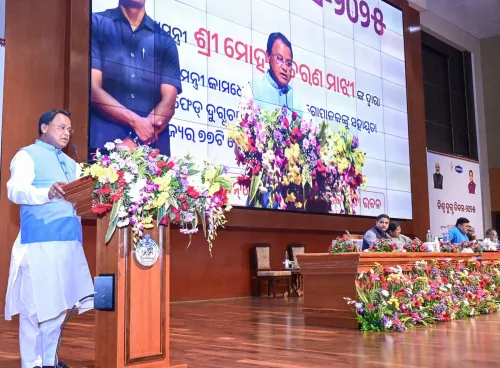
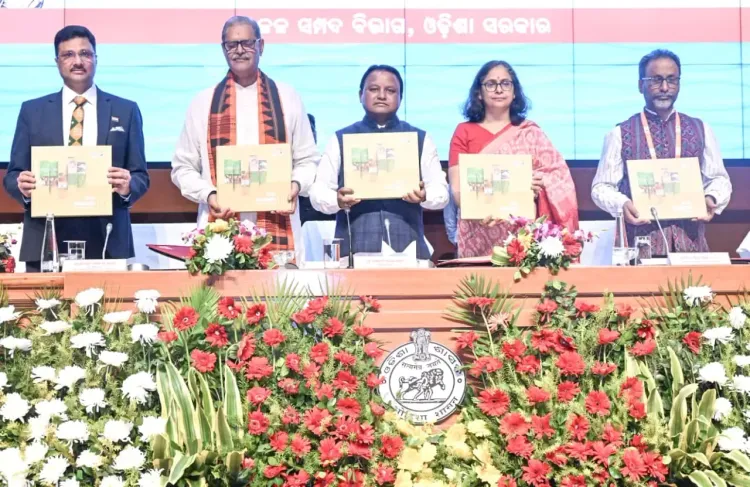
Bhubaneswar, Jan 22 (NationPress) Chief Minister Mohan Charan Majhi announced on Thursday that the Odisha government is dedicated to ensuring that irrigation facilities reach over 90% of the state's cultivable land. This initiative aims to transform Odisha into a prosperous state by 2036.
While speaking at a state-level event focused on the Pani Panchayat system, CM Majhi emphasized that the effective management of water resources is vital for driving agricultural advancement, economic development, and the overall progress of Odisha.
Additionally, he revealed plans to extend irrigation to an extra 1.5 million hectares of land in the upcoming five years through a combination of major, medium, and minor irrigation projects, lift irrigation systems, mega lift projects, and the creation of check dams.
Currently, there are 40,380 Pani Panchayats operational in the state, overseeing irrigation for 2.412 million hectares of land.
The Odisha Pani Panchayat Act of 2002, along with its amendments, ensures equitable rights and opportunities for women, fishermen, and water users.
CM Majhi pointed out that traditional irrigation methods often led to water wastage; however, the Pani Panchayat system promotes fair and efficient water distribution.
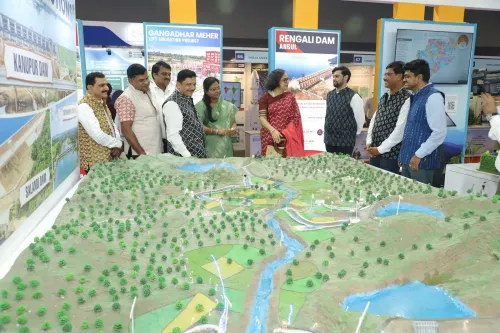
He also mentioned rapid progress on various irrigation and water resource projects statewide, including the Khairibandhan Barrage in Mayurbhanj, the Upper Lanth Irrigation Project in Balangir, the Sandul underground pipeline project in Kalahandi, and the Brutanga Irrigation Project in Nayagarh, alongside numerous reservoir and canal initiatives.
“With a vision to make Odisha prosperous by 2036, our government is determined to ensure irrigation facilities for more than 90% of cultivable land,” stated Majhi.
He encouraged farmers to increase their earnings through crop diversification, vegetable farming, and horticulture, asserting that a Samruddha Odisha cannot be realized without prosperous farmers.
Majhi highlighted that the government has introduced various schemes and programs aimed at achieving farmer self-reliance.
Moreover, he stressed that the state government is prioritizing climate-resilient agriculture through the Odisha Integrated Irrigation Project, which promotes sustainable farming practices, technological innovations in agriculture, crop diversification, and the use of resilient seed varieties.
To embrace advanced technology in irrigation, the Institute of Water Management is engaged in implementing IoT-enabled digital water measurement and soil moisture sensing systems.
Additionally, an MoU has been signed to bolster the capacity and skills of Pani Panchayats.
A pilot project has been initiated in the Chandapala area of Nuapada district, covering 2,567 hectares, to foster modern water-use efficiency and community-managed irrigation systems.
Point of View
The commitment of Odisha's government towards enhancing irrigation facilities is commendable. It demonstrates a proactive approach to agricultural development, which is essential for the state's economic upliftment. The focus on sustainable practices and community engagement through the Pani Panchayat system can serve as a model for other regions facing similar challenges.
NationPress
30 Sept 2026
Frequently Asked Questions
What is the target irrigation coverage for Odisha by 2036?
The target is to achieve over 90% irrigation coverage for cultivable land by 2036.
How many Pani Panchayats are currently operational in Odisha?
There are currently 40,380 Pani Panchayats functioning in Odisha.
What are some key projects mentioned by CM Majhi?
Key projects include the Khairibandhan Barrage, Upper Lanth Irrigation Project, Sandul underground pipeline project, and Brutanga Irrigation Project.
What is the significance of the Odisha Pani Panchayat Act?
The Act ensures equitable rights and opportunities for women, fishermen, and water users in managing irrigation.
What is the focus of the Odisha Integrated Irrigation Project?
The project prioritizes climate-resilient agriculture through sustainable practices and technological innovations.