CM Himanta's Assam deploys bike, boat ambulances for remote care
Synopsis
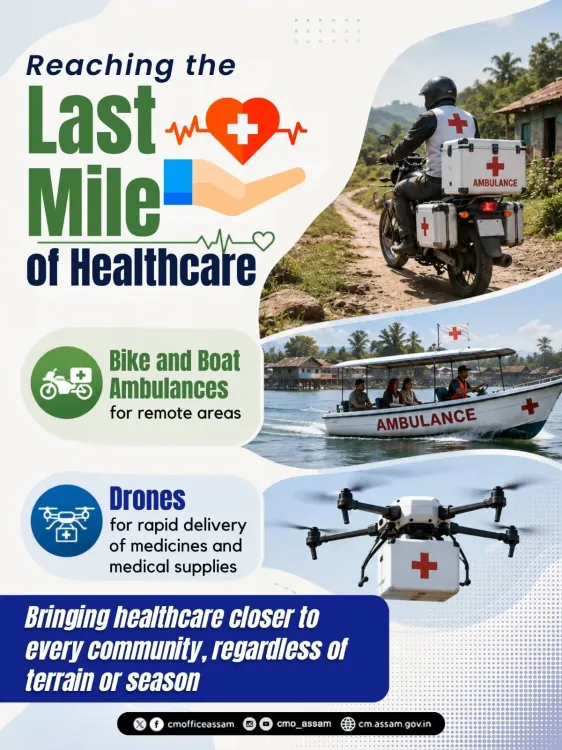
Assam's Chief Minister's Office says the state is deploying road, bike and boat ambulances under CM Himanta Biswa Sarma to ensure timely emergency healthcare for remote and flood-affected communities, building on over a decade of National Health Mission outreach.
Key Takeaways
The Chief Minister's Office of Assam announced on 13 June 2026 that the state uses road, bike and boat ambulances to cover remote areas.
Bike ambulances navigate narrow rural paths while boat ambulances serve riverine and flood-affected zones inaccessible by road.
The initiative operates under Chief Minister Dr.
Himanta Biswa Sarma , who has prioritised healthcare access since taking office in May 2021 .
Assam's multi-modal approach builds on 108 ambulance service expansions under the National Health Mission from 2015 onward.
The model aligns with Ayushman Bharat goals of reducing time-to-care in geographically difficult regions.
Future focus will be on budget allocations for fleet expansion and integration with central health-insurance schemes.
The Chief Minister's Office of Assam on Saturday, 13 June 2026 highlighted the state government's multi-modal ambulance strategy, underscoring that conventional road ambulances are being supplemented by bike and boat ambulances to reach communities in geographically isolated areas.
Context
Assam's terrain presents some of the steepest logistical challenges to emergency healthcare in India. The state's riverine chars (river islands), flood-prone plains, and hilly stretches mean that a conventional ambulance network alone cannot guarantee timely care. The CMO's post stated: 'Whether it's ambulances on the roads or bike and boat ambulances reaching remote areas, Assam is finding innovative ways to make healthcare accessible to everyone.'
The post credited the initiative to Chief Minister Dr. Himanta Biswa Sarma, framing it as part of a sustained commitment that 'distance is never a barrier to timely healthcare for the people of Assam.'
Policy Backdrop
Assam's emergency transport push builds on more than a decade of outreach to char-area populations. The state expanded its 108 ambulance services and mobile medical units under National Health Mission activities from 2015 onward, creating a foundation on which bike and boat variants now operate.
The broader national framework — Ayushman Bharat and the National Health Mission — explicitly targets reduction of time-to-care in difficult geographies. Assam's multi-modal model aligns with these goals and mirrors similar pilots tested across other Northeastern states that use riverine and trail-based transport to bridge the last mile.
Stakeholders and Impact
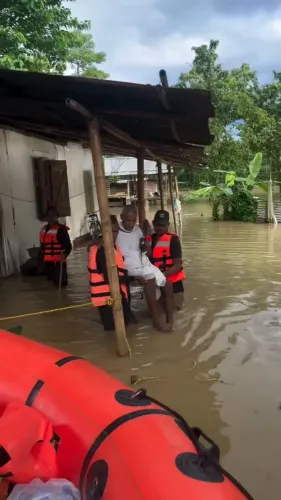
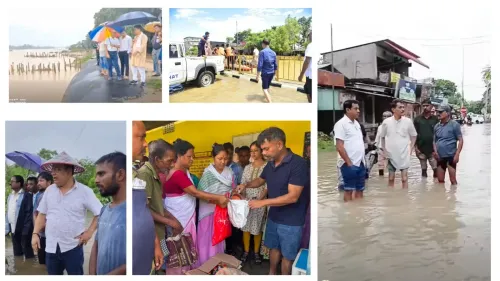
The primary beneficiaries are remote and flood-affected communities — populations on river islands and in hill settlements who have historically faced the longest waits for emergency medical response. Bike ambulances can navigate narrow rural paths and embankments that are impassable for standard vehicles, while boat ambulances are critical during annual monsoon floods when large stretches of the Brahmaputra basin become inaccessible by road.
Dr. Himanta Biswa Sarma, who served in Assam's health portfolio before becoming Chief Minister in May 2021, has maintained healthcare infrastructure as a signature policy area. His administration's focus on last-mile delivery reflects both electoral geography — Assam has a large rural and riverine voter base — and genuine public-health necessity.
What's Next
Attention will turn to state budget allocations for expanding the emergency transport fleet and to any announced integration of these services with central health-insurance schemes in the next assembly session. Scaling bike and boat ambulances requires sustained capital expenditure, trained paramedic staff, and maintenance infrastructure in areas where supply chains are themselves difficult.
If Assam formalises coverage metrics and response-time data for its multi-modal network, it could serve as a replicable model for other states in the Northeast and beyond, contributing to the national conversation on equitable emergency healthcare.
Point of View
Casting him as a problem-solver for Assam's uniquely difficult terrain. The multi-modal ambulance frame is smart politics: it is visually compelling, speaks directly to rural and riverine constituencies, and is difficult to oppose. Substantively, the approach reflects a real gap in India's emergency health architecture — the Northeast has long been an afterthought in national infrastructure planning. Whether the announcement translates into measurable improvements in response times will depend on fleet size, staffing, and maintenance budgets that have yet to be publicly detailed.
NationPress
19 Sept 2026
Frequently Asked Questions
What are boat ambulances in Assam?
Boat ambulances in Assam are watercraft equipped to provide emergency medical transport to communities on river islands and flood-affected areas that cannot be reached by road, particularly during the annual monsoon season.
Who launched the bike ambulance scheme in Assam?
The bike ambulance initiative in Assam operates under the leadership of Chief Minister Dr. Himanta Biswa Sarma, whose office highlighted the programme on 13 June 2026 as part of a broader effort to make healthcare accessible across difficult terrain.
How does Assam's ambulance network reach remote areas?
Assam uses a combination of standard road ambulances, bike ambulances for narrow rural paths and embankments, and boat ambulances for riverine and flood-prone zones, forming a multi-modal emergency transport network.
What is the 108 ambulance service in Assam?
The 108 ambulance service is an emergency medical response system that Assam expanded under the National Health Mission from 2015 onward; it forms the backbone on which newer bike and boat ambulance variants have been added.
How does Assam's healthcare model compare with other Northeastern states?
Several Northeastern states have piloted boat, bike and drone-based emergency transport to serve dispersed populations; Assam's approach is among the more structured, drawing on over a decade of char-area health outreach and aligning with Ayushman Bharat goals.