CM Himanta Launches Assam Police Bike Patrol for Faster Emergency Response
Synopsis
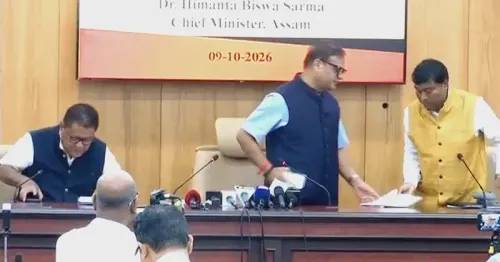
Assam Chief Minister Himanta Biswa Sarma on October 11, 2026 announced the deployment of Assam Police bike-borne patrol units to cut emergency response times, directing citizens to call 100 or 112 in distress situations.
Key Takeaways
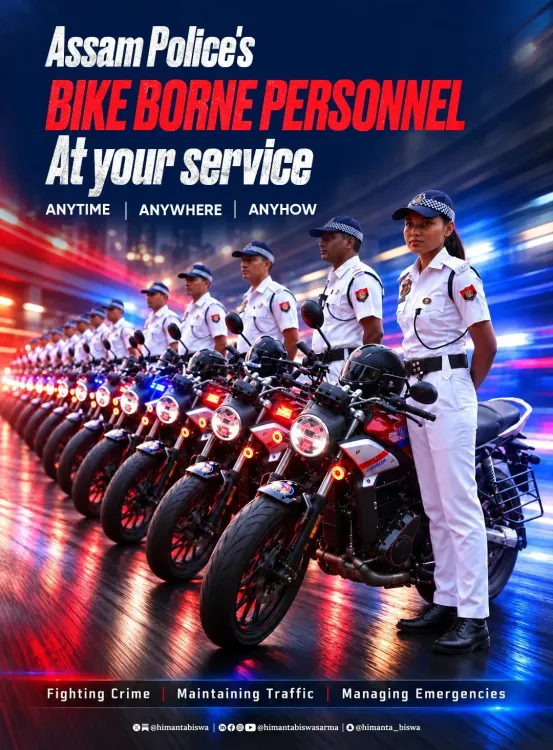
Assam Police has launched bike-borne street patrols for faster emergency response across the state.
Citizens can reach help by dialling 100 (police helpline) or 112 (integrated emergency response number).
CM Himanta Biswa Sarma announced the initiative on October 11, 2026 via X.
Motorcycle units offer mobility advantages in narrow lanes and congested roads where vehicles struggle.
The deployment aligns with a broader strategy of high-visibility policing to deter crime and reduce response times.
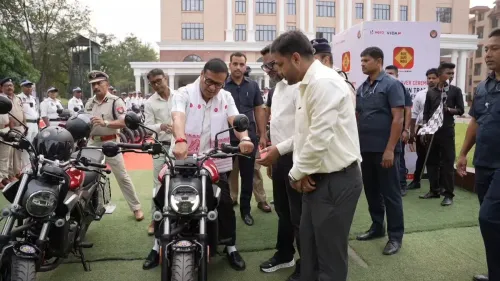
Speed saves lives — and Assam Chief Minister Himanta Biswa Sarma is betting on two wheels to close the gap between a distress call and a police response. On Sunday, October 11, 2026, the Chief Minister announced that Assam Police has deployed bike-borne personnel on active patrol across the state, promising faster reach in emergencies.
Sharing the initiative on X, CM Sarma wrote: 'The streets have new eyes. And they're on two wheels. @assampolice bike-borne personnel are patrolling to respond faster when you need help. In an emergency, call 100 or 112.'
Why Bike Patrols Give Police an Edge on Assam's Roads
In a state where urban lanes, hill roads, and densely populated market corridors can bring four-wheeled vehicles to a standstill, motorcycle units offer a practical tactical advantage. Bikes weave through traffic, reach narrow bylanes, and cut down the critical minutes between a call and a visible police presence on the ground. That window — often the difference between intervention and aftermath — is exactly what this deployment targets.
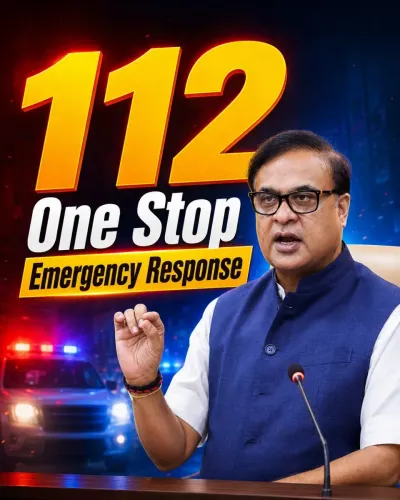
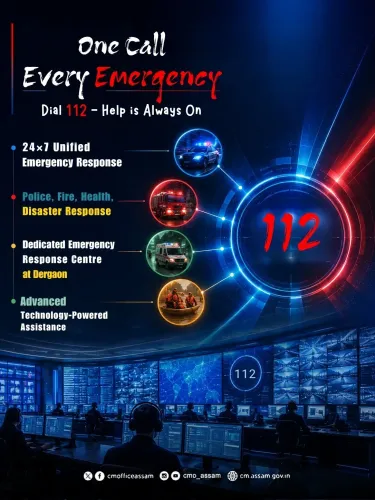
Citizens are directed to dial 100 (the national police helpline) or 112 (the integrated emergency response number) to activate the nearest patrol unit. The 112 number, rolled out under the Emergency Response Support System across Indian states, consolidates police, fire, and ambulance services on a single dial, making it a one-stop distress channel for residents.
Assam Police's Expanding Visible-Presence Strategy
The bike-patrol push fits a broader pattern of high-visibility policing that CM Sarma has championed since taking office. Frequent, visible patrols serve a dual purpose: faster reactive response when incidents occur, and a deterrent effect that can suppress opportunistic crime before it starts. Two-wheeler units are cost-efficient to deploy at scale, making them a practical instrument for stretching police coverage across both urban centres like Guwahati and smaller towns.
For residents, the message is straightforward — help is closer than it used to be, and it's moving faster. The question now is whether the deployment density matches the geography Assam demands.
Point of View
Low-cost signal of governance responsiveness — precisely the kind of ground-level initiative CM Sarma deploys to reinforce his law-and-order brand in Assam. Highlighting emergency numbers alongside the deployment moves the communication from ceremonial to actionable, giving citizens a direct behavioural nudge. For a Chief Minister who also convenes the North-East Democratic Alliance, projecting a proactive security posture in Assam carries weight beyond state politics — it frames the north-east as a stable, well-administered region. The real test lies in deployment density and whether response-time data backs the promise.
NationPress
11 Oct 2026
Frequently Asked Questions
What is Assam Police's new bike patrol initiative?
Assam Police has deployed bike-borne personnel to patrol streets across the state, enabling faster emergency response compared to conventional vehicle patrols in congested or narrow areas.
Which number should I call in an emergency in Assam?
You can call 100 for the police helpline or 112 , the integrated emergency response number that covers police, fire, and ambulance services.
Why are bike patrols more effective than car patrols?
Motorcycles can navigate traffic, narrow lanes, and congested market areas far more quickly than four-wheeled vehicles, reducing the critical time between a distress call and police arrival.
Who announced the Assam Police bike patrol programme?
Assam Chief Minister Himanta Biswa Sarma announced the initiative on October 11, 2026 , via a post on X.
What is the 112 emergency number in India?
112 is India's integrated Emergency Response Support System number that connects callers to police, fire, and ambulance services on a single dial, operational across all states including Assam.