CM Himanta Bolsters Assam Police With Bike-Borne Rapid Units
Synopsis
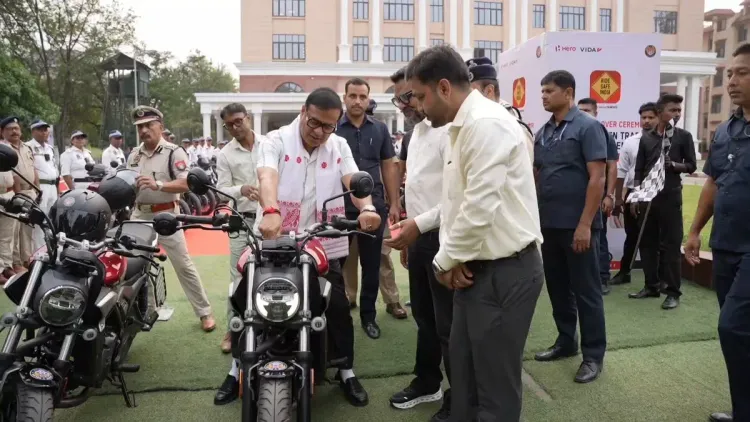
Assam CM Himanta Biswa Sarma has announced a scale-up of the state police's bike-borne rapid action teams, partnering with Hero MotoCorp to enable faster emergency response across the state's varied terrain.
Key Takeaways
Assam Police is expanding its bike-borne rapid action force for faster law-enforcement response.
The two-wheeler units are designed to reach any emergency spot across the state within minutes .
CM Himanta Biswa Sarma publicly tagged Hero MotoCorp , indicating the manufacturer's role in equipping the expanded force.
The initiative addresses the challenge of policing Assam's diverse terrain — from floodplains to urban corridors.
The move fits Assam's broader pattern of building leaner, more visible and mobile ground-level enforcement capacity.
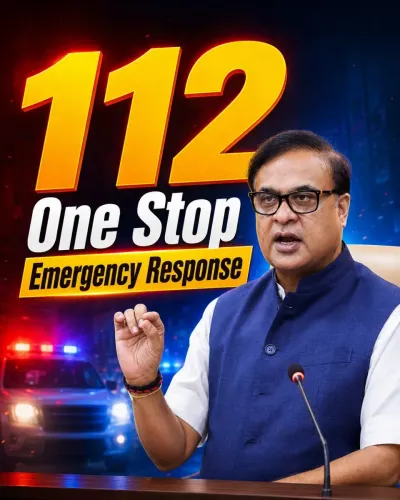
Speed is now a policing strategy in Assam. Assam Chief Minister Himanta Biswa Sarma announced on Sunday, October 4, 2026, that the state police are scaling up their bike-borne force — rapid action teams designed to slash emergency response times and reach any affected spot across the state in minutes.
Two-Wheelers as First Responders
The logic is straightforward: in a state where terrain ranges from dense urban corridors to remote riverine belts, a motorcycle cuts through where a patrol vehicle cannot. Assam Police's bike-borne units are being positioned as the front line of swift law enforcement — mobile, agile, and deployable in the kind of narrow windows that conventional policing often misses. CM Sarma tagged Hero MotoCorp in the post, signalling the motorcycle manufacturer's involvement in equipping the expanded force.
Why Bike Patrols Matter in Assam's Landscape
Assam's geography — Brahmaputra floodplains, forested foothills, and densely packed town centres — has long challenged conventional patrol logistics. Bike-borne units have become an increasingly favoured tool for states seeking faster first-response coverage without the overhead of large vehicle fleets. The ability to thread through traffic, reach interior localities, and mobilise in small, coordinated teams makes these squads particularly effective for crowd management, criminal pursuit, and disaster-response reachability.
A Signal to the Force — and to Crime
CM Sarma's quip — 'Need for Speed: fulfilled!' — carries a deliberate message: the administration is investing in visible, kinetic deterrence. Rapid-response visibility on the ground is known to compress reaction windows not just in active emergencies but also as a deterrent in high-sensitivity zones. The public tagging of Hero MotoCorp also suggests this is a procurement or partnership announcement, not merely an internal operational shift.
For a state that has aggressively restructured its policing posture over the past several years — from anti-encroachment drives to organised crackdown operations — the bike-borne expansion fits a consistent pattern: faster, leaner, more visible enforcement on the ground.
The two-wheelers are on the road. The question now is how quickly the network scales — and how visibly Assam's rapid-response capability changes the experience on the street.
Point of View
Kinetic law-enforcement capacity as a political signal as much as an operational upgrade. CM Sarma's public tagging of Hero MotoCorp transforms what could have been an internal procurement into a high-visibility announcement, amplifying the administration's 'tough on crime' brand. In a state where policing has become a central political narrative under Sarma's tenure, rapid-response visibility serves a dual purpose: genuine deterrence and constant reinforcement of an assertive governance image. The unanswered question is scale — how many units, at what cost, and across which districts — details that will determine whether this is a structural shift or a headline moment.
NationPress
4 Oct 2026
Frequently Asked Questions
What is the Assam Police bike-borne rapid action force?
It is a mobile police unit deployed on motorcycles to respond quickly to emergencies and law-enforcement situations across Assam, cutting down travel time compared to conventional patrol vehicles.
What is Hero MotoCorp's role in Assam Police expansion?
CM Himanta Biswa Sarma tagged Hero MotoCorp in his announcement, indicating the motorcycle manufacturer is involved in supplying or partnering to equip the expanded bike-borne police force.
Why are bike patrols effective in Assam?
Assam's geography — including Brahmaputra floodplains, forested foothills, and congested town centres — makes motorcycles more agile than larger patrol vehicles, enabling police to reach remote or traffic-heavy areas faster.
When did CM Himanta Sarma announce the Assam Police bike-borne force?
The announcement was made on Sunday, October 4, 2026, via a post on X.
How does the bike-borne force improve emergency response in Assam?
The rapid action teams on motorcycles can mobilise and reach affected spots in minutes, reducing the response gap that conventional vehicle-based patrols face in both urban and rural settings.