Odisha CM Office lays foundation for 3 lift irrigation projects
Synopsis
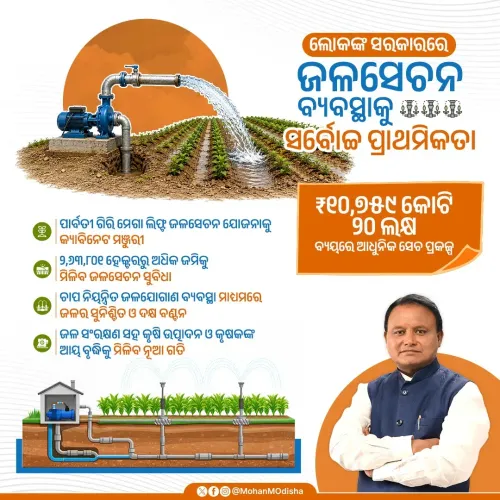
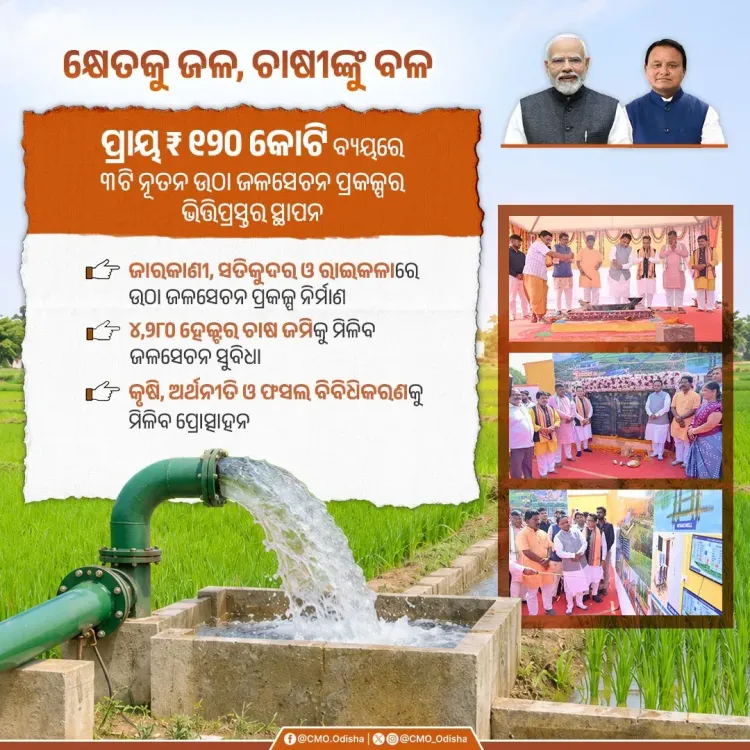
The Chief Minister's Office of Odisha has laid foundation stones for three lift irrigation projects worth ₹120 crore in Kendujhar and Mayurbhanj, aiming to bring irrigation to 4,280 hectares of rain-dependent farmland and raise farmer incomes across the two northern districts.
Key Takeaways
Foundation stones laid for three major lift irrigation projects in the Kendujhar–Mayurbhanj cluster on 7 November 2026 .
Total outlay is approximately ₹120 crore across projects at Raikala , Satikudar , and Jarkani .
The projects will bring irrigation to 4,280 hectares of currently dry, rain-fed farmland.
Both districts are in northern Odisha with significant tribal populations heavily dependent on agriculture.
Lift irrigation is designed for upland terrain where conventional canal systems are not viable.
The state government expects the projects to increase agricultural productivity and farmer incomes over coming cropping seasons.
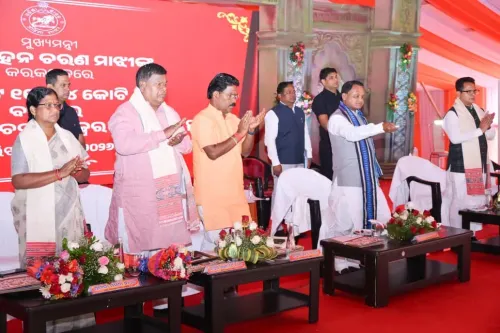
Thousands of acres of parched, rain-dependent farmland in two of Odisha's tribal belts are set to get year-round water access — a shift that could meaningfully change what farmers in Kendujhar and Mayurbhanj can grow and earn. The Chief Minister's Office of Odisha announced on Saturday, 7 November 2026, that foundation stones have been laid for three major lift irrigation projects worth approximately ₹120 crore, targeting 4,280 hectares of dry farmland across the two-district cluster.
Three projects, two districts, one water deficit addressed
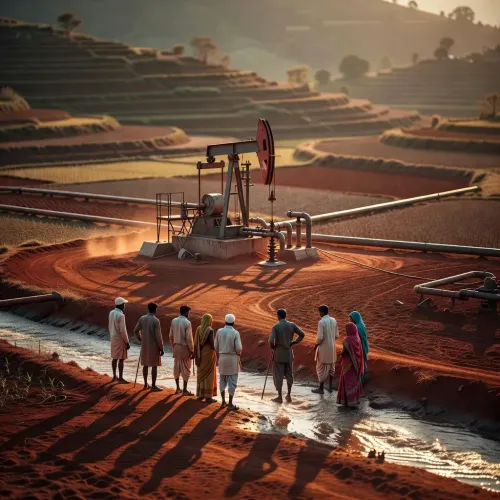
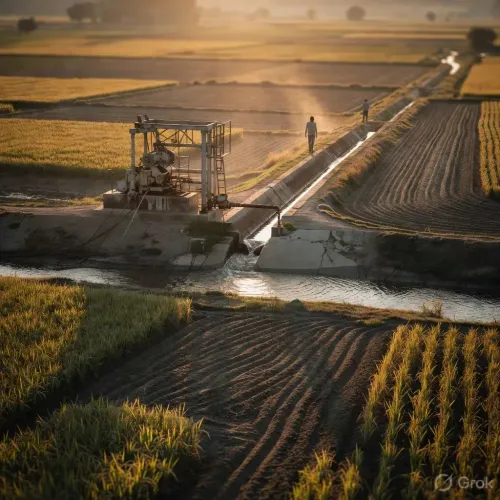
The three projects are located at Raikala, Satikudar, and Jarkani within the Kendujhar–Mayurbhanj cluster. Lift irrigation, unlike gravity-fed canal systems, pumps water from rivers or reservoirs upward into elevated agricultural zones — making it the only viable solution for the upland terrain that dominates both districts. The government stated the initiative will 'pave the way for increasing production and income of farmers' by converting currently dry fields into irrigated land.
Both Kendujhar and Mayurbhanj sit in northern Odisha, bordering Jharkhand, with substantial forest cover and significant tribal populations whose livelihoods hinge on agriculture. Despite the mineral wealth beneath Kendujhar's soil, the surface above remains largely rain-fed — a paradox that leaves cultivators at the mercy of monsoon variability every single season.
Odisha's long push to close the irrigation gap
This announcement fits a pattern stretching back over a decade. Odisha began scaling up minor and lift irrigation schemes across its districts in the early 2010s precisely because canal-based infrastructure could not economically reach upland tribal zones. The strategy: build clusters of smaller, targeted projects that together accumulate irrigated hectares fast enough to shift productivity curves at the district level.
Eastern India's state governments have repeatedly returned to lift irrigation as the instrument of choice against monsoon volatility — and for good reason. A single failed or delayed monsoon can wipe out an entire kharif crop for rain-dependent farmers. Assured irrigation, even partial, allows double-cropping and crop diversification, both of which translate directly into higher annual income.
What ₹120 crore buys — and what comes next
At roughly ₹28,000 per hectare of potential benefit, the investment signals serious state commitment to agricultural infrastructure in a zone that has historically received more attention for its mining economy than its farms. The real test will come over the next two to three cropping seasons, once the projects are commissioned and the first measurable increase in irrigated area can be recorded.
For now, the foundation stones are in the ground. The farmers waiting on the other side of that investment are watching whether the concrete follows.
Point of View
Attributable infrastructure with tangible income effects for a large voter base of smallholder farmers. The ₹120 crore outlay also signals that the state is willing to invest in upland tribal zones beyond the dominant mining narrative, potentially broadening the governing coalition's rural support base. Whether the projects translate into measurable productivity gains will depend entirely on commissioning timelines and last-mile water delivery — the perennial weak link in state irrigation schemes.
NationPress
8 Nov 2026
Frequently Asked Questions
What are the three lift irrigation projects announced in Odisha?
The three projects are located at Raikala, Satikudar, and Jarkani in the Kendujhar–Mayurbhanj cluster of northern Odisha, with a combined cost of approximately ₹120 crore.
How much land will the Odisha lift irrigation projects cover?
The three projects together will bring irrigation to 4,280 hectares of currently dry, rain-dependent farmland in Kendujhar and Mayurbhanj districts.
What is lift irrigation and why is it used in Odisha?
Lift irrigation uses pumps to draw water from rivers or reservoirs upward into elevated agricultural zones where conventional gravity-fed canals cannot reach — making it essential for the upland terrain common in northern Odisha.
Which districts benefit from the new Odisha irrigation scheme?
Kendujhar and Mayurbhanj, two northern Odisha districts bordering Jharkhand with significant tribal farming communities, are the primary beneficiaries.
When were the foundation stones for the Odisha irrigation projects laid?
The foundation stones were laid on Saturday, 7 November 2026, as announced by the Chief Minister's Office of Odisha.