CM Majhi Inaugurates SBI Branch in Kendujhar's Raikala
Synopsis
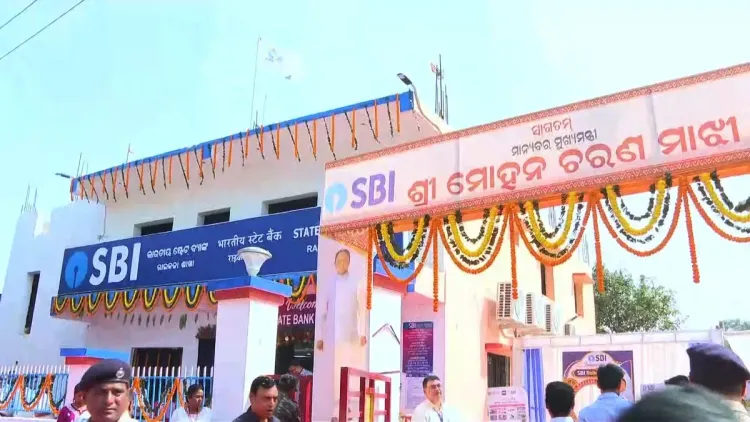
Chief Minister Mohan Charan Majhi inaugurated a new SBI branch at Raikala in Odisha's Kendujhar district on November 7, 2026, extending formal banking services to farmers, women self-help groups, and small traders in a tribal-majority, historically underserved region.
Key Takeaways
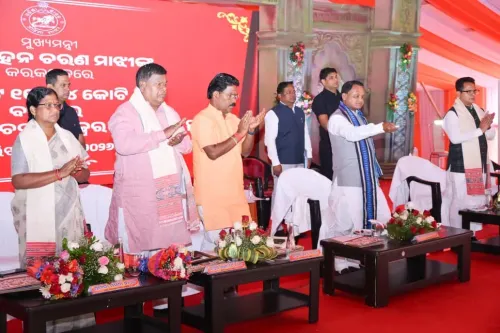
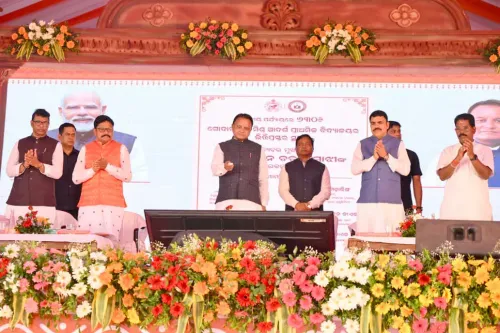
CM Mohan Charan Majhi personally inaugurated the new SBI branch at Raikala , Kendujhar district, on November 7, 2026 .
The branch serves Raikala Panchayat and surrounding villages, targeting farmers, women SHGs, and small businessmen.
Kendujhar is a mineral-rich, tribal-majority district in northern Odisha with historically low formal banking coverage.
The inauguration aligns with India's Pradhan Mantri Jan Dhan Yojana framework, active since 2014, which mandates banking access in unbanked rural areas.
Key expected outcomes include agricultural credit access, SHG lending, and cleaner delivery of government direct benefit transfers.
Banking came to a village that had long waited for it. Chief Minister Mohan Charan Majhi on Saturday, November 7, 2026, inaugurated a new State Bank of India (SBI) branch at Raikala in Kendujhar district, Odisha — bringing formal banking infrastructure directly to the doorstep of farmers, women self-help groups, and small traders in one of the state's most underserved rural pockets.
The Chief Minister's Office announced the event in Odia, stating that the new branch was opened with the goal of 'strengthening financial inclusion in rural areas and delivering banking services conveniently to the people.' With the branch now operational, residents of Raikala Panchayat and surrounding villages will gain direct access to savings accounts, agricultural credit, government benefit transfers, and micro-enterprise lending — services that previously required a journey to a distant town.
Why Kendujhar, Why Now
Kendujhar is a mineral-rich district in northern Odisha with a substantial tribal and rural population — a demographic that has historically been underserved by formal banking networks. The district's economic profile makes it a priority zone for financial inclusion: farmers need crop loans, women's SHGs need institutional credit to scale their micro-enterprises, and small traders need formal accounts to participate in digital payment ecosystems.
India's push to bank its unbanked accelerated dramatically after the launch of the Pradhan Mantri Jan Dhan Yojana in 2014, which mandated universal access to basic banking services. Public sector banks, with SBI leading the charge, have since been directed to open branches in unbanked rural and tribal areas — a directive that the Raikala inauguration directly fulfils more than a decade into that mission.
Who Stands to Gain in Raikala
Three groups stand at the centre of this branch's purpose. First, farmers who can now access Kisan Credit Card facilities and direct benefit transfers from agricultural schemes without travelling hours. Second, women self-help groups — a backbone of Odisha's rural economy — who can formalise savings, access SHG-linked credit, and graduate to larger micro-loans. Third, small businessmen in and around the panchayat, who gain access to working-capital products and digital banking tools that the informal economy cannot offer.
The ripple effects extend to social infrastructure too: direct transfers for welfare schemes — from MGNREGS wages to pension disbursements — flow cleanly through bank accounts, cutting leakage and delay.
CM Majhi's Rural Banking Push
Mohan Charan Majhi, who took charge as Chief Minister in June 2024 following the BJP's return to power in Odisha, has consistently aligned state priorities with national financial inclusion frameworks. Inaugurating an SBI branch personally — rather than delegating it — signals the administration's intent to put rural banking expansion at the centre of its governance optics. Kendujhar, with its tribal demographics and mining-economy contrast, is precisely the kind of district where the gap between state resources and citizen access has historically been widest.
The metric that will matter most in the months ahead: how many new accounts are opened, how much agricultural credit is disbursed, and whether digital transaction volumes climb — turning a ribbon-cutting into a living piece of economic infrastructure.
Point of View
Knowing that formal banking access is a prerequisite for virtually every other welfare and economic scheme to function. Kendujhar's selection is telling — it is a district that generates enormous mineral wealth for the state but whose residents have often been the last to benefit from formal financial systems. For Majhi, personally attending such inaugurations in rural Odisha carries both governance and political logic: it anchors the administration's credibility in areas where the gap between promise and delivery has historically been widest.
NationPress
8 Nov 2026
Frequently Asked Questions
Where was the new SBI branch inaugurated by CM Majhi?
The new SBI branch was inaugurated at Raikala in Kendujhar district , Odisha, on November 7, 2026.
Who will benefit from the new SBI branch in Raikala?
Farmers, women self-help groups (SHGs), small businessmen, and the general public of Raikala Panchayat and surrounding villages will benefit from easier access to banking and financial services.
What is Pradhan Mantri Jan Dhan Yojana and how does this relate?
Pradhan Mantri Jan Dhan Yojana , launched in 2014 , aims to provide universal access to banking services across India, especially in rural and tribal areas. The Raikala SBI branch directly advances this mandate in an underserved Odisha district.
Who is the Chief Minister of Odisha?
Mohan Charan Majhi is the Chief Minister of Odisha, in office since June 2024 , representing the Bharatiya Janata Party.
Why is Kendujhar district significant for financial inclusion?
Kendujhar is a mineral-rich northern Odisha district with a large tribal and rural population that has historically had limited access to formal banking infrastructure, making it a priority for financial inclusion initiatives.