CM Vishnu Deo Sai Highlights Bijapur Jan Chaupal Under Sushasan Tihar 2026
Synopsis
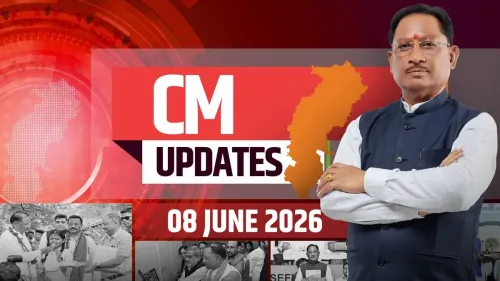
Chhattisgarh Chief Minister Vishnu Deo Sai posted a CM Updates bulletin on 2 June 2026 highlighting a Jan Chaupal held in Bijapur and other developments under Sushasan Tihar 2026, the state's annual good governance outreach drive across districts including the Bastar division.
Key Takeaways
CM Vishnu Deo Sai posted a CM Updates bulletin on 2 June 2026 on the Sushasan Tihar 2026 drive.
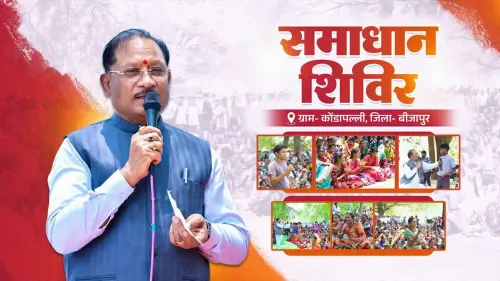
The update featured a Jan Chaupal held in Bijapur, in Chhattisgarh's Bastar division.
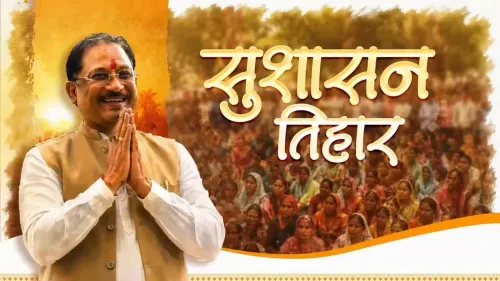
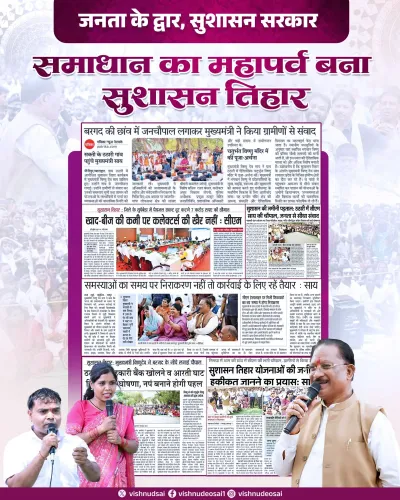
Sushasan Tihar is a state-level good governance outreach with district public hearings and scheme reviews.
Bijapur is part of a tribal-majority region with a history of left-wing extremism.
The 2026 edition continues a template used by the BJP government since December 2023.
Hashtags used: #सुशासन_तिहार_2026 and #SushasanTihar2026.
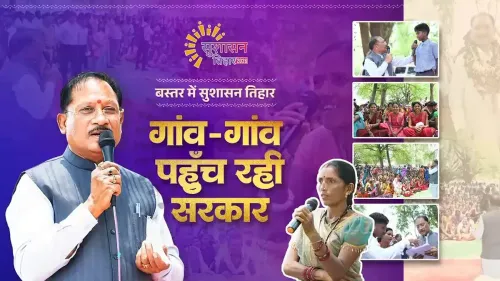
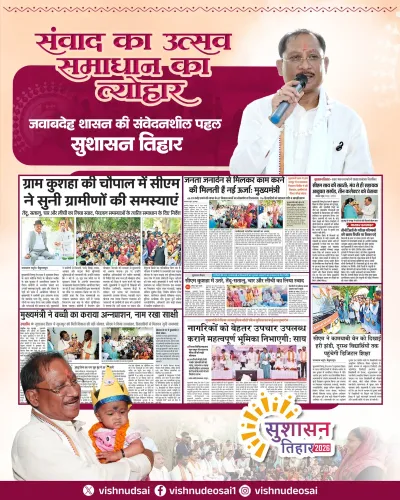
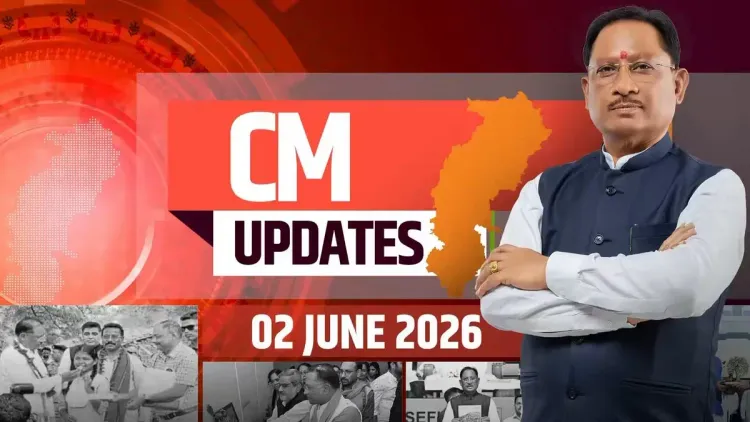
Chhattisgarh Chief Minister Vishnu Deo Sai on 2 June 2026 shared an update on the state's ongoing Sushasan Tihar 2026 outreach, flagging a Jan Chaupal held in Bijapur district along with other developments from the day. The post, accompanied by a short video bulletin, was published on the Chief Minister's official handle and used the hashtags #सुशासन_तिहार_2026 and #SushasanTihar2026.
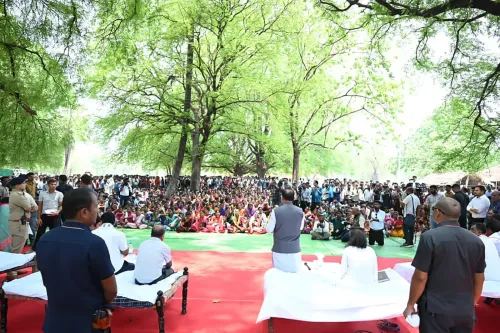
In the post, the Chief Minister wrote, 'CM Updates: Other important news including Jan Chaupal in Bijapur under Sushasan Tihar' — framing the day's coverage around the public hearing held in the southern Chhattisgarh district.
Context
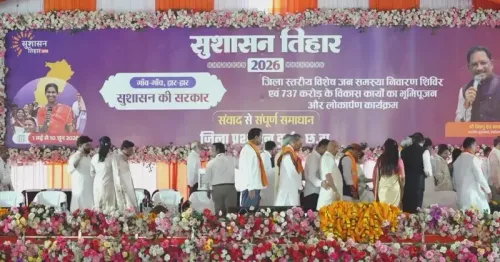
Sushasan Tihar, or the 'good governance festival', is a state-level outreach drive organised by the Chhattisgarh government featuring district-level public hearings, scheme delivery camps and administrative reviews. The 2026 edition continues a template the BJP-led state government has used since assuming office in December 2023.
The format typically combines a Jan Chaupal (open public meeting) where residents raise grievances directly with officials, along with on-the-spot disposal of applications and reviews of central and state welfare schemes.
Policy backdrop
Bijapur sits in the Bastar division of southern Chhattisgarh, a region marked by a substantial tribal population and a long history of left-wing extremism. Holding a Chief Minister-led governance festival in such a district carries symbolic weight, signalling administrative reach into areas where last-mile service delivery has historically been uneven.
Successive governments in Raipur have employed similar time-bound outreach drives to surface implementation gaps in tribal belts and to publicise the delivery of entitlements ranging from pensions and ration cards to housing and road connectivity.
Stakeholders and impact
The primary stakeholders in the Bijapur leg are rural and tribal residents of the district, who use the Jan Chaupal format to flag pending grievances on land records, forest rights, electrification, water supply and welfare scheme access. District officials, line-department heads and elected representatives are typically tasked with on-site disposal where possible.
For the state government, the optics of the Chief Minister personally amplifying a Bastar-region chaupal reinforce its messaging that administration is being taken to the doorstep of the most remote constituencies, not confined to the state capital.
What's next
The 2026 edition of Sushasan Tihar is expected to continue rolling across districts in the coming weeks, with subsequent CM Updates likely to highlight chaupals in other parts of the state. Watch points include progress reports on the grievances logged in Bijapur, the share of applications disposed on the spot, and any fresh district-level announcements tied to the festival.
Beyond the immediate news cycle, the drive will be measured on whether the surge of administrative attention translates into durable scheme delivery in Bastar — a region where the gap between policy intent and ground-level access remains the central governance test for any Chhattisgarh government.
Point of View
The BJP government is reinforcing its claim to administrative reach in conflict-affected tribal belts where successive regimes have struggled with last-mile delivery. The broader arc — time-bound governance festivals timed to publicise scheme delivery — is now a familiar political instrument across Indian states. The real test, as always, will be the disposal rate of grievances logged versus the publicity around the camps.
NationPress
21 Oct 2026
Frequently Asked Questions
What is Sushasan Tihar 2026?
Sushasan Tihar 2026 is the Chhattisgarh government's good governance outreach drive featuring district-level Jan Chaupals, grievance redressal camps and scheme delivery reviews. It is being run across districts of the state in 2026.
Where was the Jan Chaupal mentioned by CM Vishnu Deo Sai held?
The Jan Chaupal highlighted in the Chief Minister's update was held in Bijapur district, which lies in the Bastar division of southern Chhattisgarh.
Who is Vishnu Deo Sai?
Vishnu Deo Sai is the Chief Minister of Chhattisgarh and a senior BJP leader. He assumed office in December 2023 after the state assembly elections.
Why is Bijapur significant for governance outreach?
Bijapur is part of the Bastar division, a tribal-majority region with a long history of left-wing extremism, where access to administration and welfare delivery has historically been a challenge.
What is a Jan Chaupal?
A Jan Chaupal is an open public meeting where residents raise grievances directly with senior officials and elected representatives, often leading to on-the-spot disposal of applications and scheme-related complaints.