CM Sai: Sushasan Tihar Amplifies Citizen Voices in Chhattisgarh
Synopsis
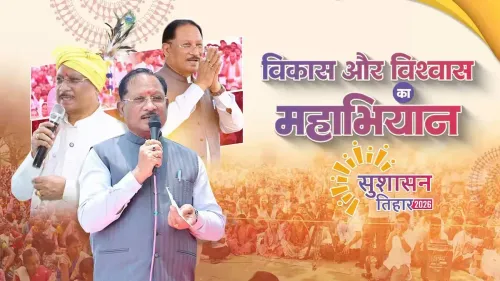
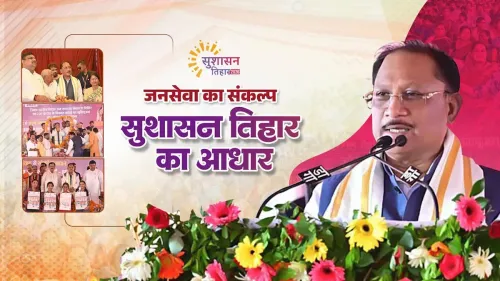
Chhattisgarh Chief Minister Vishnu Deo Sai says the Sushasan Tihar programme is emerging as a key platform for citizen engagement, with farmers, women, and youth sharing feedback on government schemes at Sushasan Chaupal gatherings across the state.
Key Takeaways
Chief Minister Vishnu Deo Sai promoted the Sushasan Tihar programme on June 7, 2026 , calling it a strong medium for understanding public sentiment.
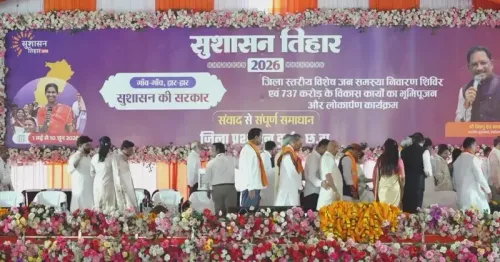
The programme includes local-level Sushasan Chaupal meetings where citizens interact directly with the administration.
Farmers are sharing success stories, women are describing positive scheme-driven changes, and youth are voicing aspirations at these gatherings.
The initiative was launched after the BJP returned to power in Chhattisgarh following the December 2023 assembly elections .
Similar chaupal-style outreach models have been used in Madhya Pradesh and Rajasthan , reflecting a broader BJP governance approach.
Feedback from the chaupals may feed into future state budget decisions and welfare scheme reviews.
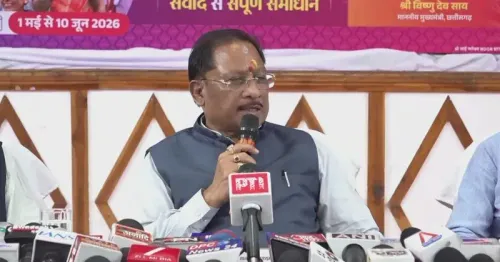
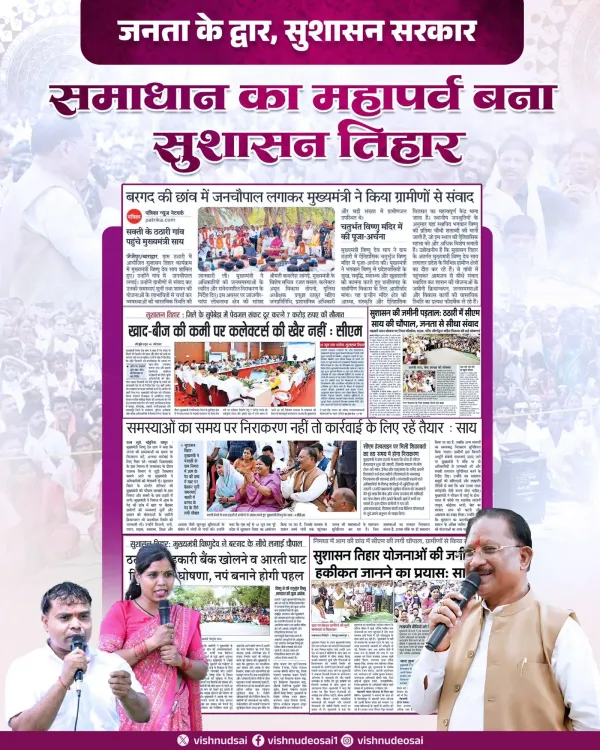
Chhattisgarh Chief Minister Vishnu Deo Sai on Sunday, June 7, 2026, highlighted the growing reach of the state's Sushasan Tihar programme, describing it as a powerful channel for understanding public sentiment and delivering sensitive, responsive solutions to citizens' problems.
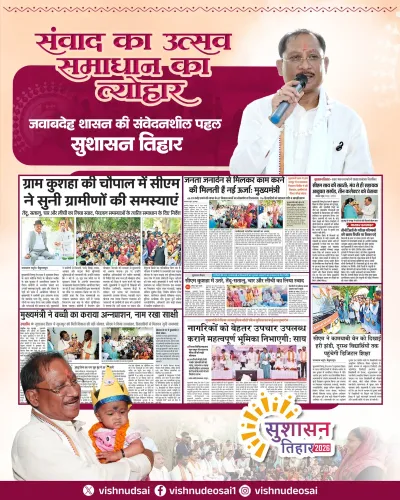
Posting on X, Chief Minister Sai wrote: 'Sushasan Tihar janabhavnaon ko samajhne aur samasyaon ke samvedansheel samadhan ka sashakt madhyam ban raha hai' — translated as, 'Sushasan Tihar is becoming a strong medium for understanding public feelings and providing sensitive solutions to problems.' He further noted that at the Sushasan Chaupal gatherings, farmers are sharing success stories, women are speaking about positive changes brought by government schemes, and youth are voicing their dreams and aspirations.
Context
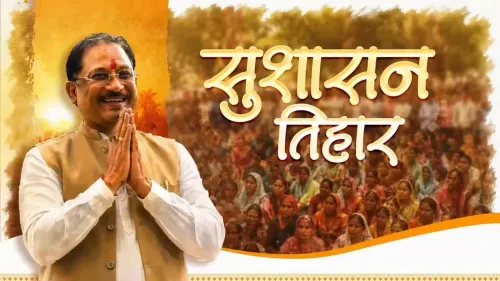
The Sushasan Tihar — literally 'festival of good governance' — is a state-level public outreach programme launched by the BJP government in Chhattisgarh after its return to power following the December 2023 assembly elections. The initiative involves structured public meetings, called Sushasan Chaupals, held at the local level across districts of the state. These forums are designed to bring government functionaries face-to-face with ordinary citizens, allowing beneficiaries to recount their experiences with welfare delivery and flag unresolved grievances.
Policy Backdrop
The programme builds on a longer tradition of Jan Sunwai and grievance-redressal platforms that previous administrations in Chhattisgarh had deployed to bridge the gap between policy intent and ground-level outcomes. The BJP government has framed the Sushasan Tihar as a step beyond passive grievance intake — positioning it as a two-way dialogue where citizen feedback can inform administrative decisions. Chaupal-style outreach models have been adopted in other BJP-governed states such as Madhya Pradesh and Rajasthan as well, reflecting a broader party-level emphasis on visible, participatory governance formats.
Stakeholders and Impact
Chief Minister Sai's post specifically identifies three groups at the centre of the Sushasan Chaupal interactions: farmers, who are sharing accounts of agricultural progress and scheme benefits; women — described as mothers and sisters — who are speaking about positive changes in their lives resulting from state welfare programmes; and youth, who are articulating their aspirations and expectations from the government. This three-pronged focus mirrors the state government's stated priority constituencies for welfare delivery and political outreach in the post-2023 election period.
What's Next
The district-wise expansion of Sushasan Tihar events across Chhattisgarh will be closely watched to see whether citizen feedback gathered at these chaupals is formally channelled into state budget allocations or welfare scheme reviews in upcoming assembly sessions. The programme's scale and the nature of issues raised could also shape the government's communication strategy ahead of future electoral cycles in the state.
Point of View
Rather than relying solely on administrative reporting. By publicly amplifying voices of farmers, women, and youth, Chief Minister Sai is reinforcing the party's core welfare narrative ahead of any future electoral test in the state. The chaupal format — low-cost, high-visibility, and participatory — has become a signature instrument across BJP-ruled states, suggesting a coordinated approach to bridging the perception gap between scheme announcement and ground-level delivery. Whether the feedback gathered translates into measurable policy adjustments will determine the programme's long-term credibility beyond its communicative value.
NationPress
26 Oct 2026
Frequently Asked Questions
What is Sushasan Tihar in Chhattisgarh?
Sushasan Tihar is a good governance outreach programme launched by the BJP government in Chhattisgarh after the December 2023 elections, involving public meetings called Sushasan Chaupals where citizens share feedback on government schemes and raise grievances.
What is a Sushasan Chaupal?
A Sushasan Chaupal is a local-level public meeting held under the Sushasan Tihar initiative, where farmers, women, and youth interact directly with government representatives to share experiences and voice concerns.
Who is Vishnu Deo Sai?
Vishnu Deo Sai is the Chief Minister of Chhattisgarh and a BJP leader who assumed office in December 2023 after the party's victory in the state assembly elections.
What did CM Vishnu Deo Sai say about Sushasan Tihar?
CM Sai said Sushasan Tihar is becoming a strong medium for understanding public feelings and providing sensitive solutions to problems, with farmers, women, and youth actively participating in chaupal discussions.
Is Sushasan Tihar unique to Chhattisgarh?
While Sushasan Tihar is specific to Chhattisgarh, similar chaupal-style public outreach models have been used in other BJP-governed states like Madhya Pradesh and Rajasthan as part of a broader governance engagement approach.