CM Yogi: Training success lies in better governance, not certificates
Synopsis
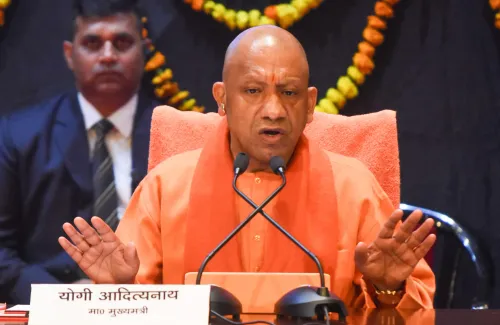
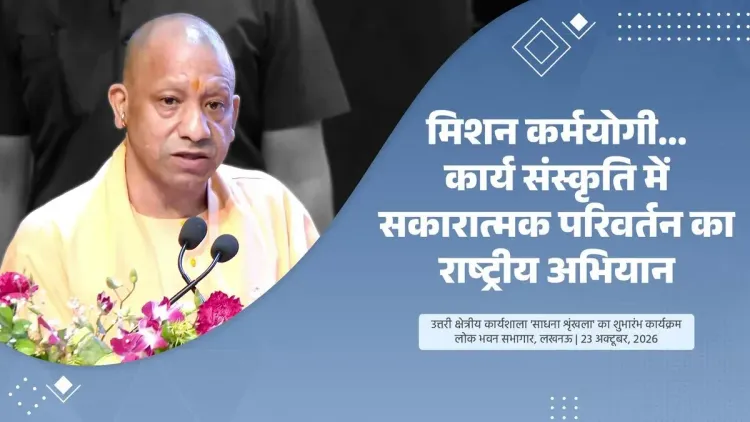
Chief Minister Yogi Adityanath of Uttar Pradesh declared on October 23, 2026, that genuine training success must reflect in better bureaucratic decisions, simplified processes, and improved citizen services — not in the volume of certificates issued.
Key Takeaways
CM Yogi Adityanath stated on October 23, 2026 that civil service training must be judged by outcomes, not certificates.
The three outcome markers he named: better decisions , simplified processes , and improved citizen services .
The statement aligns with the central government's Mission Karmayogi framework launched in 2020 , which emphasises competency-based over compliance-based training.
Uttar Pradesh , India's most populous state, houses one of the country's largest civil service cadres, making this shift significant in scale.
The signal points toward stricter outcome-based evaluation of future training programmes across UP government departments .
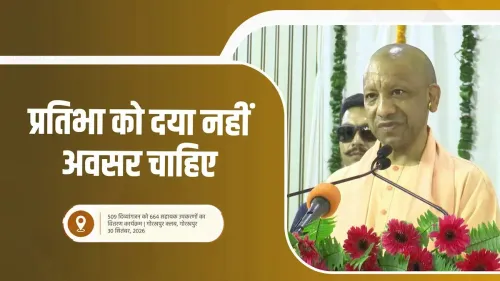
Certificates don't run governments — decisions do. In a pointed statement on governance reform, the Chief Minister's Office of Uttar Pradesh on Friday, October 23, 2026 shared a sharp directive from Chief Minister Yogi Adityanath: the true measure of civil service training is not the number of certificates issued, but the quality of decisions taken, the simplicity of processes achieved, and the improvement in services that ordinary citizens actually experience.
In his words, 'प्रशिक्षण की वास्तविक सफलता प्रमाण पत्रों की संख्या से नहीं...' — 'The real success of training should not be seen in the number of certificates, but in the better decisions made after training, the simplified processes, and the improved services available to citizens.'
Why 'certificate culture' is the target
For decades, government training programmes across India measured their own worth in throughput: how many officials attended, how many modules were completed, how many certificates were handed out. CM Yogi's statement names that metric as insufficient — even misleading. It is a direct challenge to a compliance-first culture that can leave administrative procedures as opaque and citizen-unfriendly as before any training took place.
The critique lands against a backdrop of national-level reform. The National Programme for Civil Services Capacity Building, better known as Mission Karmayogi, was launched by the central government in 2020 with precisely this pivot in mind: away from input metrics and toward demonstrated, on-the-job capability. Uttar Pradesh — India's most populous state, with one of its largest civil service cadres — is a critical testing ground for whether that philosophy translates to ground-level change.
Outcome-based governance as UP's administrative yardstick
The Yogi government has, since 2017, repeatedly framed its administrative agenda around service delivery and process simplification — from single-window clearances to e-governance portals. This statement reinforces that the lens for evaluating bureaucratic capacity-building will be the same: not inputs, but outputs that citizens can feel.
The question the statement implicitly sets up for UP's departments is uncomfortable but clarifying: can your officials point to a decision that is better, a form that is simpler, a window that is faster — because of a training they attended? If not, the training did not succeed, regardless of how many attended.
What comes next for UP's training architecture
The signal from Lucknow now points toward a sharper evaluation framework for department-level capacity-building programmes across Uttar Pradesh. Watchers of UP governance will look for concrete follow-through — announced benchmarks for post-training process audits, measurable citizen-service timelines, or formal reviews of how training cohorts have changed actual administrative outcomes.
A government that sets outcome-based standards for its own training is, in effect, promising to be held to them. The bar has been stated publicly — now the departments have to clear it.
Point of View
Framing administrative reform in citizen-service terms is both substantively sound and politically strategic: it shifts accountability from the state to the department level. The harder test will be institutional follow-through — whether the UP administration builds auditable mechanisms that can actually verify post-training decision quality, or whether the statement remains aspirational rhetoric.
NationPress
23 Oct 2026
Frequently Asked Questions
What did CM Yogi Adityanath say about government training programmes?
CM Yogi stated that the real success of training should not be measured by the number of certificates issued, but by the better decisions made, the processes simplified, and the improved services delivered to citizens after the training.
What is Mission Karmayogi and how does it relate to this statement?
Mission Karmayogi is the central government's National Programme for Civil Services Capacity Building, launched in 2020, which shifts civil service training from input-based metrics to outcome-based capability. CM Yogi's statement directly echoes this philosophy at the state level in Uttar Pradesh.
Why is outcome-based training evaluation important for Uttar Pradesh?
Uttar Pradesh is India's most populous state with one of its largest civil service cadres. Ensuring that training translates into better governance decisions and citizen services — rather than just formal certifications — directly affects the quality of administration experienced by hundreds of millions of people.
What changes might follow CM Yogi's remarks on civil service training?
Analysts expect the Uttar Pradesh government to announce more structured post-training evaluations, process simplification audits within departments, and measurable citizen-service benchmarks to back up the stated outcome-oriented standard.
Has the Yogi government focused on administrative reform before?
Yes. Since taking office in 2017, CM Yogi Adityanath has repeatedly emphasised service delivery improvements, e-governance portals, and process simplification as central planks of the UP administration's governance agenda.