Trump eyes Lebanon for Abraham Accords, signals major Middle East expansion
Synopsis
Trump openly floated Lebanon joining the Abraham Accords — a country whose laws ban contact with Israel and where Hezbollah holds significant military sway. If it happens, it would dwarf every previous normalisation deal in geopolitical weight, and reshape connectivity corridors linking India, West Asia, and Europe.
Key Takeaways
President Donald Trump said on 21 July that Lebanon could eventually join the Abraham Accords .
Trump met Lebanese President Joseph Aoun at the White House to discuss a US-sponsored framework agreement signed in June .
The June deal aims to strengthen the Lebanese Armed Forces , reduce Hezbollah 's military footprint, and enable phased Israeli withdrawal from southern Lebanon .
Aoun called the framework agreement 'a historic achievement' and said both leaders shared a vision for ending the state of hostility between Lebanon and Israel.
Trump indicated direct commercial flights between the US and Lebanon could resume: 'I could see that happening, absolutely.' India stands to benefit from expanded regional stability through initiatives like the India-Middle East-Europe Economic Corridor (IMEC) .
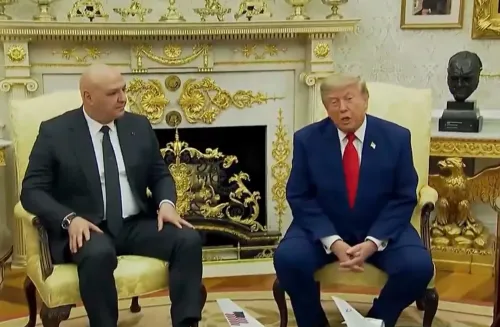
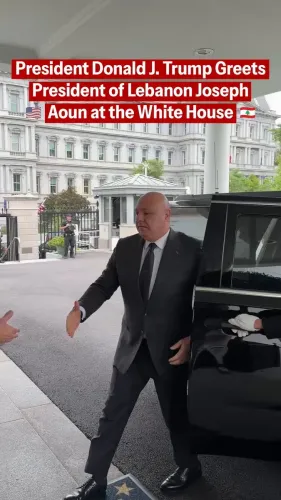
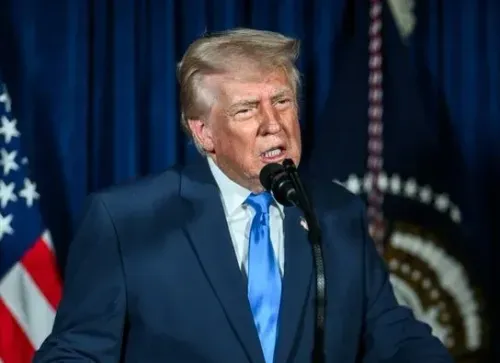
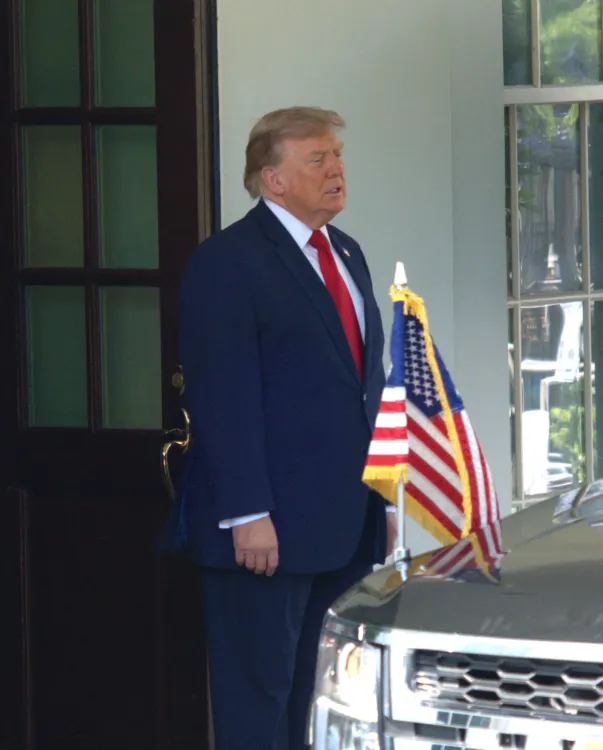
US President Donald Trump on Tuesday, 21 July said that Lebanon could eventually join the Abraham Accords, signalling his administration's intent to broaden the US-backed normalisation framework despite decades of deep-seated hostility between Lebanon and Israel. The remarks came during a White House meeting with Lebanese President Joseph Aoun, the first such high-level bilateral engagement in years.
What Trump Said
Responding to a question about Lebanon's laws that prohibit contact with Israel, Trump said he intended to raise the matter directly with Aoun. 'I will,' Trump said, adding: 'The Abraham Accords have been, I think, a tremendous success. I think you're going to see a lot of countries joining pretty soon.'
Trump also underscored the economic resilience of the existing accords. 'They are so successful for them, economically successful,' he said. 'Nobody left, even during this time of conflict.' He further noted: 'I think Lebanon has a very important place.'
Aoun's Position
Lebanese President Joseph Aoun, while not directly addressing the Abraham Accords by name, framed a recently signed framework agreement with Israel as a step toward ending decades of enmity. 'The ultimate objective is ending the state of hostility between Lebanon and Israel forever,' Aoun said, describing the agreement as 'a historic achievement.' He added that both leaders shared a common vision for regional stability: 'It's about time for Lebanon and for the whole region to be stable and secure.'
Key Developments from the White House Meeting
The meeting centred on implementing a US-sponsored framework agreement signed in June, which is designed to strengthen the Lebanese Armed Forces, reduce Hezbollah's military presence, and facilitate a phased Israeli redeployment from southern Lebanon. Trump confirmed that Israeli forces were 'in the process of redeploying' and said 'very concrete plans' were already in place to bolster Lebanon's military capacity.
On the prospect of direct commercial flights between the United States and Lebanon — currently suspended — Trump said: 'I could see that happening, absolutely,' indicating that security normalisation could unlock broader economic and logistical ties.
Why This Matters for the Region and India
An expansion of the Abraham Accords to Lebanon would represent a seismic shift in Middle Eastern geopolitics. The original accords, brokered during Trump's first term, brought Israel into formal relations with the United Arab Emirates, Bahrain, Sudan, and Morocco. Lebanon, historically a frontline state in the Arab-Israeli conflict and home to Hezbollah, would be a far more consequential addition.
For India, which maintains strong strategic partnerships with Israel, the UAE, and Bahrain — all existing signatories — as well as longstanding ties with Lebanon and other Arab states, greater regional stability carries direct economic implications. Expanded normalisation would support trade, investment, and connectivity initiatives, including the proposed India-Middle East-Europe Economic Corridor (IMEC), backed by India, the US, the UAE, and the European Union. This comes amid renewed US diplomatic momentum in the region following the June framework agreement.
What Comes Next
No formal timeline has been set for Lebanon's potential entry into the Abraham Accords, and significant domestic and political obstacles remain — including Hezbollah's entrenched influence and Lebanon's own legal prohibitions on normalisation with Israel. Analysts note that the June framework agreement is itself still in early implementation. How swiftly the Lebanese Armed Forces can be strengthened and Israeli redeployment completed will likely determine the pace of any further diplomatic steps.
Point of View
Lebanon is not a Gulf state with insulated leadership; it is a fractured republic where Hezbollah retains both arms and political representation. The June framework agreement is still in early implementation, Israeli redeployment is partial, and Lebanon's own laws criminalise normalisation with Israel. Framing this as an accords candidate before those fundamentals are resolved risks overpromising in a region where credibility gaps have derailed past US peace initiatives. The India angle — IMEC connectivity — is real but secondary; the corridor's viability depends on Israeli-Arab stability that does not yet exist on the ground.
NationPress
20 Oct 2026
Frequently Asked Questions
What are the Abraham Accords and which countries have joined?
The Abraham Accords are a series of US-brokered normalisation agreements between Israel and Arab states, first signed in 2020 during Trump's first term. Current signatories include the United Arab Emirates, Bahrain, Sudan, and Morocco.
Why is Lebanon joining the Abraham Accords significant?
Lebanon would be the most consequential addition to the Abraham Accords because it shares a border with Israel, has fought multiple wars against it, and is home to Hezbollah — a militant group that rejects Israel's existence. Its laws currently prohibit any contact with Israel, making formal normalisation a major political and legal hurdle.
What was agreed at the Trump-Aoun White House meeting on 21 July?
The meeting focused on implementing a US-sponsored framework agreement signed in June 2025, which aims to strengthen Lebanon's armed forces, reduce Hezbollah's military presence, and facilitate a phased Israeli redeployment from southern Lebanon. No formal Abraham Accords timeline was announced.
What did Lebanese President Joseph Aoun say about normalisation with Israel?
Aoun did not directly endorse the Abraham Accords but called the June framework agreement 'a historic achievement' and said its ultimate objective was 'ending the state of hostility between Lebanon and Israel forever.' He described a shared vision for regional stability with Trump.
How does Lebanon's potential normalisation affect India?
India maintains strategic partnerships with existing Abraham Accords signatories — Israel, the UAE, and Bahrain — as well as longstanding ties with Lebanon and Arab states. Greater regional stability would support trade and the proposed India-Middle East-Europe Economic Corridor (IMEC), which India, the US, the UAE, and the EU are backing.