Trump's Iran talks target broader Middle East reset, Abraham Accords expansion
Synopsis
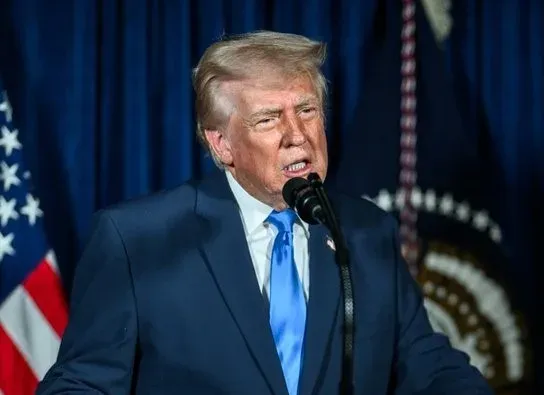
The Trump administration is not just negotiating with Iran — it is betting that a deal could unlock the most ambitious Middle East realignment in a generation, potentially bringing Saudi Arabia into the Abraham Accords framework. Whether that vision survives contact with Tehran's own calculus is the defining question of the coming months.
Key Takeaways
Vice President JD Vance met Iranian officials in Switzerland on 22 June as part of ongoing US-Iran diplomacy.
The Trump administration is framing the talks as an opportunity for a broader Middle East reset beyond ending the four-month conflict.
UN Ambassador Mike Waltz said negotiations could produce 'a fundamentally different regional order,' invoking the Abraham Accords model.
Senator Lindsey Graham predicted Saudi Arabia would join the Abraham Accords in 2026 , calling it 'the biggest change in 5,000 years in the Mideast.' Critics have raised concerns that the memorandum of understanding with Iran offers too many upfront concessions and that Tehran may use economic relief to rebuild military capacity.
Vice President JD Vance met Iranian officials in Switzerland on Sunday, 22 June, as the Trump administration framed its ongoing diplomacy with Tehran as far more than a bid to end a four-month conflict — positioning the negotiations as a potential catalyst for a sweeping regional realignment across the Middle East. Senior administration figures argued the talks could prevent Iran from acquiring a nuclear weapon and expand the framework established by the Abraham Accords during President Donald Trump's first term.
What the Administration Is Saying
'What the president has asked us to do is turn over a new leaf to transform our relationship with the people of Iran,' Vance said, adding that if Iran's leadership abandoned regional instability and nuclear ambitions, the United States would be willing to 'fundamentally transform our relationship with that country.'
US Ambassador to the United Nations Mike Waltz described the negotiations as an opportunity to establish a fundamentally different regional order. 'We need to give peace a chance,' Waltz said. 'Perhaps we can finally turn the page to a new Middle East, like President Trump did with the Abraham Accords his first term.' Waltz also pointed to deepening security cooperation among American regional partners, noting that Israel and the UAE were now working together militarily — a development he described as 'the next evolution of the Abraham Accords.'
Republican Push to Expand Abraham Accords
Republican Senator Lindsey Graham went further, linking the Iran negotiations directly to a broader regional strategy. 'We're going to expand the Abraham Accords in calendar year 2026,' Graham said in an interview on CBS. He predicted that Saudi Arabia would eventually join the normalisation framework, calling such an outcome 'the biggest change in 5,000 years in the Mideast.'
Graham also argued that a diplomatic settlement with Iran would box Tehran in regardless of outcome. 'If we get a deal, Iran will be in a box,' he said. 'If we don't get a deal, Iran will be in a box.'
Negotiating from Pressure
Administration officials have consistently argued that diplomacy backed by military pressure gives Washington greater leverage than previous rounds of talks with Tehran. Waltz said the United States was negotiating from a position of strength, citing what he described as 'a devastated Iranian economy' and 'a devastated Iranian military,' while keeping the focus firmly on nuclear non-proliferation.
Obstacles and Critics
The administration's vision faces significant headwinds. Critics have questioned whether the memorandum of understanding with Iran offers too many upfront concessions and whether Tehran can be trusted to honour future commitments. Some lawmakers have also raised concern that economic relief could allow Iran to rebuild military capabilities and bolster support for regional proxies.
Administration officials, however, maintain that the current negotiations represent only the opening stage of a larger diplomatic effort — not a final settlement. The Abraham Accords, brokered during Trump's first term, normalised relations between Israel and several Arab states including the United Arab Emirates and Bahrain, and are widely regarded as one of the most consequential diplomatic shifts in the region in decades. Whether the Iran channel can deliver a comparable breakthrough remains, for now, an open question.
Point of View
But those accords involved states that had already made strategic choices to align with the US — Iran's calculus is categorically different. The 'Iran in a box' framing from Graham, while rhetorically neat, sidesteps the core tension: a deal that gives Tehran economic relief could strengthen the very regional network critics say it is meant to contain. The real test is not whether a memorandum gets signed, but whether any agreement includes verification mechanisms rigorous enough to survive a change in Iranian leadership or a shift in US domestic politics.
NationPress
20 Sept 2026
Frequently Asked Questions
What are the Trump administration's Iran talks about?
The talks involve the United States and Iran negotiating a diplomatic framework aimed at preventing Iran from acquiring nuclear weapons and potentially reducing regional tensions. Vice President JD Vance met Iranian officials in Switzerland on 22 June, with the administration describing the negotiations as the opening stage of a broader Middle East realignment.
What is the Abraham Accords connection to the Iran talks?
Administration officials, including UN Ambassador Mike Waltz and Senator Lindsey Graham, have argued that a successful deal with Iran could create conditions for expanding the Abraham Accords — the normalisation framework brokered during Trump's first term between Israel and Arab states including the UAE and Bahrain. Graham specifically predicted Saudi Arabia would join the Accords in 2026.
Why are critics concerned about the Iran negotiations?
Critics argue the memorandum of understanding with Iran may offer too many concessions upfront and that Tehran cannot be reliably trusted to honour future commitments. Some lawmakers also fear that economic relief granted under any deal could allow Iran to rebuild its military and increase support for regional proxy groups.
What did JD Vance say about the US-Iran relationship?
Vance said the president had asked his team to 'turn over a new leaf to transform our relationship with the people of Iran.' He added that if Iran's leadership abandoned regional instability and nuclear ambitions, the US would be willing to 'fundamentally transform our relationship with that country.'
How does the Trump administration justify its negotiating position with Iran?
Officials argue they are negotiating from a position of strength, citing what they describe as a devastated Iranian economy and military. UN Ambassador Waltz said this leverage, backed by military pressure, places Washington in a stronger position than previous administrations that engaged Tehran diplomatically.