Trump says Iran talks 'proceeding nicely', pushes Abraham Accords expansion
Synopsis
Trump has set a striking new condition for any Iran nuclear deal: every country at the table — including Saudi Arabia, Qatar, Pakistan, and eventually Iran itself — must sign the Abraham Accords. If the gambit works, it would be the most consequential Middle East realignment since the Oslo Accords. If it doesn’t, Trump warns it’s ‘back to the battlefront.’
Key Takeaways
Donald Trump declared on 25 May that Iran negotiations were ‘proceeding nicely’ via a Truth Social post.
Trump made joining the Abraham Accords a mandatory condition for all countries participating in the regional deal.
He named Saudi Arabia , Qatar , Pakistan , Türkiye , Egypt , and Jordan as countries expected to sign.
Trump suggested Iran itself could eventually become an Abraham Accords signatory if a nuclear agreement is finalised.
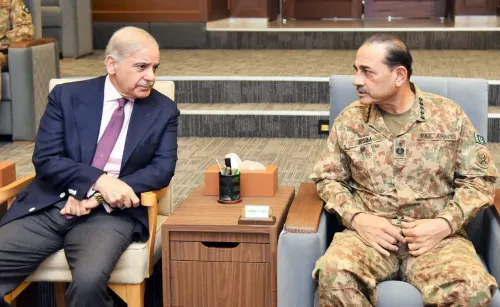
He said he personally discussed the framework with leaders including Saudi Crown Prince Mohammed bin Salman , Pakistan Army chief Field Marshal Syed Asim Munir , and Turkish President Erdoğan .
U.S. representatives have been directed to begin the formal process of expanding the accords.
U.S. President Donald Trump on Monday, 25 May declared that negotiations with Iran were “proceeding nicely” and called on several Middle Eastern and South Asian nations — including Saudi Arabia, Qatar, and Pakistan — to join the Abraham Accords as part of a sweeping regional settlement. The remarks, posted on his Truth Social platform, came days after Trump signalled that a broad regional understanding involving Iran and multiple countries was nearing finalisation.
What Trump Said
In an extended Truth Social post, Trump framed the Iran negotiations in stark binary terms: either a comprehensive agreement benefiting all parties, or a return to open conflict. “It will only be a Great Deal for all or no Deal at all — Back to the Battlefront and shooting, but bigger and stronger than ever before — And nobody wants that!” he wrote.
Trump said he had personally discussed the matter with a roster of regional leaders, including Saudi Crown Prince Mohammed bin Salman, UAE President Mohammed bin Zayed Al Nahyan, Qatar’s Emir Sheikh Tamim bin Hamad Al Thani, Pakistan Army chief Field Marshal Syed Asim Munir Ahmed Shah, Turkish President Recep Tayyip Erdoğan, Egyptian President Abdel Fattah el-Sisi, Jordan’s King Abdullah II, and Bahrain’s King Hamad bin Isa Al Khalifa, among others.
Abraham Accords as a Condition
Trump made Abraham Accords membership an explicit condition for participation in the broader deal. “I stated that, after all the work done by the United States to try and pull this very complex puzzle together, it should be mandatory that all of these Countries, at a minimum, simultaneously sign onto the Abraham Accords,” he wrote.
He singled out Saudi Arabia and Qatar as the countries that should sign first, adding that Türkiye, Egypt, Jordan, and Pakistan should follow. The UAE and Bahrain are already signatories. “If they don’t, they should not be part of this deal, as it shows bad intentions,” Trump warned.
Iran as a Potential Signatory
In a striking claim, Trump suggested that Iran itself could eventually join the Abraham Accords if a final nuclear and regional agreement is concluded with Washington. “In speaking to numerous of the Great Leaders mentioned above, they would be honored, as soon as our Document is signed, to have the Islamic Republic of Iran as part of the Abraham Accords,” he wrote, adding: “Wow, now that would be something special!”
This is a significant escalation of the accords’ stated ambitions. The framework, originally brokered during Trump’s first term, normalised ties between Israel and the UAE, Bahrain, Morocco, Sudan, and Kazakhstan. Bringing Iran — Israel’s most vocal regional adversary — into the same framework would represent an unprecedented diplomatic shift.
Regional and Strategic Implications
Trump argued that a wider settlement could transform the Middle East into a unified economic and political bloc. “The Middle East would be United, Powerful, and Economically Strong, like perhaps no other area, anywhere in the World!” he wrote. He also directed U.S. representatives to begin formalising the expansion process, stating: “By copy of this TRUTH, I am asking my Representatives to begin, and successfully complete, the process of signing these Countries into the already Historic Abraham Accords.”
Notably, the inclusion of Pakistan — a non-Arab, nuclear-armed state with no direct conflict with Israel — broadens the accords well beyond their original Middle Eastern scope. The reference to Pakistan Army chief Field Marshal Syed Asim Munir Ahmed Shah as a direct interlocutor, rather than Pakistan’s civilian government, has also drawn attention. With Iran-U.S. nuclear talks ongoing and Gulf states recalibrating their regional postures, the coming weeks will test whether Trump’s sweeping vision translates into formal agreements.
Point of View
A non-Arab nuclear state, signals that the Abraham Accords are being rebranded from a narrow Israel-Gulf normalisation tool into a broader U.S.-led regional order. The most extraordinary claim — that Iran could itself join the accords — has no visible Iranian endorsement and sits in sharp tension with Tehran’s stated positions. Mainstream coverage has focused on the Saudi angle; the Pakistan dimension, and specifically the direct engagement with the army chief rather than the elected government, deserves far more scrutiny.
NationPress
24 Sept 2026
Frequently Asked Questions
What did Trump say about Iran negotiations on 25 May 2025?
Trump said on 25 May that U.S. negotiations with Iran were ‘proceeding nicely’ and could result in a ‘Great Deal for all.’ He warned, however, that failure would mean a return to conflict ‘bigger and stronger than ever before.’
What are the Abraham Accords and why is Trump expanding them?
The Abraham Accords are a U.S.-brokered normalisation framework signed during Trump’s first term, under which the UAE, Bahrain, Morocco, Sudan, and Kazakhstan established ties with Israel. Trump is now pushing Saudi Arabia, Qatar, Pakistan, Türkiye, Egypt, and Jordan to join as a condition for participating in a broader Iran-led regional settlement.
Why is Pakistan being asked to join the Abraham Accords?
Trump named Pakistan among the countries he wants to sign the Abraham Accords as part of the broader regional deal. Pakistan is a non-Arab, nuclear-armed state with no direct conflict with Israel, making its inclusion a significant expansion of the accords’ original scope. Trump said he discussed the matter directly with Pakistan Army chief Field Marshal Syed Asim Munir Ahmed Shah.
Could Iran actually join the Abraham Accords?
Trump claimed that regional leaders he spoke with would welcome Iran as an Abraham Accords signatory once a final nuclear and regional document is signed. However, this claim has no publicly confirmed Iranian endorsement, and Iran has historically opposed the normalisation framework.
What happens if countries refuse to sign the Abraham Accords?
Trump stated that countries unwilling to sign the Abraham Accords should not be part of the broader regional deal, saying refusal ‘shows bad intentions.’ He has directed U.S. representatives to begin the formal process of bringing new signatories into the accords.