Abraham Accords expansion: Pakistan and Bangladesh face scrutiny over Israel normalisation
Synopsis
Trump's push to rope Muslim-majority nations — including Pakistan and Bangladesh — into the Abraham Accords is exposing a fault line between Washington's strategic ambitions and South Asia's domestic political realities. With Pakistan's Defence Minister publicly rejecting normalisation and Islamabad allegedly lobbying Bangladesh to keep its distance from Israel, the Accords are no longer just a Middle East story.
Key Takeaways
Donald Trump has called on Pakistan , Bangladesh , Saudi Arabia , Turkey , Egypt , and others to 'simultaneously' sign the Abraham Accords .
An analysis in The Jerusalem Post by Blitz editor Salah Uddin Shoaib Choudhury warns of a 'potentially explosive confrontation' if pressure on Pakistan is sustained.
Pakistan's Defence Minister Khawaja Asif publicly questioned Israel's credibility, signalling resistance to normalisation.
Pakistan reportedly lobbied Iran and Palestinian authorities to pressure Bangladesh into reimposing Israeli travel restrictions on its passports.
The development marks the first significant extension of Abraham Accords diplomacy into South Asia .
US President Donald Trump's renewed diplomatic push to expand the Abraham Accords has placed Pakistan and Bangladesh under heightened international scrutiny, according to an analysis published in The Jerusalem Post. Trump has called on a bloc of Muslim-majority nations — including Saudi Arabia, Qatar, Pakistan, Turkey, Egypt, Jordan, Bahrain, and the United Arab Emirates — to 'simultaneously' sign the Accords as part of broader regional stabilisation efforts following the Iran conflict.
The Geopolitical Stakes for South Asia
The Abraham Accords are increasingly emerging as a defining geopolitical contest that extends well beyond the Middle East into South Asia, according to Salah Uddin Shoaib Choudhury, Editor of Bangladeshi newspaper Blitz, writing in The Jerusalem Post. Choudhury argues that nations such as Pakistan and Bangladesh now find themselves caught between deep internal ideological pressures and rising strategic expectations from Washington.
'Trump's call for several Muslim-majority countries to normalise ties with Israel has already generated visible discomfort in Islamabad, where political leaders are attempting to balance strategic relations with Washington against deeply rooted domestic support for the Palestinian cause. The issue is now emerging as a major geopolitical test for South Asia's Muslim-majority nations,' Choudhury wrote.
Pakistan's Difficult Position
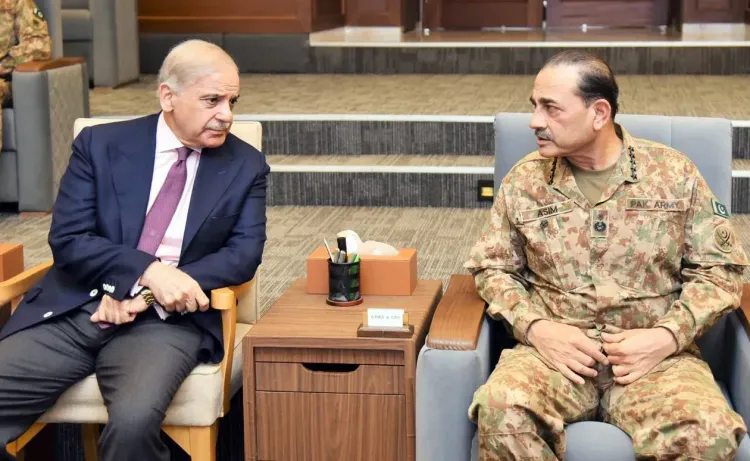
The report warns that the White House's pressure could leave Pakistan in an 'extraordinarily difficult position' — one where domestic political realities, ideological sensitivities, and geopolitical calculations directly clash with American strategic expectations. While Trump has reportedly maintained warm ties with Pakistan Army Chief Field Marshal Asim Munir and Prime Minister Shehbaz Sharif, the analysis suggests that demanding Islamabad normalise ties with Israel 'may fundamentally alter this strategic equation.'
Choudhury further cautioned that Trump's push could lead to a 'potentially explosive confrontation' with Pakistan and other influential Muslim-majority nations if the pressure is sustained without diplomatic accommodation.
Domestic Pushback in Pakistan
The report highlights that any move toward recognising Israel risks triggering a sharp domestic backlash in Pakistan, given widespread public support for the Palestinian cause and persistent opposition from religious and political groups who insist normalisation cannot proceed without an independent Palestinian state.
Pakistan's Defence Minister Khawaja Asif was cited as having publicly criticised the idea, questioning Israel's credibility: 'How will you sit down with those people whose word cannot be trusted even for a single day?' The report noted that such statements signal Pakistan is 'currently unwilling to publicly bow to American pressure, despite its growing strategic closeness with the Trump administration.'
Bangladesh Drawn Into the Equation
Bangladesh's position has also come under the spotlight. According to the report, at Islamabad's quiet persuasion, Iran and Palestinian authorities reportedly requested Bangladesh to reimpose restrictions on Israeli travel in Bangladeshi passports — a development that underscores how Pakistan is allegedly working to keep other Muslim-majority nations aligned against normalisation with Israel.
This comes amid a broader pattern of Washington testing the limits of its post-Abraham Accords diplomatic architecture, which has so far seen only a handful of Arab states formally normalise ties with Israel since 2020. The inclusion of South Asian nations in this framework marks a significant escalation of scope.
What Happens Next
Analysts will be watching whether the Trump administration follows its call with concrete diplomatic incentives or coercive pressure. For Pakistan, the calculus involves not just Washington but also domestic electoral politics, the military establishment's calculations, and the broader Muslim world's response. How Bangladesh navigates its own passport and trade policies toward Israel is also expected to draw continued scrutiny in the weeks ahead.
Point of View
And so, likely, does Washington. The more interesting story is Bangladesh: a nation under a transitional government, caught between Islamabad's quiet lobbying and its own calculus on trade and travel ties with Israel. The Accords' expansion into South Asia may ultimately expose the framework's ceiling rather than its reach.
NationPress
20 Oct 2026
Frequently Asked Questions
What are the Abraham Accords and why is Trump expanding them?
The Abraham Accords are normalisation agreements between Israel and several Arab states, first brokered in 2020. Trump is now pushing additional Muslim-majority nations — including Pakistan, Bangladesh, Saudi Arabia, and Turkey — to join as part of broader regional stabilisation efforts following the Iran conflict.
Why is Pakistan reluctant to join the Abraham Accords?
Pakistan faces deep domestic opposition to normalising ties with Israel, driven by widespread public support for the Palestinian cause and pressure from religious and political groups who insist an independent Palestinian state must come first. Defence Minister Khawaja Asif has publicly questioned Israel's credibility, signalling official resistance.
How is Bangladesh affected by Trump's Abraham Accords push?
Bangladesh has reportedly been pressured by Iran and Palestinian authorities — allegedly at Pakistan's quiet urging — to reimpose Israeli travel restrictions on Bangladeshi passports. This draws Bangladesh into a diplomatic contest it has not formally entered.
What did Pakistan's Defence Minister say about joining the Abraham Accords?
Pakistan's Defence Minister Khawaja Asif criticised the idea, asking: 'How will you sit down with those people whose word cannot be trusted even for a single day?' The remarks indicate Pakistan is unwilling to publicly yield to US pressure on this issue, despite its strategic closeness with the Trump administration.
What is the broader significance of extending the Abraham Accords to South Asia?
It marks the first major attempt to bring South Asian Muslim-majority nations into the Accords framework, transforming what began as a Middle East normalisation initiative into a wider geopolitical test. Analysts say it pits Washington's strategic ambitions directly against the domestic political constraints of nations like Pakistan and Bangladesh.