Trump Says Middle East Peace Deal Could Spark Wider Regional Accord
Synopsis
President Donald Trump declared at a world leaders summit that a newly concluded peace agreement could anchor a far broader Middle East normalization deal, saying the US is 'very close' to achieving it — echoing the ambition that drove the 2020 Abraham Accords.
Key Takeaways
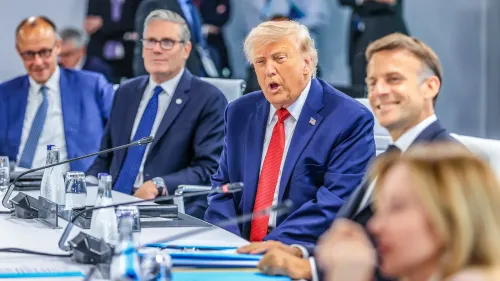
President Trump publicly expressed hope that a recent peace agreement would become 'the beginning of a much larger deal all across the Middle East.' The statement was made to world leaders gathered at what appears to be a high-level diplomatic summit during the week of June 17, 2026 .
Trump described the US as 'very close' to a wider regional accord, signalling active ongoing negotiations.
The remarks build on the Abraham Accords of 2020 , which normalized ties between Israel and the UAE , Bahrain , Morocco , and Sudan .
A broader deal could have significant implications for India 's energy security, the IMEC corridor, and the 9 million Indians living in the Gulf .
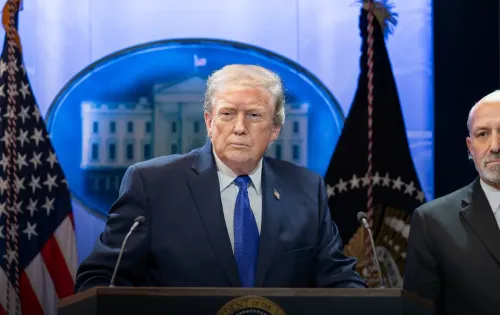
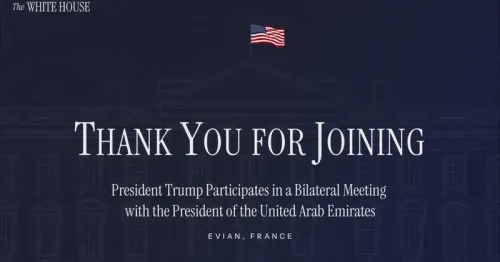
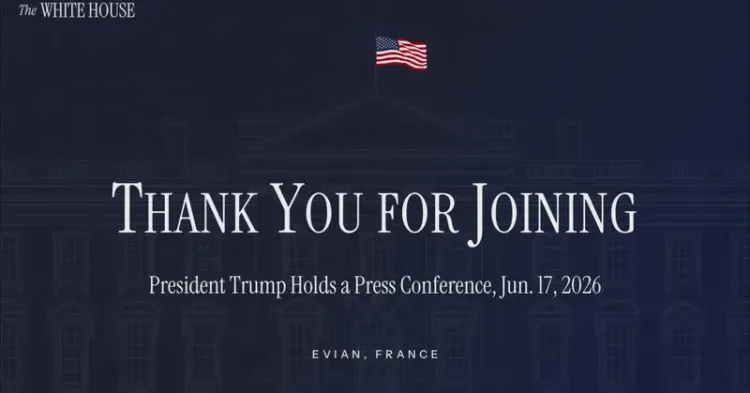
The White House on Wednesday, June 17, 2026, shared a statement from President Donald J. Trump expressing confidence that a recently concluded peace agreement could serve as the foundation for a sweeping regional deal across the Middle East.
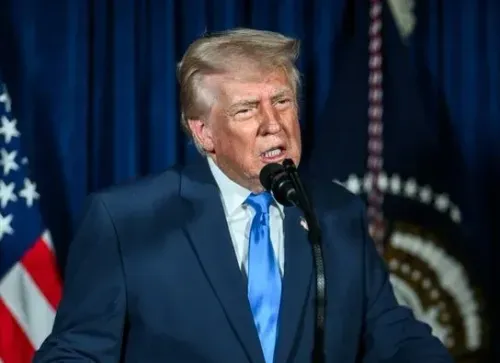
Speaking to world leaders gathered for what appeared to be a high-level diplomatic summit, Trump said: 'It's my hope that the peace agreement will be the beginning of a much larger deal all across the Middle East. We're very close.'
Context
Trump has long positioned Middle East normalization as a signature foreign-policy ambition. During his first term, his administration brokered the Abraham Accords of 2020, a series of bilateral agreements that normalized diplomatic and economic relations between Israel and four Arab states — the UAE, Bahrain, Morocco, and Sudan — without requiring a comprehensive resolution of the Israeli-Palestinian conflict.
The latest statement suggests a new agreement has been reached, which Trump is now using as a springboard to push for broader regional normalization. The phrase 'world leaders here this week' points to an ongoing or recently concluded multilateral gathering, though the specific summit and the parties to the new agreement have not been named in the post.
Policy Backdrop
The Abraham Accords framework established a precedent: Arab states could normalize ties with Israel through bilateral economic and security incentives, sidestepping the long-stalled Palestinian negotiations. US administrations have since treated this incremental approach as a viable parallel track to any eventual two-state solution.
Trump's current remarks follow the same logic — using a fresh agreement as leverage to draw more Arab and Muslim-majority countries into a wider normalization architecture. The phrase 'much larger deal' signals ambitions that go beyond the original four Abraham Accords signatories, potentially encompassing nations such as Saudi Arabia, which had been in active normalization talks with Israel before regional tensions escalated in 2023.
Stakeholders and Impact
The primary stakeholders in any expanded Middle East deal include the Israeli government, Arab League member states, and Palestinian leadership, whose status in any normalization framework remains deeply contested. A broader accord could reshape trade corridors, security alliances, and energy partnerships across the region.
For India, which maintains strategic ties with both Israel and key Gulf states, a stabilized Middle East directly affects energy imports, the India-Middle East-Europe Economic Corridor (IMEC) project, and the welfare of nearly 9 million Indian nationals working in the Gulf. Any shift in regional diplomatic alignments is therefore watched closely in New Delhi.
What's Next
Analysts will be watching for follow-on announcements naming the additional countries being courted for normalization, as well as the scheduling of ministerial or bilateral summit meetings. Trump's use of the phrase 'very close' suggests active negotiations are underway rather than a deal already sealed.
If a wider agreement materializes, it would rank among the most consequential diplomatic realignments in the Middle East in decades, with implications for US influence in the region, Iran's strategic calculus, and the long-term prospects for a Palestinian state.
Point of View
Designed to create diplomatic urgency. For the broader Middle East, the key test is whether any new agreement includes meaningful provisions for Palestinian statehood or sidesteps it entirely, as the Abraham Accords did. The phrase 'very close' is characteristically assertive, but it does mark a notable escalation in the public confidence level coming from the White House on this issue.
NationPress
24 Sept 2026
Frequently Asked Questions
What did Trump say about a Middle East peace deal in June 2026?
President Trump said he hopes a recently concluded peace agreement will be 'the beginning of a much larger deal all across the Middle East,' adding that the US is 'very close' to achieving it.
What are the Abraham Accords and how are they related?
The Abraham Accords are a series of normalization agreements signed in 2020 between Israel and the UAE, Bahrain, Morocco, and Sudan, brokered by the Trump administration. The 2026 remarks suggest Trump is seeking to expand this framework further.
Which countries could join a wider Middle East normalization deal?
No specific countries have been named in the post. Analysts have previously identified Saudi Arabia as a key potential participant in any expanded normalization framework with Israel.
How does a Middle East peace deal affect India?
India has deep ties with both Israel and Gulf states. A broader regional deal could affect India's energy imports, the India-Middle East-Europe Economic Corridor (IMEC), and the nearly 9 million Indian nationals working in the Gulf region.
Is the new Middle East peace agreement already signed?
The White House post does not confirm a signed agreement; Trump's phrasing — 'will be the beginning' and 'very close' — suggests a deal has been reached but a wider accord is still being negotiated.