Trump Holds Bilateral Meeting with UAE President MBZ
Synopsis
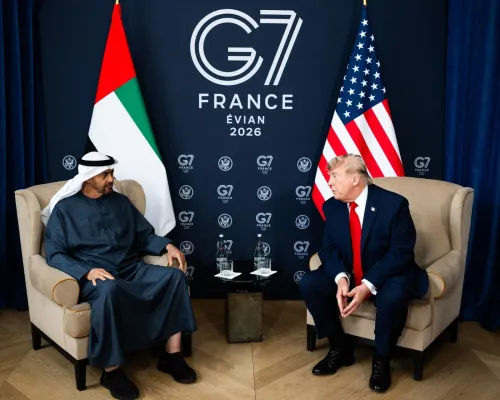
US President Donald Trump held a bilateral meeting with UAE President Mohamed bin Zayed Al Nahyan on 16 June 2026. The summit underscores deep US-UAE ties rooted in the Abraham Accords, defence cooperation, and Gulf security partnerships forged during Trump's first and second terms.
Key Takeaways
President Trump met UAE President Mohamed bin Zayed Al Nahyan on 16 June 2026 in a formal bilateral summit.
The UAE was designated a major non-NATO ally during Trump's first term, with approved sales including F-35 aircraft.
The Abraham Accords (2020) , brokered under Trump, normalised UAE-Israel relations and remain a defining element of US-Gulf diplomacy.
The UAE hosts US military forces and is a key partner in countering Iranian influence in the region.
Follow-on announcements on defence, trade, or technology cooperation are expected in the wake of the meeting.
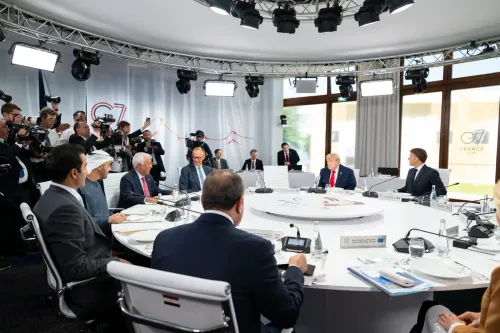
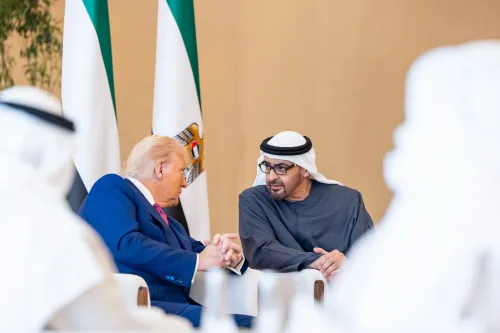
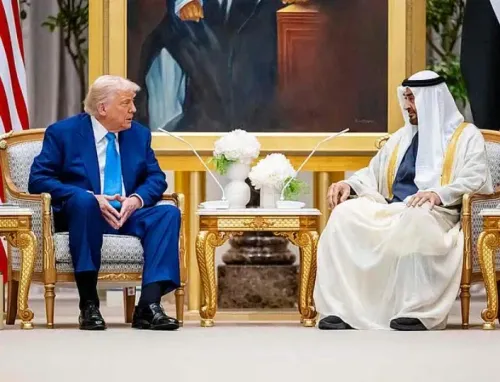
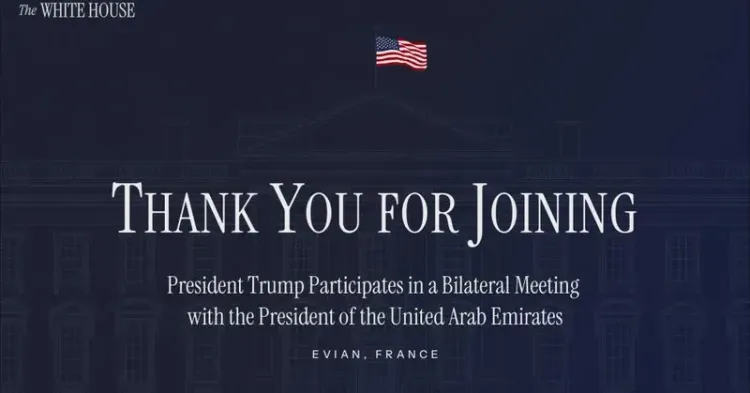
US President Donald Trump held a bilateral meeting with UAE President Mohamed bin Zayed Al Nahyan (MBZ) on Tuesday, 16 June 2026, as the two leaders convened for high-level talks underscoring the enduring strategic partnership between Washington and Abu Dhabi. The White House confirmed the meeting via an official post on X, sharing a livestream of the engagement.
Context
The bilateral meeting between Trump and MBZ reflects the close personal and institutional ties that have defined US-UAE relations over the past decade. Mohamed bin Zayed, who became President of the UAE in 2022, has long been regarded as one of Washington's most reliable partners in the Gulf, coordinating on defence, energy, and regional security.
The meeting comes against the backdrop of evolving dynamics across the Middle East, where the United States continues to maintain a significant forward military presence and relies on Gulf partners for counterterrorism cooperation and energy market stability.
Policy Backdrop
The relationship between the two nations was significantly elevated during Trump's first term (2017-2021), when the administration designated the UAE a major non-NATO ally and approved landmark arms sales, including a deal for F-35 fighter aircraft. The signature achievement of that era, the Abraham Accords of 2020, normalised diplomatic relations between the UAE and Israel under US facilitation — a realignment that reshaped Gulf geopolitics.
Those accords expanded regional economic and security ties and remain a cornerstone of Trump's foreign-policy legacy in the Middle East. Bilateral meetings of this nature have historically served as platforms to advance defence sales, trade agreements, and technology cooperation frameworks.
Stakeholders and Impact
US diplomats and Gulf energy-sector players are among the key stakeholders watching this engagement closely. The UAE sits at the intersection of global oil markets, regional security architecture, and emerging technology investment — areas where American commercial and strategic interests converge.
Broader regional security partners, particularly those invested in countering Iranian influence across the Gulf, will also be attentive to any signals emerging from the talks. The UAE hosts US military forces and serves as a critical node in American forward-deployment strategy in the region.
What's Next
Analysts will watch for follow-on announcements related to defence procurement, commercial agreements, or technology cooperation that typically accompany high-profile bilateral summits between Washington and Abu Dhabi. Any coordination ahead of future multilateral gatherings involving Gulf states could also emerge from this meeting.
The bilateral engagement signals that US-Gulf partnerships remain a central pillar of Trump's second-term foreign policy, with the UAE positioned as a preferred interlocutor for American interests across the Middle East.
Point of View
Suggesting Washington intends to deepen, not merely maintain, its Gulf alignments. For the UAE, face-time with Trump carries strategic currency at a moment when regional actors are recalibrating around shifting power dynamics involving Iran and the broader Arab world. The outcome of this summit — particularly any defence or commercial announcements — will be closely read by rivals and partners alike as a barometer of how far US-Gulf ties will advance under the current administration.
NationPress
16 Sept 2026
Frequently Asked Questions
Why did Trump meet UAE President Mohamed bin Zayed in June 2026?
The bilateral meeting on 16 June 2026 was a high-level diplomatic engagement to advance the longstanding US-UAE strategic partnership, covering areas such as defence cooperation, energy security, and regional stability.
What are the Abraham Accords and how do they relate to this meeting?
The Abraham Accords are the 2020 agreements brokered by the Trump administration that normalised diplomatic relations between the UAE and Israel . They remain the cornerstone of US-UAE relations and provide the policy foundation for ongoing bilateral engagements.
Is the UAE a US military ally?
Yes. The UAE was designated a major non-NATO ally by the Trump administration during his first term and hosts US military forces , making it one of Washington's most important security partners in the Gulf.
What could come out of the Trump-MBZ bilateral meeting?
Potential outcomes include announcements on defence procurement, commercial or technology agreements, and coordination on regional security matters, particularly those related to countering Iranian influence.
Who is Mohamed bin Zayed Al Nahyan?
Mohamed bin Zayed Al Nahyan (MBZ) has served as President of the UAE since 2022 and is the ruler of Abu Dhabi . He is considered one of the most influential leaders in the Gulf and a close partner of successive US administrations.