Trump praises UAE ties at G7, says Iran deal will cut oil prices
Synopsis
On the sidelines of the G7 in Evian, Trump used a brief but pointed meeting with UAE President Mohammed Bin Zayed to signal that the newly signed Iran agreement is already moving oil markets — and that nuclear proliferation is off the table. The encounter underscored the UAE's outsized role in US Middle East strategy, with Trump hinting that the Abraham Accords could soon expand to new Arab signatories.
Key Takeaways
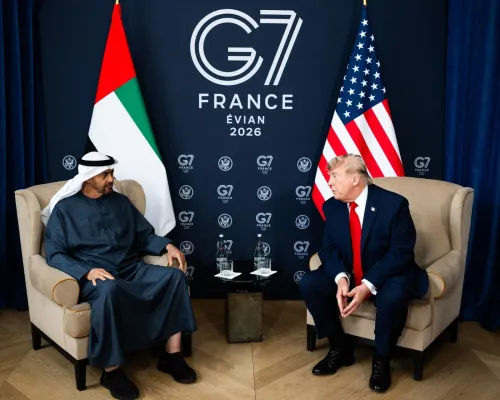
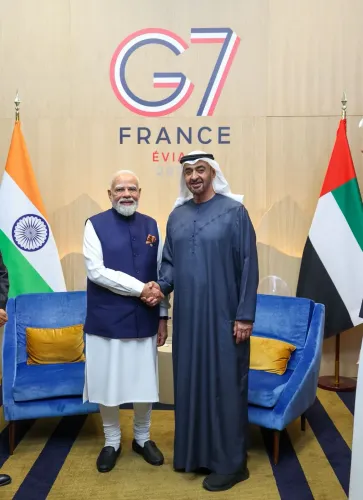
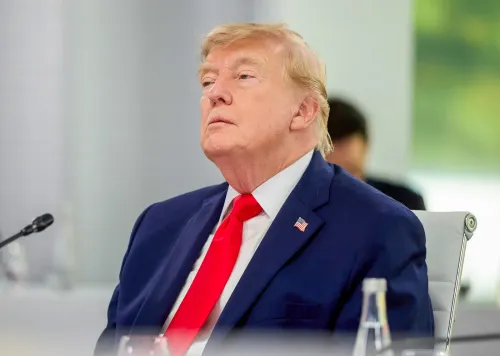
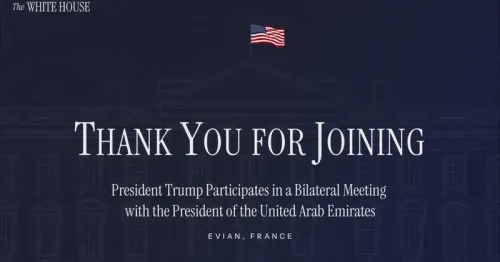
President Trump met UAE President Mohammed Bin Zayed Al Nahyan on 16 June at the G7 Summit in Evian, France .
Trump said the newly signed Iran agreement is already moving ships and oil, with prices 'coming down rapidly.' He confirmed Iran will not be permitted to develop or acquire a nuclear weapon under the deal.
The full text of the agreement is to be released publicly later in the week; Trump also floated submitting it to Congress .
Trump expressed optimism that more Arab nations would join the Abraham Accords , saying 'I think they will all start coming in.' Trump also met Qatar's Emir Sheikh Tamim bin Hamad Al Thani , warning Tehran against violating the agreement's terms.
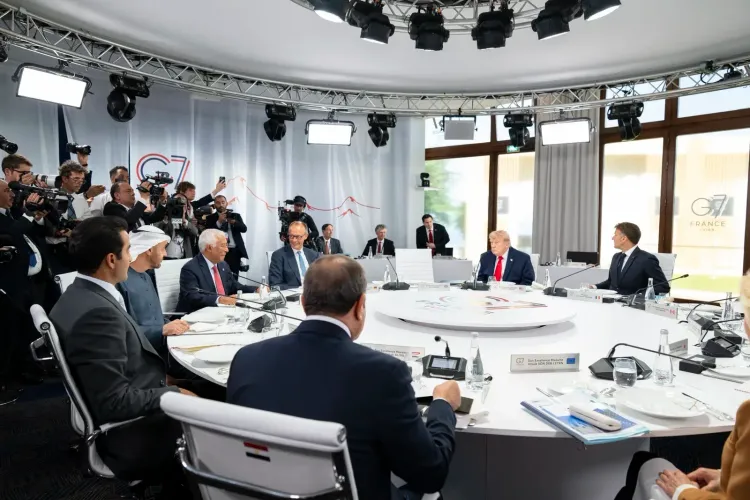
President Donald Trump held a bilateral meeting with UAE President Mohammed Bin Zayed Al Nahyan on the sidelines of the G7 Summit in Evian, France on 16 June, praising the relationship between the two nations as 'outstanding' and expressing confidence that a newly signed agreement with Iran would ease regional tensions and help stabilise global energy markets.
What Trump Said About the Iran Agreement
Speaking alongside Mohammed Bin Zayed, Trump said the deal was already producing tangible results. 'We just signed a deal with Iran. Ships are starting to move now... oil is starting to go and prices are coming down rapidly,' he said. He added that the most critical outcome was nuclear restraint: 'Most importantly Iran will not have a nuclear weapon.'
Trump indicated he would not immediately release the text of the agreement, saying he preferred a formal setting. 'I will go over the document with the media,' he said. He also suggested he was open to submitting the deal to Congress for review, dismissing anticipated resistance with characteristic confidence.
UAE's Role in Regional Diplomacy
The UAE has emerged as one of Washington's closest security and economic partners in the Gulf. It was among the first signatories of the Abraham Accords in 2020, the US-brokered agreements that normalised relations between Israel and several Arab states and fundamentally reshaped Middle Eastern diplomacy. Trump praised the UAE President as 'very advanced' and expressed optimism that more Arab nations would eventually join the framework, saying, 'I think they will all start coming in.'
The bilateral, which lasted less than 15 minutes, came hours after Trump held separate discussions with Qatar's Emir Sheikh Tamim bin Hamad Al Thani, where he again defended the Iran agreement and issued a stark warning to Tehran: 'They will not develop, purchase or buy a nuclear weapon. If they do all hell will break loose.'
G7 Sidelines: A Crowded Diplomatic Day
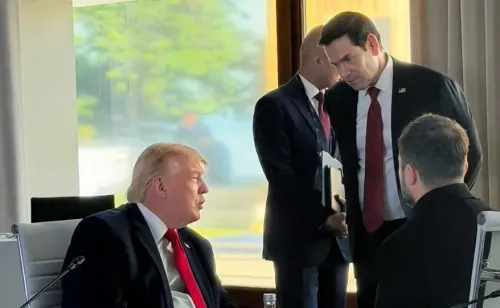
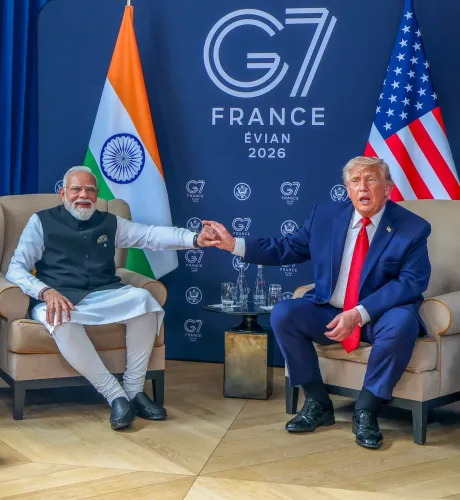
Trump's schedule at Evian reflected the breadth of US diplomatic engagement. Following the UAE bilateral, he engaged with German Chancellor Friedrich Merz, Canadian Prime Minister Mark Carney, Italian Prime Minister Giorgia Meloni, and European Council President Antonio Costa. Egyptian President Abdel Fattah el-Sisi later joined the gathering and greeted Trump personally, with French President Emmanuel Macron also present.
Conversations ranged from the newly announced Iran agreement — which dominated the day's formal discussions — to lighter topics including the FIFA World Cup and a planned UFC event at the White House. Trump praised UFC president Dana White during the informal exchanges.
What Comes Next
The full text of the Iran agreement is expected to be released publicly later in the week, according to Trump. Analysts will be watching closely for details on verification mechanisms and the specific constraints placed on Iran's nuclear programme. The deal's reception in the US Congress — and among Gulf states not yet part of the Abraham Accords — will be a key indicator of its durability.
Point of View
Before the text is even public. That is either a sign of confidence or a hedge — if congressional or allied reaction sours, the rollout can be managed. The UAE's centrality here is telling; Washington is leaning on Abraham Accords signatories to provide regional legitimacy for a deal whose verification architecture remains undisclosed. The real question is whether 'ships are moving' is a durable outcome or a short-term market signal that obscures unresolved structural tensions with Tehran.
NationPress
24 Sept 2026
Frequently Asked Questions
What did Trump say about the Iran deal at the G7 Summit?
Trump said the newly signed Iran agreement is already producing results, with oil shipments resuming and prices falling. He stated that under the deal, Iran will not be permitted to develop or acquire a nuclear weapon, and warned of severe consequences if Tehran violated the terms.
What was discussed at the Trump-UAE bilateral meeting in Evian?
The meeting, which lasted less than 15 minutes, covered the Iran agreement, the future of the Abraham Accords, and prospects for broader Arab participation in the normalisation framework. Trump praised UAE President Mohammed Bin Zayed as 'very advanced' and described bilateral ties as 'outstanding.'
When will the full text of the Iran agreement be released?
Trump said he would release the document later in the week, preferring a formal setting. He also indicated he was open to submitting the agreement to the US Congress for review.
What is the Abraham Accords and why is the UAE central to it?
The Abraham Accords, signed in 2020, normalised relations between Israel and several Arab states, with the UAE among the first signatories. The agreements reshaped Middle Eastern diplomacy and established the UAE as one of Washington's closest Gulf security and economic partners.
Which other leaders did Trump meet at the G7 in Evian on 16 June?
Alongside the UAE President, Trump engaged with German Chancellor Friedrich Merz, Canadian Prime Minister Mark Carney, Italian Prime Minister Giorgia Meloni, European Council President Antonio Costa, Egyptian President Abdel Fattah el-Sisi, French President Emmanuel Macron, and Qatar's Emir Sheikh Tamim bin Hamad Al Thani.