Trump hails Iran nuclear deal at G7, says Modi and world leaders welcomed accord
Synopsis
At the G7 summit in Evian, Trump declared a landmark memorandum of understanding with Iran — one that commits Tehran to never acquiring a nuclear weapon and reopens the Strait of Hormuz. With PM Modi and every attending world leader reportedly welcoming the accord, and formal signing expected within days, the deal marks a dramatic diplomatic pivot after weeks of military pressure.
Key Takeaways
US President Donald Trump announced a memorandum of understanding with Iran at the G7 summit in Evian on 17 June .
The deal commits Iran to never producing or procuring a nuclear weapon , with no time-limited clause.
The Strait of Hormuz has already seen a substantial increase in maritime traffic; normal energy flows expected to resume within days.
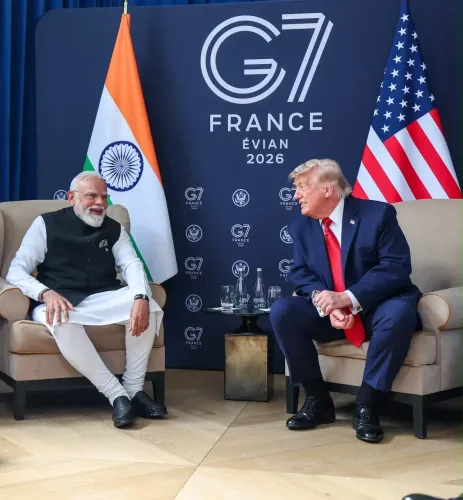
Prime Minister Narendra Modi and all attending G7 leaders reportedly welcomed the accord, according to Trump.
Pakistan and Qatar were credited by Trump for facilitating the diplomacy.
Trump warned that military action could resume if Iran fails to honour the agreement; formal signing is expected 'tomorrow or the next day.'
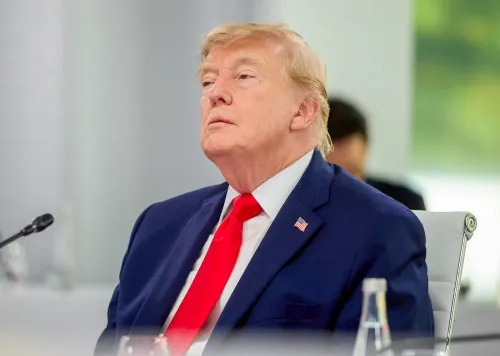
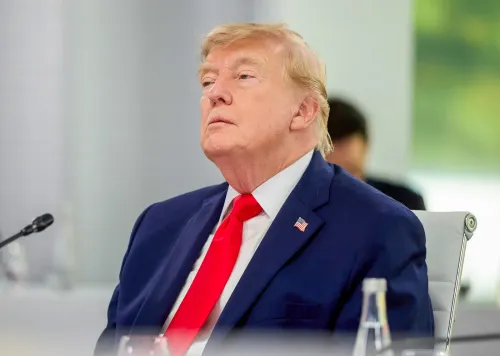
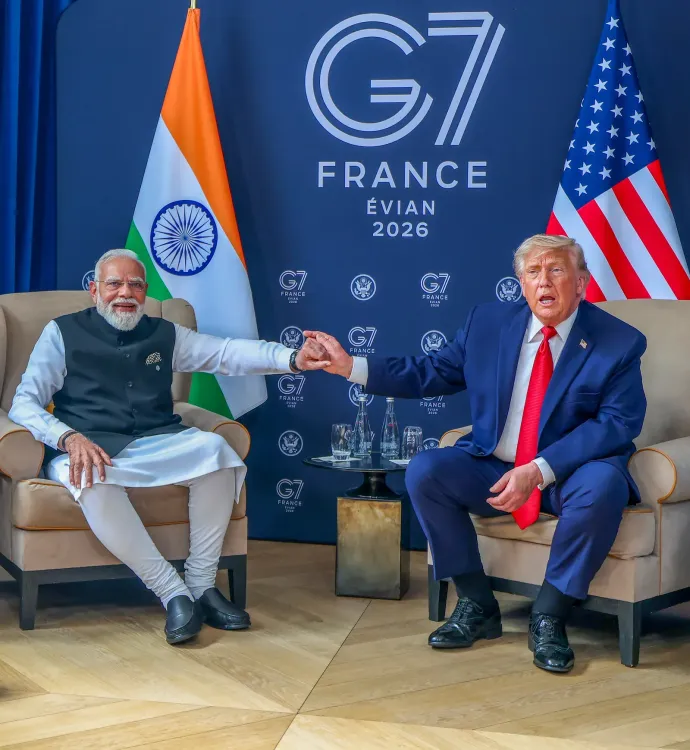
US President Donald Trump on Wednesday, 17 June declared the agreement reached with Iran a historic breakthrough at the conclusion of the G7 summit in Evian, stating it had ended the ongoing conflict, secured the reopening of the Strait of Hormuz, and committed Tehran to never acquiring a nuclear weapon. Trump added that world leaders present at the summit — including Prime Minister Narendra Modi — had welcomed the accord as a step toward greater stability in the Middle East.
What the Agreement Covers
Trump described the understanding, which he characterised as a memorandum of understanding, as achieving every stated objective. 'On Sunday, we reached an agreement with Iran that achieves everything we set out to accomplish — everything and much more,' he said. 'Ending the current conflict, reopening the Strait of Hormuz and preventing Iran from obtaining a nuclear weapon, that's what it was all about.'
The President underscored that the nuclear commitment was open-ended and not time-limited. 'Importantly, Iran has agreed that it will neither produce nor procure a nuclear weapon,' Trump said, adding: 'It doesn't say they'll have one in five years or 10 years or 20 years.' He also noted that the deal covered both the development and acquisition of nuclear arms.
Strait of Hormuz and Energy Flows
Trump repeatedly cited the reopening of the Strait of Hormuz — one of the world's most critical energy chokepoints — as among the agreement's most consequential outcomes. 'Maritime traffic through the Strait of Hormuz has already increased very substantially,' he said, adding that normal energy flows were expected to resume within days. He argued that prolonged military action would never have achieved this result: 'If we didn't do this deal, we could have dropped more bombs for another three weeks, two weeks, four weeks, two years. You would never have the Hormuz Strait open.'
Modi's Reaction and G7 Consensus
Trump said his conversation with Prime Minister Modi at the summit was extensive and positive. 'Prime Minister Modi was here, we had a long talk, he's a great guy,' Trump said. 'They are thrilled that we made a deal, every one of them.' He also stated that no leader at the summit had urged him to continue military operations against Iran. 'There's not one nation that came to us and said, please, sir, keep dropping bombs on them,' he said.
Trump also thanked Pakistan and Qatar for their role in facilitating diplomacy, and praised Saudi Arabia and the United Arab Emirates as important partners during the process.
Warnings and What Comes Next
Despite the celebratory tone, Trump issued a pointed warning: if Iran failed to honour the memorandum, military action could resume. 'If they don't honor that, we'll probably go back to bombing them until they honor it,' he said. The deal is expected to be formally signed imminently — 'tomorrow, maybe the next day,' according to Trump.
Looking ahead, Washington and Gulf nations are set to pursue a parallel track addressing non-nuclear concerns, including conventional ballistic missiles and what Trump described as 'terrorist proxies.' Trump expressed hope that the Iran accord would serve as the foundation for a broader regional settlement: 'It's my hope that the peace agreement will be the beginning of a much larger deal all across the Middle East.'
Point of View
And Trump himself acknowledged that some provisions may not even be written into the document. The absence of a verification mechanism — a flaw that haunted the 2015 JCPOA — has not been addressed publicly. India's reported enthusiasm, via Modi's warm reception at Evian, signals New Delhi's relief over energy security given its dependence on Gulf oil flows through the Strait of Hormuz; but India has not issued an independent statement, making Trump's characterisation of Modi's position the only available source. The broader 'Middle East deal' Trump envisions remains entirely undefined.
NationPress
18 Sept 2026
Frequently Asked Questions
What is the Iran deal announced by Trump at the G7 summit?
It is a memorandum of understanding reached on Sunday before the G7 summit in Evian, under which Iran has committed to never producing or procuring a nuclear weapon and the Strait of Hormuz has been reopened to commercial shipping. Trump said the deal would be formally signed within a day or two of his 17 June announcement.
How did PM Modi respond to the Iran nuclear deal?
According to Trump, Prime Minister Narendra Modi — who was present at the G7 summit in Evian — welcomed the agreement and held a lengthy bilateral conversation with the US President on the sidelines. India has not issued an independent statement; Trump's remarks at the press conference are the sole source for Modi's position.
What happens if Iran does not honour the agreement?
Trump warned that the US would likely resume military operations against Iran if Tehran fails to comply. 'If they don't honor that, we'll probably go back to bombing them until they honor it,' he said at the Evian press conference.
Why is the Strait of Hormuz significant in this deal?
The Strait of Hormuz is one of the world's most critical energy chokepoints, through which a significant share of global oil and gas exports pass. Trump said maritime traffic had already increased substantially following the agreement and that normal energy flows were expected to resume within days.
Which countries helped broker the Iran deal?
Trump specifically thanked Pakistan and Qatar for their diplomatic efforts in facilitating the agreement, and also praised Saudi Arabia and the United Arab Emirates as important partners during the process.