Trump signs US-Iran deal at Versailles, eyes regional stability and lower oil prices
Synopsis
Trump didn't just attend a Versailles dinner — he left with a signed US-Iran memorandum of understanding. The accord targets the Strait of Hormuz, Iran's nuclear ambitions, and global energy prices all at once, while Trump made clear that US bombers remain an option if Tehran blinks. This is the most significant Washington-Tehran diplomatic moment in years.
Key Takeaways
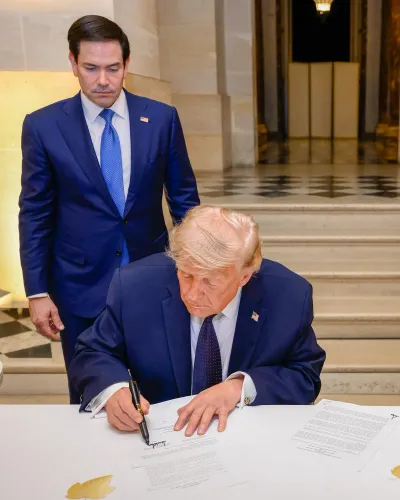
US President Donald Trump signed a US-Iran memorandum of understanding at the Palace of Versailles on 18 June .
The accord aims to end hostilities, reopen the Strait of Hormuz , and establish a framework for broader negotiations between Washington and Tehran .
Trump identified preventing Iran from acquiring a nuclear weapon as the deal's central objective.
A reported 60-day window exists for negotiating a comprehensive settlement, though Trump signalled flexibility on the timeline.
Trump warned that military action — including airstrikes — remained an option if Iran did not comply.
On the sidelines, Trump said he may reimpose sanctions on Russia given the fall in global oil prices.
US President Donald Trump signed a landmark memorandum of understanding with Iran at the Palace of Versailles on 18 June, capping a day of intense diplomacy in Paris and marking what the White House is describing as a major breakthrough in Washington-Tehran relations. The accord is designed to reduce hostilities, reopen the Strait of Hormuz, and create a framework for broader negotiations — with Trump projecting the deal as a driver of regional stability and lower global energy prices.
How the Signing Unfolded
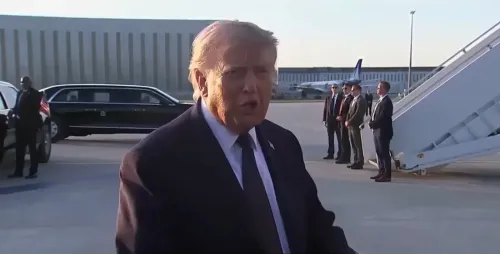
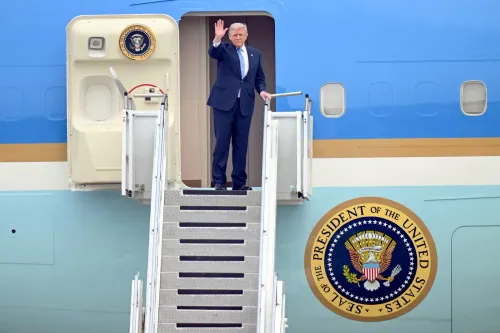
Trump first signalled the deal's imminent conclusion upon landing in Paris, telling reporters he expected it finalised within 48 hours. Hours later, emerging from a dinner hosted by French President Emmanuel Macron at Versailles, he confirmed the document had been executed. 'It's signed,' Trump told reporters. 'I signed it in Versailles. Just signed it.'
The memorandum is intended to serve as a foundational framework for further Washington-Tehran negotiations while restoring normal commercial shipping through the Strait of Hormuz — one of the world's most critical energy corridors, through which roughly a fifth of global oil supply transits.
Nuclear Programme: The Central Objective
Trump made clear that preventing Iran from acquiring a nuclear weapon remains the deal's core purpose. Asked about provisions addressing Iran's existing nuclear material, he said such stockpiles were 'much less important than not having a nuclear weapon.'
He also drew a notable distinction between nuclear arms and conventional ballistic missiles, suggesting Iran could retain some missile capability if neighbouring states maintained comparable arsenals. 'A ballistic missile is not the same thing as what we're talking about when we talk nuclear,' Trump said. 'But if Saudi Arabia and Qatar and they all have some, I would say in relative proportion, I think it's OK.'
Military Presence and Compliance Warnings
Trump indicated that US military forces would remain in the Gulf region for the foreseeable future, describing a watch-and-wait posture. 'I would say a little while, see how it all goes,' he said. He also issued a pointed warning that military action remained on the table if Tehran failed to honour the agreement. 'If they don't come through, is it a threat that we'd bomb? You can call whatever you want, but it will probably happen,' Trump said.
On the memorandum's reported 60-day timeframe for negotiating a comprehensive settlement, Trump signalled flexibility. 'Just as long as they're behaving, I really don't care that much,' he said.
Broader Geopolitical Backdrop
The Versailles signing came as world leaders convened in France for discussions spanning global security, trade, and energy. On the sidelines, Trump also addressed the war in Ukraine, acknowledging that Kyiv was holding its ground against a larger Russian military — 'they're doing pretty well, they're holding their own' — and suggested he may reimpose sanctions on Russia given the decline in global oil prices. 'Now that the oil price is way down... I may put it back on,' he said.
This comes amid a broader recalibration of US foreign policy under Trump's second term, with the administration pursuing negotiated settlements across multiple flashpoints simultaneously. Whether the Versailles memorandum translates into a durable agreement will depend on the technical talks that follow within the stipulated timeframe.
Point of View
But its substance will be tested in the 60-day negotiating window that follows. Trump's willingness to allow Iran some ballistic missile capability — provided neighbouring Gulf states retain theirs — is a meaningful concession that will draw scrutiny from hawks in Washington and from Israel. The deal's architecture also leaves the nuclear stockpile question deliberately vague, which could become a fault line in follow-on talks. Most critically, a memorandum of understanding is not a treaty — it is a statement of intent, and Washington-Tehran history is littered with frameworks that collapsed at the implementation stage.
NationPress
20 Sept 2026
Frequently Asked Questions
What is the US-Iran memorandum of understanding signed at Versailles?
It is a diplomatic accord signed by US President Donald Trump at the Palace of Versailles on 18 June , designed to reduce hostilities between Washington and Tehran, reopen the Strait of Hormuz to normal shipping, and create a framework for further negotiations. It is not a final treaty but a foundational agreement intended to lead to a comprehensive settlement within a reported 60-day window.
Why is the Strait of Hormuz central to this deal?
The Strait of Hormuz is one of the world's most critical energy corridors, through which a significant share of global oil supply passes. Disruptions to shipping there directly affect global energy prices, making its reopening a key economic and strategic objective of the agreement.
What did Trump say about Iran's nuclear programme?
Trump said preventing Iran from acquiring a nuclear weapon is the deal's primary objective. He described concerns over Iran's existing nuclear material as 'much less important than not having a nuclear weapon,' and separately suggested Iran could retain some ballistic missiles in proportion to what neighbouring Gulf states possess.
What happens if Iran does not comply with the memorandum?
Trump explicitly warned that military action, including potential airstrikes, remains an option if Iran fails to honour the agreement. 'If they don't come through... it will probably happen,' he told reporters after the signing.
How does this deal connect to broader US foreign policy under Trump?
The Versailles signing coincides with a broader US diplomatic push under Trump's second term. On the same trip, Trump also addressed the Ukraine conflict and floated the possibility of reimposing sanctions on Russia, signalling that the administration is pursuing negotiated settlements across multiple geopolitical flashpoints simultaneously.