Rubio backs UAE security after Iran attacks in Abu Dhabi visit
Synopsis
Rubio's Abu Dhabi stop was more than a courtesy call — it was Washington publicly drawing a security line around the UAE after Iran's attacks. With Trump simultaneously pursuing a memorandum of understanding with Tehran and reassuring Gulf allies rattled by Iranian pressure, the US is running two contradictory tracks at once. How long that balance holds is the real story.
Key Takeaways
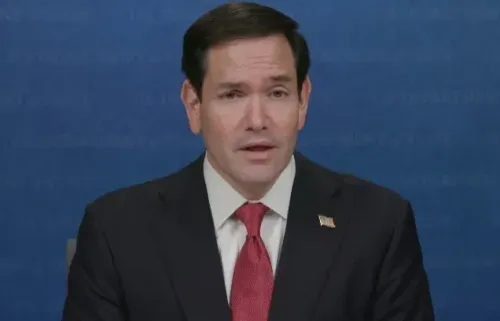
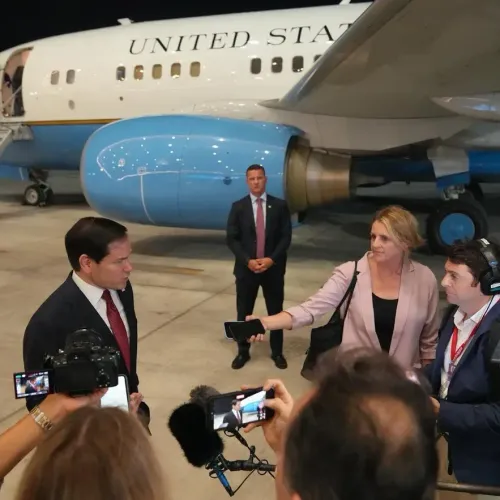
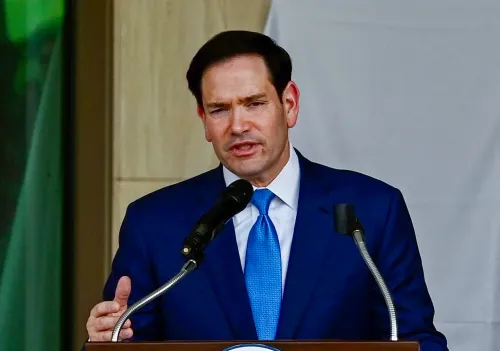
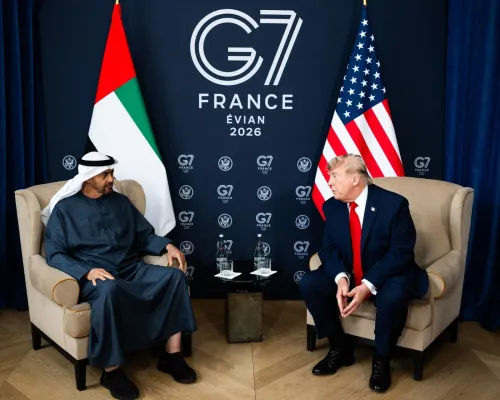
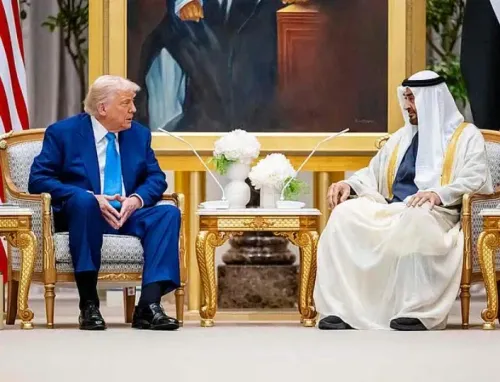
US Secretary of State Marco Rubio met UAE President Sheikh Mohamed bin Zayed Al Nahyan in Abu Dhabi on 25 June 2025 .
Rubio reaffirmed US commitment to UAE security and praised Emirati 'courage and resilience in the face of Iran's attacks.' Talks covered President Trump's memorandum of understanding with Iran and securing free transit through the Strait of Hormuz .
Rubio's June 23–25 Gulf tour also includes stops in Kuwait and Bahrain .
The Gulf Cooperation Council (GCC) — six nations including the UAE — remains a key US strategic partner in the region.
US Secretary of State Marco Rubio met UAE President Sheikh Mohamed bin Zayed Al Nahyan and senior Emirati officials in Abu Dhabi on Wednesday, 25 June 2025, reaffirming Washington's security commitment to the Emirates and advancing diplomatic efforts around President Donald Trump's memorandum of understanding with Iran. The meeting formed a central stop in Rubio's June 23–25 Gulf tour spanning the United Arab Emirates, Kuwait, and Bahrain.
Key Developments
Rubio and Sheikh Mohamed discussed the Trump administration's recently announced memorandum of understanding with Iran, efforts to secure unimpeded maritime transit through the Strait of Hormuz, and the broader imperative of regional peace and stability. The State Department confirmed the two leaders also reviewed the strategic dimensions of the US–UAE bilateral relationship, covering defence and commercial cooperation.
State Department spokesperson Tommy Pigott said in a statement that the two sides discussed 'the strong bilateral U.S.–UAE ties and continued partnership in the areas of defense and commerce.'
What the US Said About Iran's Attacks
Washington offered pointed praise for Abu Dhabi's conduct during the recent regional crisis triggered by Iranian actions. According to Pigott, 'The Secretary thanked the UAE for their leadership and unparalleled support, praised their courage and resilience in the face of Iran's attacks, and reaffirmed the U.S. commitment to the security of the Emirates.'
The explicit reference to Iran's attacks — and the language of 'courage and resilience' — signals that Washington views the UAE as having borne direct pressure during the latest escalation, and is now publicly underscoring its security guarantees to Abu Dhabi.
Strait of Hormuz at the Centre of Talks
A recurring theme across Rubio's Gulf itinerary is the Strait of Hormuz, through which an estimated 20% of the world's traded oil passes. Ensuring 'full and free safe transit' through the waterway was listed as a core agenda item by the State Department ahead of the trip. Any disruption to Hormuz shipping — a scenario Iran has periodically threatened — would have immediate consequences for global energy markets and supply chains.
This comes amid heightened sensitivity around the strait following the recent Iran-related regional crisis, making Rubio's reassurances to Gulf partners particularly consequential.
Gulf Cooperation Council Context
The Gulf Cooperation Council (GCC) — comprising Bahrain, Kuwait, Oman, Qatar, Saudi Arabia, and the UAE — remains a cornerstone of US strategic engagement in the Middle East. Rubio's three-nation tour is widely seen as a coordinated effort to shore up GCC confidence in Washington's regional posture at a moment when the Trump administration is simultaneously pursuing a diplomatic track with Tehran.
The dual-track approach — engaging Iran through a memorandum of understanding while publicly backing Gulf allies who have faced Iranian pressure — reflects the tightrope Washington is walking as it attempts to reshape the region's security architecture.
What Comes Next
Rubio's Gulf tour concludes on 25 June, after which the State Department is expected to provide a fuller readout of outcomes from all three stops. The durability of the Trump–Iran memorandum of understanding — and whether it translates into a verifiable reduction in Iranian regional activity — will determine how much reassurance Washington's Gulf partners ultimately derive from this round of diplomacy.
Point of View
Manama, or Kuwait City. The Strait of Hormuz framing is also telling: energy security, not just regional politics, is driving the urgency of this tour. If the Iran MoU does not produce verifiable behavioural change, Gulf partners will remember that Washington talked security while Tehran kept the pressure on.
NationPress
23 Sept 2026
Frequently Asked Questions
Why did Marco Rubio visit Abu Dhabi in June 2025?
Rubio visited Abu Dhabi on 25 June 2025 as part of a June 23–25 Gulf tour covering the UAE, Kuwait, and Bahrain. The trip focused on advancing President Trump's memorandum of understanding with Iran, securing transit through the Strait of Hormuz, and reinforcing US security partnerships with Gulf allies.
What did the US say about Iran's attacks on the UAE?
State Department spokesperson Tommy Pigott said Rubio 'praised their courage and resilience in the face of Iran's attacks' and 'reaffirmed the U.S. commitment to the security of the Emirates.' The remarks represent Washington's clearest public acknowledgement of Iranian pressure on the UAE during the recent regional crisis.
What is Trump's memorandum of understanding with Iran?
It is a recently announced diplomatic framework between the Trump administration and Iran, the details of which have not been fully disclosed. Rubio's Gulf tour is partly aimed at briefing US allies on its contents and implications for regional security.
Why is the Strait of Hormuz central to these talks?
The Strait of Hormuz is one of the world's most critical maritime chokepoints, through which roughly 20% of globally traded oil passes. Iran has periodically threatened to disrupt shipping there, making guarantees of free transit a top priority for the US and its Gulf partners.
Which countries are part of the Gulf Cooperation Council?
The GCC comprises Bahrain, Kuwait, Oman, Qatar, Saudi Arabia, and the UAE. It serves as the primary platform for political, economic, and security coordination among Gulf states and is a key partner for the United States in the region.