Trump pressures Pakistan to join Abraham Accords as Iran deal condition
Synopsis
Donald Trump has made Abraham Accords membership a stated condition of the Iran war settlement — and Pakistan, with its decades-long opposition to Israel, is explicitly on his list. The demand bundles regional normalisation and an Iran ceasefire into a single high-stakes diplomatic package, putting Islamabad in an extraordinarily difficult position domestically and internationally.
Key Takeaways
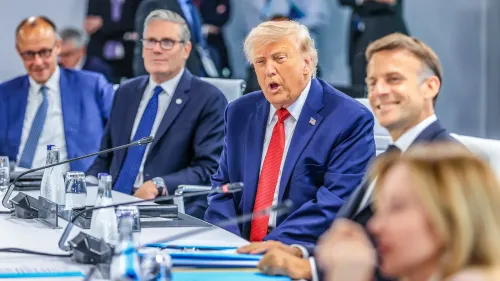
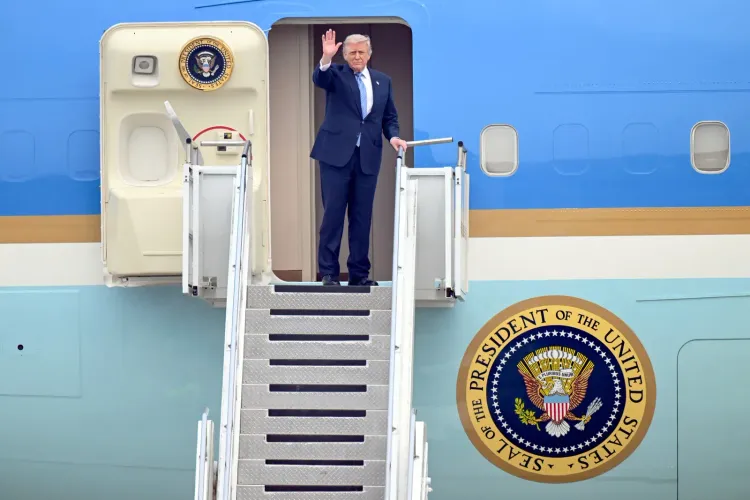
US President Donald Trump posted on Truth Social on 25 May that it 'should be mandatory' for Pakistan to join the Abraham Accords .
Trump tied the demand to the Iran war settlement , framing it as a quid pro quo for US involvement.
Other named countries include Saudi Arabia , Qatar , Türkiye , Egypt , and Jordan .
The Abraham Accords were launched in 2020 ; current members include the UAE , Bahrain , Morocco , and Sudan .
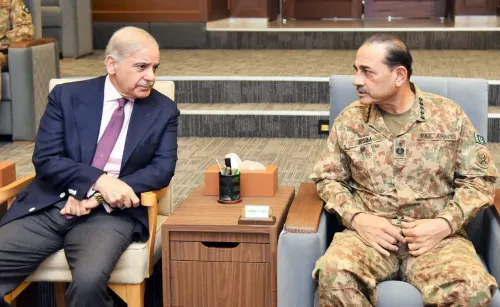
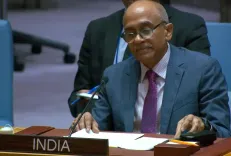
Pakistan's UN envoy Asim Iftikhar Ahmad has previously accused Israel of war crimes, underscoring the domestic and diplomatic obstacles Islamabad faces.
The demand reportedly complicates ongoing Strait of Hormuz and Iran settlement negotiations.
US President Donald Trump has publicly pressured Pakistan to recognise Israel and formalise diplomatic ties as part of a broader settlement linked to the Iran war, posting the demand on his Truth Social platform on Monday, 25 May. The move marks a significant escalation in Washington's push to expand the Abraham Accords — the normalisation framework launched during Trump's first term in 2020 — to encompass major Muslim-majority nations.
What Trump Demanded
In his Truth Social post, Trump wrote that it 'should be mandatory' for Pakistan to 'sign onto the Abraham Accords', under which Muslim-majority nations formally recognise Israel. He framed the demand as a quid pro quo, stating the US had expended considerable effort to 'pull this very complex puzzle together' — a reference to both the Israel-initiated Iran conflict and Washington's ongoing attempts to broker its end.
Trump also directed his representatives to 'begin, and successfully complete, the process of signing these Countries into the already Historic Abraham Accord,' according to his post. Beyond Pakistan, he named Saudi Arabia, Qatar, Türkiye, Egypt, and Jordan as countries from which he expects similar acquiescence.
Current State of the Abraham Accords
The Abraham Accords — named after the patriarch revered by Muslims, Jews, and Christians alike — were originally signed in 2020 during Trump's first term, with the United Arab Emirates and Bahrain as founding signatories. Morocco and Sudan subsequently joined. Reports indicate that Kazakhstan and Somaliland have also agreed to join the framework, though formal accession remains pending. The UAE and Bahrain, both drawn into the Iran conflict, had already been part of the original accord.
Why Pakistan Faces a Difficult Choice
Pakistan's stance on Israel is rooted in decades of opposition, dating to its resistance to Israel's founding and its military backing of Arab nations during successive Arab-Israeli wars. Islamabad has consistently positioned itself as a champion of Muslim solidarity and a vocal critic of Israeli policies toward Palestinians.
Pakistan's Permanent Representative at the United Nations, Asim Iftikhar Ahmad, has publicly accused Israel of using 'starvation of civilians as a method of warfare' and suggested such conduct 'may constitute a war crime.' Against the backdrop of sustained criticism at international forums and strong domestic Islamist opposition to any normalisation with Israel, analysts suggest it would be deeply difficult for Islamabad to comply with Trump's demand.
Implications for the Iran Settlement
Trump's Abraham Accords push introduces a new and potentially complicating dimension to the broader Iran deal negotiations, which have reportedly stalled over separate issues. By tying Accords membership to the Iran war settlement, Washington is effectively bundling two distinct diplomatic tracks — regional normalisation with Israel and a ceasefire or agreement with Tehran — into a single framework. Critics argue this linkage could further delay an already fragile peace process.
What Comes Next
It remains unclear whether Pakistan or any of the other named countries will formally respond to Trump's demand. The post signals that Washington intends to use its role as a mediator in the Iran conflict as leverage to extract normalisation commitments. How the named governments — particularly those with deep domestic sensitivities around Israel — navigate this pressure will be closely watched in the coming weeks.
Point of View
Not easier, to sell in Islamabad, Riyadh, or Ankara. Pakistan in particular faces a near-impossible domestic calculus: its government has built significant political capital on pro-Palestinian rhetoric, and any move toward Israel recognition would hand Islamist opposition parties a potent mobilisation issue. The broader question mainstream coverage is missing is whether Trump's approach — public demands via social media rather than back-channel diplomacy — is designed to produce agreements or to produce leverage.
NationPress
19 Sept 2026
Frequently Asked Questions
What did Trump say about Pakistan and the Abraham Accords?
Trump posted on Truth Social on 25 May that it 'should be mandatory' for Pakistan to join the Abraham Accords, which require Muslim-majority nations to formally recognise Israel. He framed the demand as a condition tied to US efforts to settle the Iran war.
What are the Abraham Accords?
The Abraham Accords are a normalisation framework launched in 2020 during Trump's first term, under which Muslim-majority nations agree to formally recognise Israel and establish diplomatic ties. The UAE, Bahrain, Morocco, and Sudan are current signatories, with Kazakhstan and Somaliland reportedly agreeing to join.
Why would it be difficult for Pakistan to comply?
Pakistan has opposed Israeli statehood since Israel's founding and has a history of supporting Arab nations in conflicts with Israel. Domestically, strong Islamist sentiment and Pakistan's self-positioning as a champion of Muslim causes make any normalisation with Israel politically costly for the government in Islamabad.
Which other countries did Trump name in his demand?
Alongside Pakistan, Trump named Saudi Arabia, Qatar, Türkiye, Egypt, and Jordan as countries he expects to join the Abraham Accords as part of the Iran war settlement process.
How does this demand affect the Iran deal negotiations?
According to reports, tying Abraham Accords membership to the Iran settlement introduces a new complicating dimension to negotiations that have already stalled over separate issues, potentially delaying a resolution to the Iran conflict further.