Saudi Arabia nuclear weapons option flagged in US intel report
Synopsis
A classified US intelligence document says Saudi Arabia hasn't ruled out nuclear weapons — and it landed on Capitol Hill just as lawmakers review a Trump-backed nuclear energy deal worth tens of billions of dollars. The deal's enrichment pathway, its exemption from IAEA's Additional Protocol, and a Saudi-Israel normalisation condition make this one of the most consequential — and contested — non-proliferation decisions of the Trump era.
Key Takeaways
A classified US intelligence assessment concludes Saudi Arabia has not ruled out developing nuclear weapons, reported on 27 September 2026 .
The findings were transmitted to Congress last month amid a 90-day review of a Trump administration civilian nuclear cooperation agreement with Riyadh .
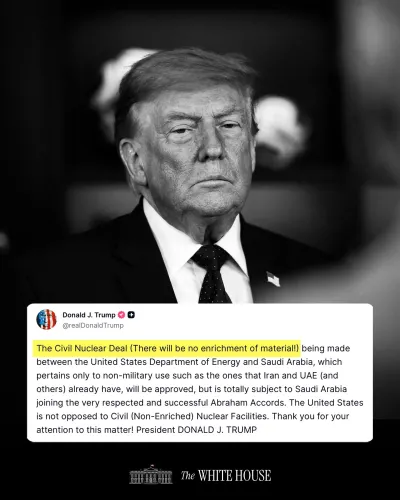
The deal initially caps Saudi uranium enrichment at 5 per cent , but includes a pathway to 20 per cent — a level experts say significantly shortens the route to weapons-grade material.
The agreement does not require Saudi Arabia to adopt the IAEA Additional Protocol , a key non-proliferation safeguard.
Six Democratic senators , including Edward Markey and Jeff Merkley , wrote to Secretary Rubio demanding the deal be abandoned, citing a departure from the non-proliferation 'Gold Standard'.
President Trump has also reportedly made Saudi normalisation with Israel a condition of the nuclear agreement.
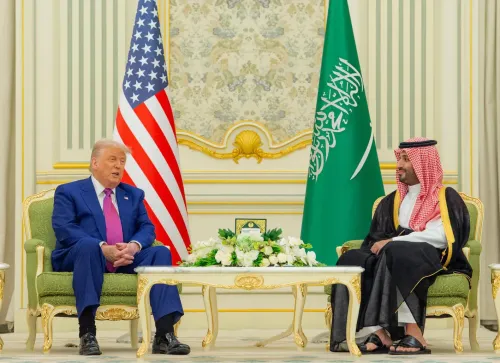
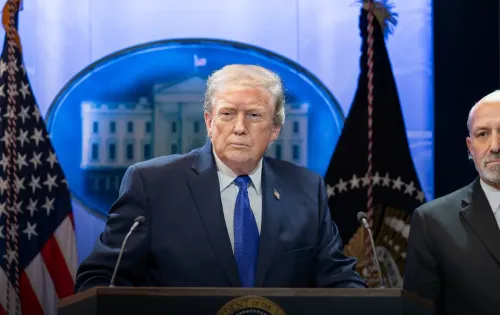
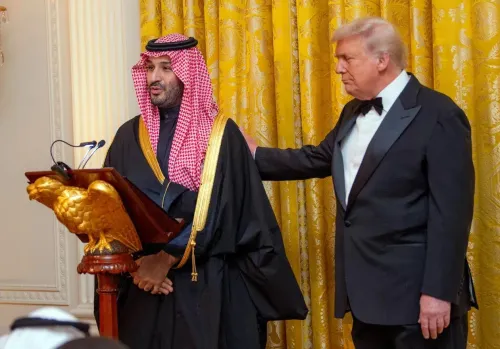
A classified US intelligence assessment has concluded that Saudi Arabia has not ruled out developing nuclear weapons, according to a report by The Washington Post published on 27 September 2026. The findings have intensified congressional scrutiny of President Donald Trump's proposed civilian nuclear cooperation agreement with Riyadh — a deal that could open tens of billions of dollars in contracts for American energy companies.
What the Intelligence Documents Reveal
The assessment was contained in classified documents sent to Congress last month, according to US officials cited by the Post. The Central Intelligence Agency (CIA) declined to comment on the findings, which have not been made public. The documents were transmitted as lawmakers enter a mandatory 90-day review period of the so-called Section 123 agreement — named after the provision of the US Atomic Energy Act that governs civilian nuclear transfers to foreign countries.
The agreement, if it takes effect, would allow American companies to begin nuclear energy projects in Saudi Arabia worth tens of billions of dollars. The Trump administration has argued the partnership would deepen ties with Riyadh, generate business for US firms, and prevent the kingdom from turning to Russia or China for nuclear technology.
The Enrichment Threshold and Proliferation Concerns
A central concern among critics is the agreement's enrichment provisions. The deal initially caps Saudi uranium enrichment at below 5 per cent — well below weapons grade. However, it reportedly includes a pathway to enrichment of up to 20 per cent following an additional study and a separate written agreement, according to details reported by the Post and The Wall Street Journal.
Experts warn that reaching 20 per cent enrichment — while still below weapons grade — substantially shortens the technical timeline to produce material suitable for a nuclear weapon. The agreement also does not require Saudi Arabia to adopt the International Atomic Energy Agency (IAEA)'s Additional Protocol, which grants inspectors broader access to fuel-cycle facilities, research sites, and suspected undeclared locations.
Congressional Pushback and the 'Gold Standard' Demand
A group of Democratic senators led by Edward Markey and Jeff Merkley wrote to Secretary of State Marco Rubio on Friday, demanding the administration abandon the deal. The letter was also signed by Senators Tim Kaine, Chris Van Hollen, Peter Welch, and Ron Wyden.
'With this deal, the Trump Administration is departing from precedent, adopting looser restrictions, and caving to Saudi demands,' the senators said. They argued that Riyadh should accept what lawmakers call the non-proliferation 'Gold Standard' — a framework that prohibits domestic uranium enrichment and plutonium reprocessing while mandating implementation of the IAEA Additional Protocol.
Supporters of the deal, however, contend that US involvement gives Washington greater leverage over Saudi nuclear activities than a programme built by Russian or Chinese firms. Lawmakers who wish to block the agreement would need a two-thirds majority in Congress to override a presidential veto.
Saudi Arabia's Position and the Israel Condition
The Saudi government did not directly address the intelligence assessment, instead referring to an earlier statement by Energy Minister Abdulaziz bin Salman, who said the kingdom's nuclear programme would be 'peaceful' and developed with 'the highest levels of responsibility and transparency.'
The State Department defended the agreement, stating that Washington 'does not and will not support a Saudi nuclear weapon program,' and described the deal as combining nuclear energy cooperation with 'the strongest non-proliferation standards that were diplomatically achievable.'
Notably, the Post also reported that President Trump has made Saudi normalisation of relations with Israel a condition of the nuclear agreement. Riyadh has maintained it will not establish diplomatic relations with Israel without concrete progress toward a Palestinian state — a condition that adds a geopolitical dimension well beyond nuclear policy.
Saudi Arabia is a signatory to the Nuclear Non-Proliferation Treaty (NPT) and is subject to existing IAEA safeguards. As Congress continues its review, the outcome will likely shape both US non-proliferation policy and the broader geopolitical architecture of the Middle East.
Point of View
Which is a more precise and more troubling conclusion. The deal's enrichment pathway to 20 per cent, combined with the absence of an IAEA Additional Protocol requirement, creates exactly the kind of ambiguity that proliferation experts have warned against for decades. The Trump administration's argument — that US involvement is better than ceding the field to Russia or China — has merit as a realpolitik calculation, but it sidesteps the harder question: whether any enrichment pathway is acceptable given the intelligence finding. Adding a Saudi-Israel normalisation condition turns a nuclear safety question into a geopolitical bargaining chip, which is a precedent with consequences far beyond the Gulf.
NationPress
27 Sept 2026
Frequently Asked Questions
What does the US intelligence assessment say about Saudi Arabia and nuclear weapons?
According to a report by The Washington Post, a classified US intelligence assessment concludes that Saudi Arabia has not ruled out developing nuclear weapons. The document was sent to Congress last month and has not been made public; the CIA declined to comment.
What is the Trump administration's nuclear deal with Saudi Arabia?
It is a civilian nuclear cooperation agreement under Section 123 of the US Atomic Energy Act, which would allow American companies to conduct nuclear energy projects in Saudi Arabia worth tens of billions of dollars. The deal initially limits Saudi uranium enrichment to below 5 per cent, with a potential pathway to 20 per cent enrichment under additional conditions.
Why are senators opposing the Saudi nuclear agreement?
A group of six Democratic senators, led by Edward Markey and Jeff Merkley, argue the deal departs from non-proliferation precedent by adopting looser restrictions. They want Saudi Arabia to accept the 'Gold Standard' — a framework prohibiting domestic enrichment and reprocessing, and requiring IAEA Additional Protocol adherence — before any agreement proceeds.
What is the IAEA Additional Protocol and why does it matter here?
The IAEA Additional Protocol gives international inspectors broader access to a country's nuclear fuel-cycle facilities, research sites, and suspected undeclared locations. Critics of the Saudi deal say its absence from the agreement is a significant gap, as it reduces international visibility into Saudi nuclear activities.
What is the Saudi-Israel condition linked to this nuclear deal?
President Trump has reportedly made Saudi normalisation of relations with Israel a condition of the nuclear agreement, according to The Washington Post. Saudi Arabia has stated it will not establish diplomatic ties with Israel without meaningful progress toward a Palestinian state, adding a complex geopolitical dimension to the nuclear negotiations.