PM Modi shares Vedic verse on nationhood and collective strength
Synopsis
Prime Minister Narendra Modi on November 11, 2026, posted a Vedic Sanskrit verse on X invoking Rashtra — the nation — as a force born from the austerity and knowledge of ancient sages, continuing his practice of sharing India's civilizational texts with a mass digital audience.
Key Takeaways
PM Narendra Modi posted a Vedic Sanskrit hymn on X on Wednesday, November 11, 2026 .
The verse links the emergence of the Rashtra (nation) to the tapas (austerity) and initiation of Vedic sages who 'desired good.' The Sanskrit terms balam (strength) and ojas (vigour) are described as arising from that prior commitment to knowledge and discipline.
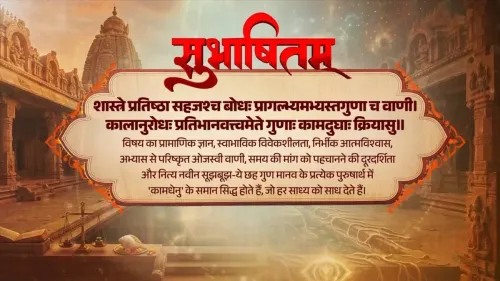
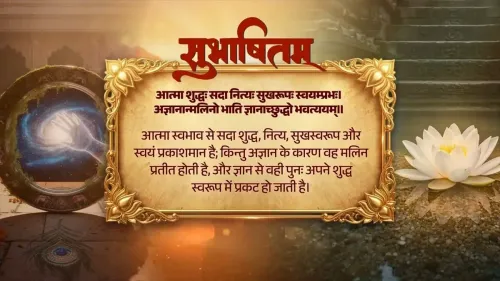
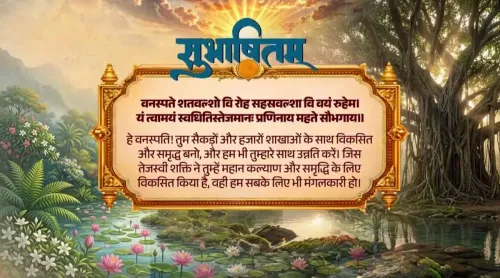
The post included a video but no explanatory caption, letting the verse speak independently.
Modi has an established pattern of sharing Vedic and Upanishadic verses on X to frame India's national identity in civilizational terms.
A Sanskrit verse on the soul of a nation — its sages, its strength, its sacred discipline — arrived on the Prime Minister's feed at dawn on Wednesday, November 11, 2026. Prime Minister Narendra Modi posted a Vedic hymn on X, invoking the ancient idea that a nation's power is born from knowledge, tapas (austerity), and righteous intent.
The verse, rendered in classical Sanskrit, reads: 'भद्रमिच्छन्त ऋषयः स्वर्विदस्तपो दीक्षामुपनिषेदुरग्रे। ततो राष्ट्रं बलमोजश्च जातं तदस्मै देवा उपसन्नमन्तु॥' — which translates broadly as: 'The sages who knew the heavens, desiring good, took to tapas and initiation from the very beginning. From that emerged the Rashtra, strength, and vigour — may the gods attend upon it.'
What the hymn says about Rashtra
The word Rashtra — the Sanskrit root of the modern Hindi and constitutional term for 'nation' — appears in Vedic literature long before the modern state. In this verse, the nation is not a bureaucratic construct; it is an outcome. It emerges, the hymn argues, from the prior commitment of seers to austerity and knowledge. Strength (balam) and vigour (ojas) follow that foundation. It is a sequence: wisdom first, then power. For a Prime Minister who has repeatedly drawn on India's civilizational texts — from the Bhagavad Gita to Upanishadic passages — to articulate a vision of national identity, the choice of verse carries its own logic. The post carries no explanatory caption, letting the Sanskrit stand on its own terms.Modi's pattern of Vedic outreach on X
Modi has periodically used his social-media presence to post Sanskrit shlokas, Upanishadic phrases, and Vedic hymns — particularly at cultural, spiritual, or nationally significant moments. The practice is deliberate: Sanskrit, once confined to academic and temple settings, is surfaced in a mass-digital context, reaching hundreds of millions of followers who may encounter the language for the first time through a smartphone notification. The accompanying video — details of which were not made public in the post — typically in such posts provides visual or musical texture to the verse, widening its emotional reach beyond those who can parse the original language. Whether this post signals a forthcoming cultural address, an education initiative, or simply a moment of civilizational reflection will become clearer in the days ahead. What is clear today: the Prime Minister opened his November 11 morning by reminding his audience that, in Vedic imagination, the nation was never just territory. It was an aspiration — born of discipline, sustained by the divine.Point of View
No policy hook, no caption — is itself a communicative act: it treats the ancient text as self-sufficient and its audience as capable of engaging with India's pre-colonial intellectual heritage directly. This fits a consistent BJP-era cultural project of repositioning Sanskrit from a priestly preserve to a mainstream national inheritance. The specific selection of a Rashtra verse, with its sequence of wisdom-before-power, also offers a subtle civilizational counter-narrative: India's nationhood, the verse implies, predates the modern state by millennia. Watch for whether this verse surfaces in an upcoming speech or policy context — Modi's social-media posts have often served as advance framing for larger public addresses.
NationPress
11 Nov 2026
Frequently Asked Questions
What is the Sanskrit verse PM Modi posted on November 11 2026?
PM Modi posted a Vedic verse that translates as: 'The sages who knew the heavens, desiring good, took to tapas and initiation from the very beginning. From that emerged the Rashtra, strength, and vigour — may the gods attend upon it.' The original Sanskrit uses the words Rashtra, balam, and ojas.
What does Rashtra mean in Sanskrit?
Rashtra is a Sanskrit term meaning nation or polity. It appears in Vedic literature and is the linguistic root of the modern Hindi and constitutional word for nation. In Vedic usage, it connotes a collective body of people bound by shared strength and purpose.
Why does PM Modi post Sanskrit verses on X?
PM Modi has a documented practice of sharing Sanskrit shlokas and Vedic verses on X to highlight India's civilizational heritage and to frame national identity in terms of ancient texts. The posts typically accompany culturally or spiritually significant moments.
What does tapas mean in the verse Modi posted?
Tapas in Sanskrit refers to austerity, disciplined spiritual practice, or focused dedication. In the verse Modi posted, it is the quality the ancient sages embraced before the Rashtra — the nation — could emerge, suggesting that collective discipline is a precondition of national strength.
What is ojas in the Vedic context of Modi's post?
Ojas is a Sanskrit word meaning vigour, vital energy, or radiance. In the verse Modi shared, ojas appears alongside balam (strength) as one of the qualities that arise from the sages' prior commitment to austerity and knowledge.