Akhilesh Yadav accuses BJP of hiding Delhi pollution data
Synopsis
Samajwadi Party president Akhilesh Yadav accused the BJP-led central government of masking Delhi's severe winter air pollution with false data, calling on citizens to hear the truth from suffering children, the sick and the elderly.
Key Takeaways
Akhilesh Yadav posted a sharp attack on November 10, 2026 , accusing the BJP government of covering up Delhi's pollution crisis with manipulated statistics.
He asked that pollution's true toll be judged by the suffering of 'innocent children, the sick and the elderly fighting for every breath.' Delhi experiences its worst air quality annually in October–November due to stubble burning, local emissions and stagnant weather.
The Graded Response Action Plan (GRAP) , operational since 2017 , stages emergency measures as AQI worsens across the NCR.
The National Clean Air Programme (2019) targeted a 20–30% reduction in particulate matter by 2024; progress against the target has been disputed.
SP's criticism fits an established pattern of opposition parties using Delhi's annual pollution crisis to challenge central government credibility on environmental governance.
Every winter, Delhi's air becomes a crisis — and this year, Samajwadi Party president Akhilesh Yadav is directing his sharpest fire at the BJP-led central government, accusing it of draping 'false statistics like a sheet over the unbearable suffering of pollution.' He posted the attack on X on Tuesday, November 10, 2026, as the capital entered its most toxic seasonal window.
The charge: data as cover for choking air
Yadav's post, written in Hindi, is unsparing: 'Dilli mein baithi bhrasht BJP sarkar jhoothe aankon ki chaadar se pradushan ki asahneey takleef ko dhakna chahti hai' — 'The corrupt BJP government sitting in Delhi wants to cover the unbearable pain of pollution with a sheet of false figures.' He then pivots to a human lens, asking that the true state of pollution be gauged not from official readings but from 'innocent children, the sick and the elderly who are fighting for their lives with every single breath.'
The rhetorical punch lands with his closing line: 'BJP jhoothi thi, jhoothi hai aur jhoothi hi rahegi' — 'The BJP was a liar, is a liar, and will always remain a liar.' It is combative, deliberate political messaging aimed squarely at how the government frames air-quality data to the public.
Delhi's annual pollution crisis and the policy scaffolding around it
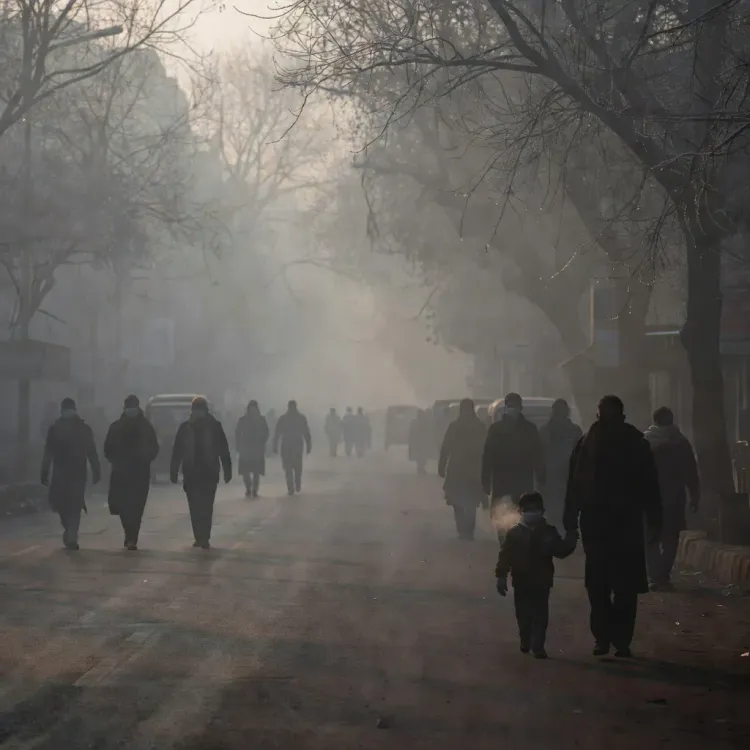
Delhi enters its worst air quality period each year between October and November, when stubble burning from farms in neighbouring states, local vehicular and industrial emissions, and stagnant weather conditions combine to push particulate matter to hazardous levels. The Graded Response Action Plan (GRAP), introduced in 2017, provides a staged framework — from restricting construction dust to banning diesel trucks — that kicks in as Air Quality Index readings worsen.
The National Clean Air Programme, launched in 2019, had set a target of reducing particulate matter concentrations by 20–30 per cent by 2024. Progress against that target has been contested, and the credibility of monitoring infrastructure has itself become a political flashpoint in the recurring annual debate.
SP joins an established pattern of opposition pressure
Akhilesh Yadav's broadside fits a consistent pattern: opposition leaders — particularly from parties with a strong base in the Uttar Pradesh and NCR electorate — periodically frame Delhi's air quality crisis as evidence of central government failure or data manipulation. For SP, whose voter base includes large numbers of workers, migrants and families in Delhi-NCR, the pollution debate carries direct constituency resonance. Children gasping for breath and elderly patients struggling to breathe are not abstractions — they are images that travel quickly through WhatsApp networks and local media.
The charge of statistical opaqueness is particularly pointed: if official AQI readings appear lower than what residents experience, it erodes trust not just in one reading but in the entire regulatory system built around GRAP triggers and emergency school closures.
With winter tightening its grip on the capital, every new GRAP stage announcement will now be read through this political lens — and Yadav has just made sure of it.
Point of View
An elderly patient struggling — the attack becomes difficult to rebut with statistics alone. The timing is calculated; every November the Delhi air story dominates national coverage, and an early aggressive frame shapes how voters interpret every subsequent government announcement. For SP, it also reinforces the party's posture as champion of the urban poor and migrant workforce most exposed to pollution. The deeper policy question the post raises — whether official AQI monitoring infrastructure is reliable and independent — is one that environmental regulators and courts have repeatedly grappled with, and it will not be settled by a single political exchange.
NationPress
10 Nov 2026
Frequently Asked Questions
What did Akhilesh Yadav say about Delhi pollution?
On November 10, 2026, Akhilesh Yadav accused the BJP-led central government of using false statistics to hide the severity of Delhi's air pollution, saying the real truth should be heard from children, the sick and the elderly struggling to breathe.
Why is Delhi's air quality so bad every winter?
Delhi's pollution peaks each October–November due to a combination of stubble burning in neighbouring states like Punjab and Haryana, local vehicular and industrial emissions, and cold, stagnant weather that traps pollutants close to the ground.
What is the Graded Response Action Plan (GRAP)?
GRAP is a staged emergency framework introduced in 2017 that imposes progressively stricter pollution-control measures across Delhi-NCR — such as halting construction or banning diesel trucks — as the Air Quality Index crosses defined thresholds.
What is the National Clean Air Programme?
The National Clean Air Programme was launched in 2019 with a target of reducing particulate matter concentrations by 20–30 per cent by 2024 across Indian cities; its implementation and results have been a subject of political and environmental debate.
Is Akhilesh Yadav's claim about manipulated pollution data verified?
The specific claim about recent data manipulation has not been independently verified. The broader political criticism — that opposition parties challenge the credibility of official AQI readings during pollution spikes — is a recurring pattern in Delhi's environmental governance debate.